
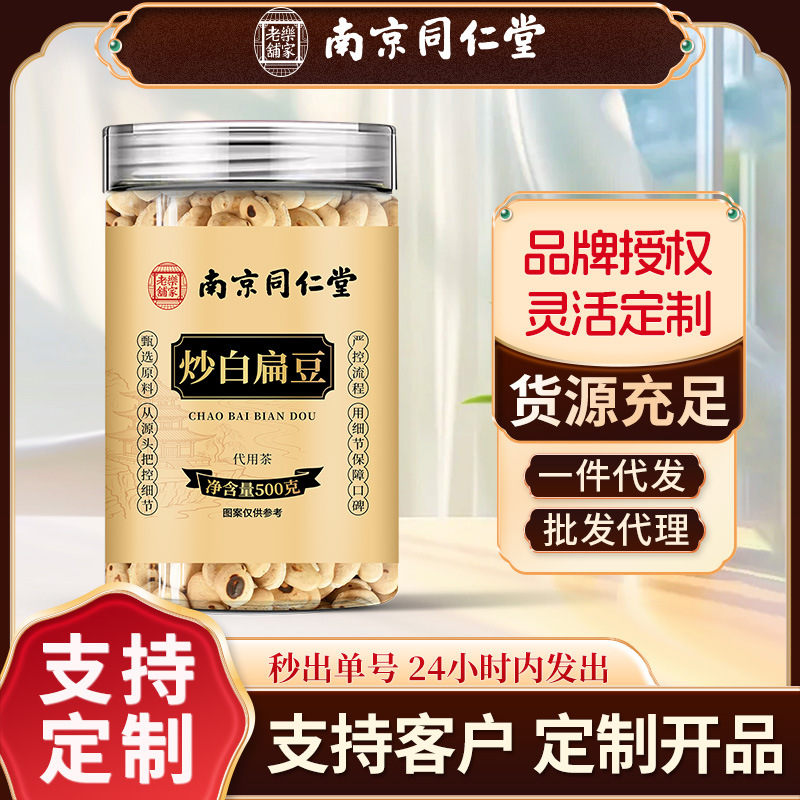
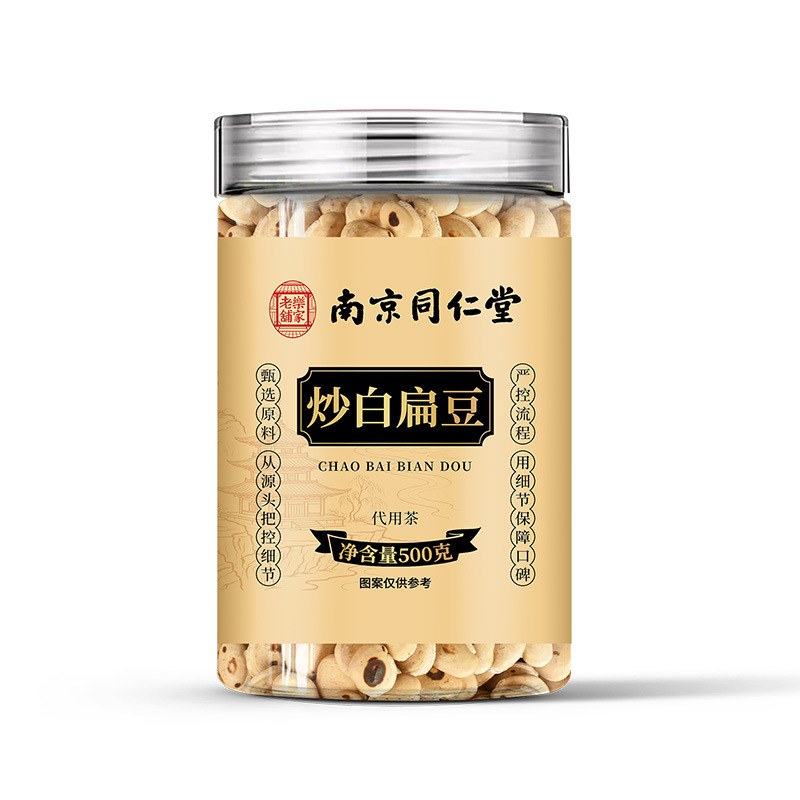
Dry-Fried White Hyacinth Bean 500g Bai Bian Dou Herbal Tea for Daily Wellness
$7.04
9999 in stock
Description
Dry-Fried White Hyacinth Bean, known in TCM as Bai Bian Dou (白扁豆), is the processed seed of Dolichos lablab. In TCM theory it is sweet and slightly warm, entering the Spleen and Stomach channels. Traditionally used to support digestive wellness and gentle daily nourishment. This 500g pack of pre-packaged decoction pieces is suitable for making herbal tea or adding to soups and congee.
Key Selling Points
- Identified in TCM as Bai Bian Dou (白扁豆), the seed of Dolichos lablab
- Dry-fried processing, a traditional TCM preparation method
- Sweet and slightly warm nature, associated with the Spleen and Stomach channels
- 500g pre-packaged decoction pieces in a resealable jar
- Suitable for herbal tea, soup, and congee preparation
Quality & Sensory
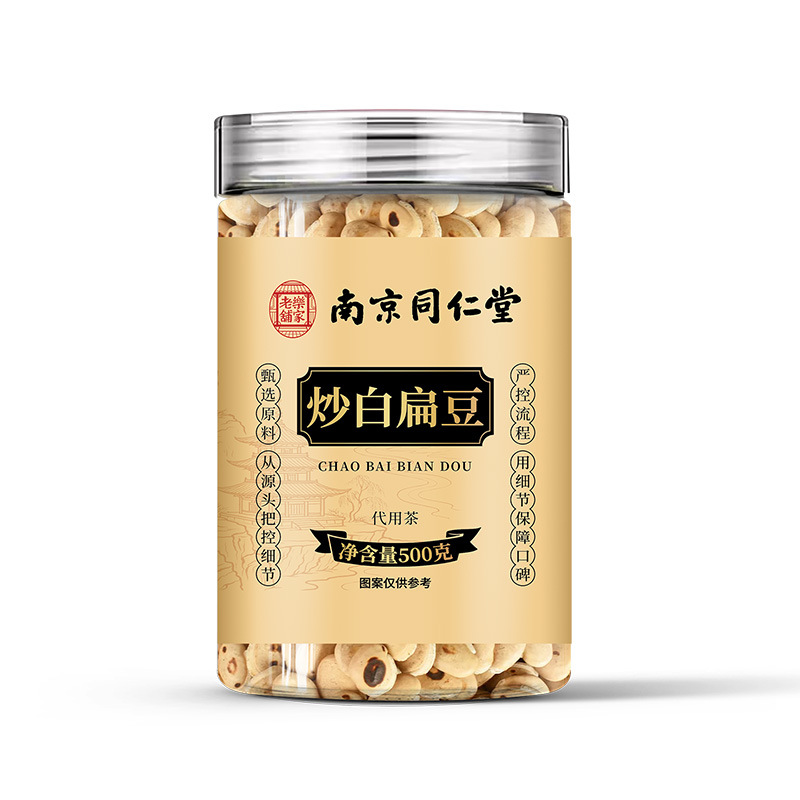
The dry-fried seeds are typically pale yellow to light brown with a dry, slightly firm texture and a mild, faintly toasted aroma. When simmered or brewed, they yield a gentle, subtly sweet and earthy taste. Color and aroma may vary slightly between batches.
Technical Specifications
| Product Type | Dry-fried decoction pieces |
|---|---|
| Chinese Name | 炒白扁豆 |
| Pinyin | Chao Bai Bian Dou |
| Botanical Name | Dolichos lablab |
| Plant Part | Seed |
| Net Weight | 500g |
Usage Scenarios
- Simmered as a daily herbal tea
- Added to soups and broths
- Cooked into congee or rice dishes
- Combined with other herbs in a decoction
Traditional Uses
In TCM theory, Bai Bian Dou is traditionally used to support the Spleen and Stomach and to gently resolve dampness. It is commonly simmered in soups, congee, or decoctions, often paired with ingredients such as Chinese yam, lotus seed, or Job's tears. Dry-frying is a traditional method believed to enhance its warming and digestive properties.
FAQ Q&A
Q: What is dry-fried white hyacinth bean?
A: It is the seed of Dolichos lablab, known in TCM as Bai Bian Dou (白扁豆), processed by dry-frying. It is sold as 500g of pre-packaged decoction pieces.
Q: What is its traditional value in TCM?
A: In TCM theory it is sweet and slightly warm, entering the Spleen and Stomach channels. It is traditionally associated with supporting digestion and resolving dampness.
Q: How is it commonly prepared?
A: It is typically simmered in water as a tea, added to soups, or cooked into congee. It can also be combined with other herbs in a decoction.
Additional information
| Weight | 0.68 kg |
|---|---|
| Dimensions | 15 × 15 × 15 cm |
Related products
-
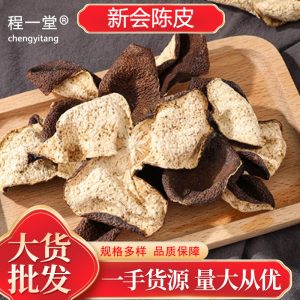
Xinhui Chenpi Dried Tangerine Peel 500g Sun Dried Aged Peel for Soup and Tea
Price range: $60.19 through $116.90 -
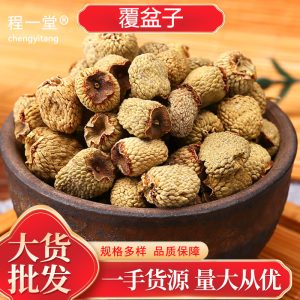
Dried Raspberry Fruit Fu Pen Zi Whole Berries for Herbal Tea and Wine Infusion 500g
Price range: $15.63 through $18.06 -
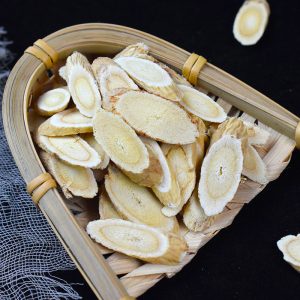
Astragalus Root Slices Huang Qi 500g Dried Herb for Soups and Teas
Price range: $7.36 through $22.11 -

Yi Zhi Ren Dried Alpinia Oxyphylla Fruit 500g Traditional Herbal Tea and Decoction Ingredient
Price range: $11.74 through $13.36
Reviews
There are no reviews yet.