
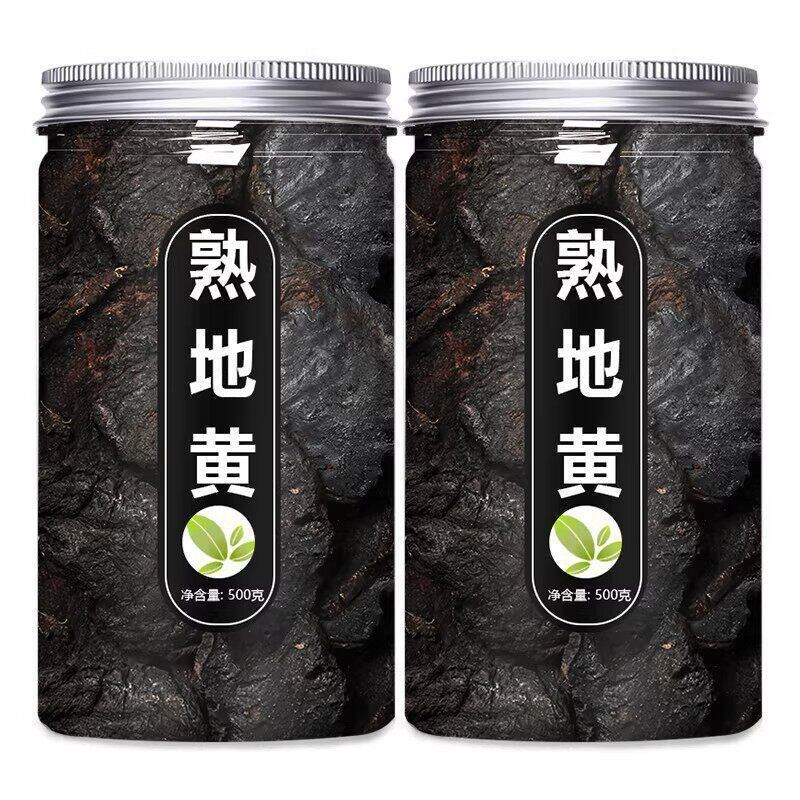
Prepared Rehmannia Root Slices Nine Steam Nine Sun Henan Huai Di Huang Dried Herbal Decoction Pieces
Price range: $5.65 through $8.69
Description
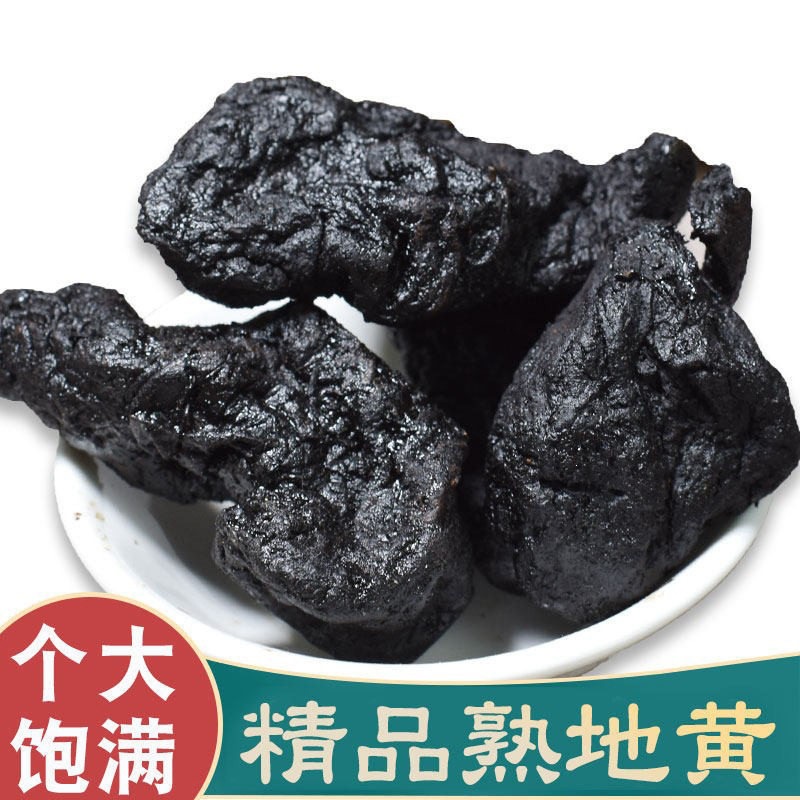
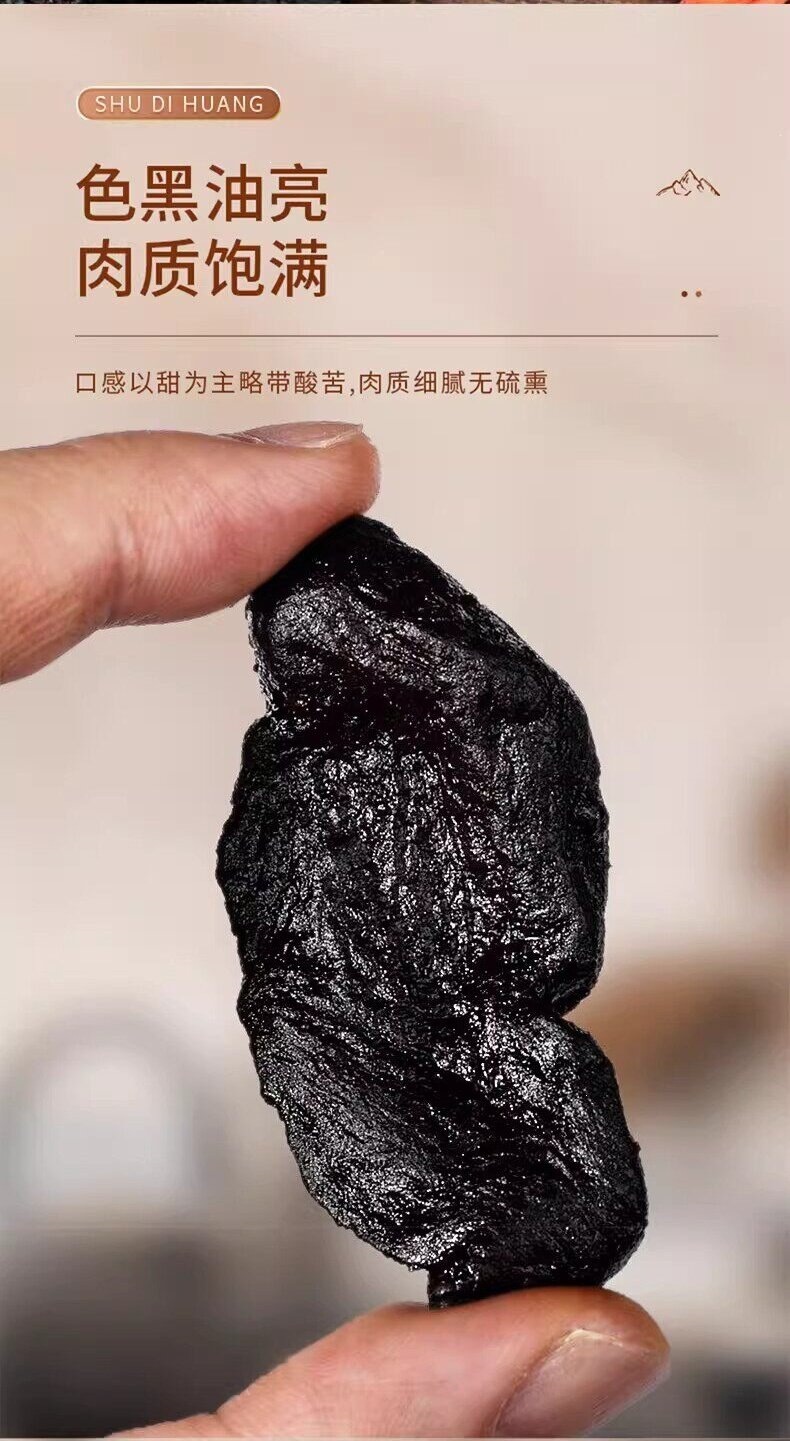
Prepared Rehmannia Root Slices, known in TCM as Shu Di Huang (熟地黄), from Rehmannia glutinosa, are dried, traditionally processed root decoction pieces. In TCM theory, Shu Di Huang is sweet and slightly warm, entering the Heart, Liver, and Kidney channels, and is traditionally associated with nourishing Yin and Blood. The slices are suited for decoction, tea, soup, or congee in daily herbal wellness routines.
Key Selling Points
- Traditional Shu Di Huang prepared rehmannia root slices
- Sourced from Huai Di Huang in Henan Jiaozuo region
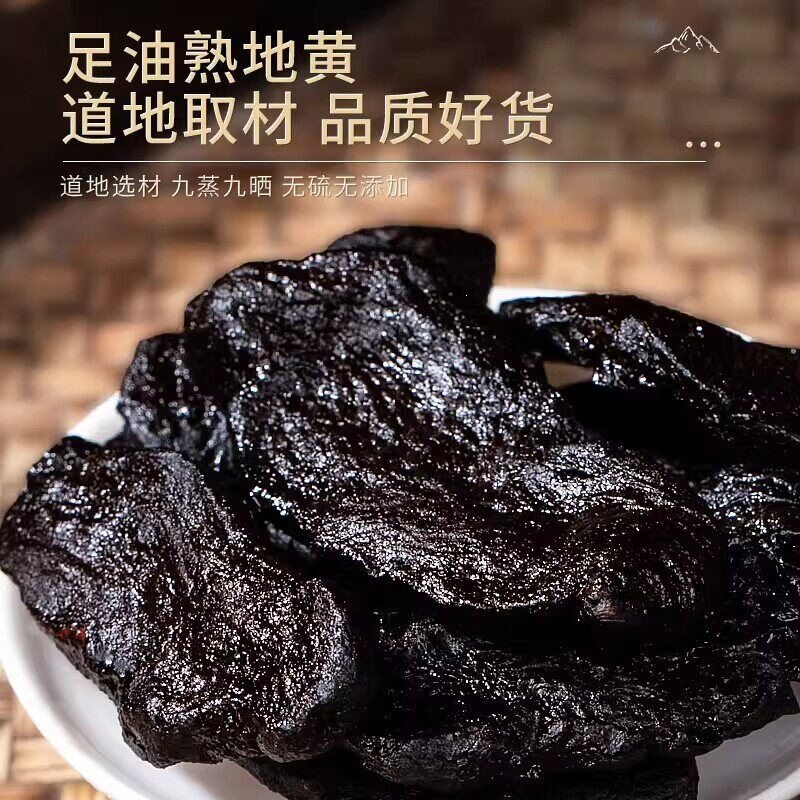
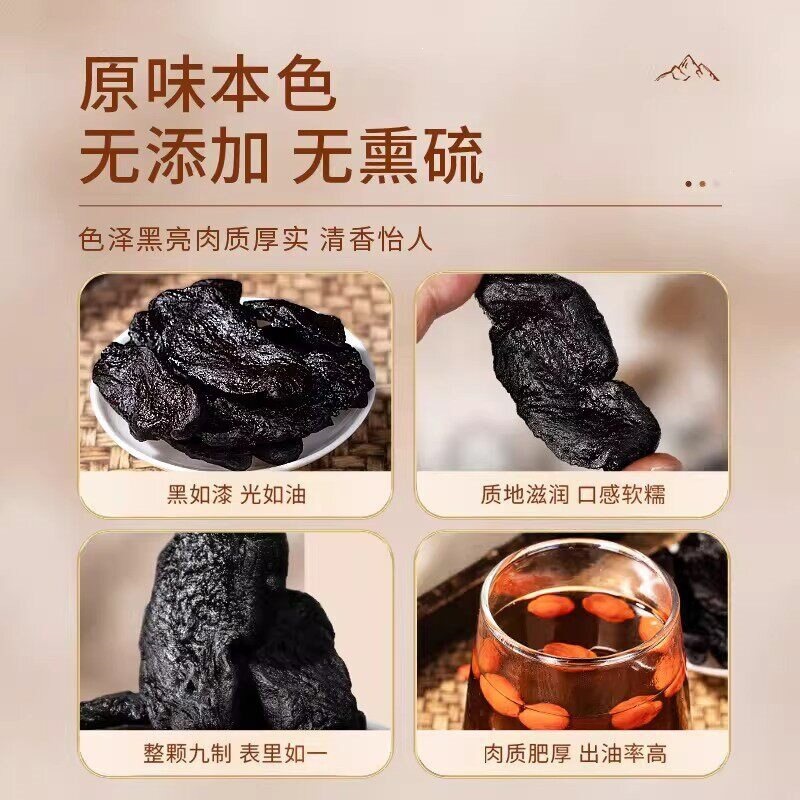
- Nine steam nine sun traditional processing method
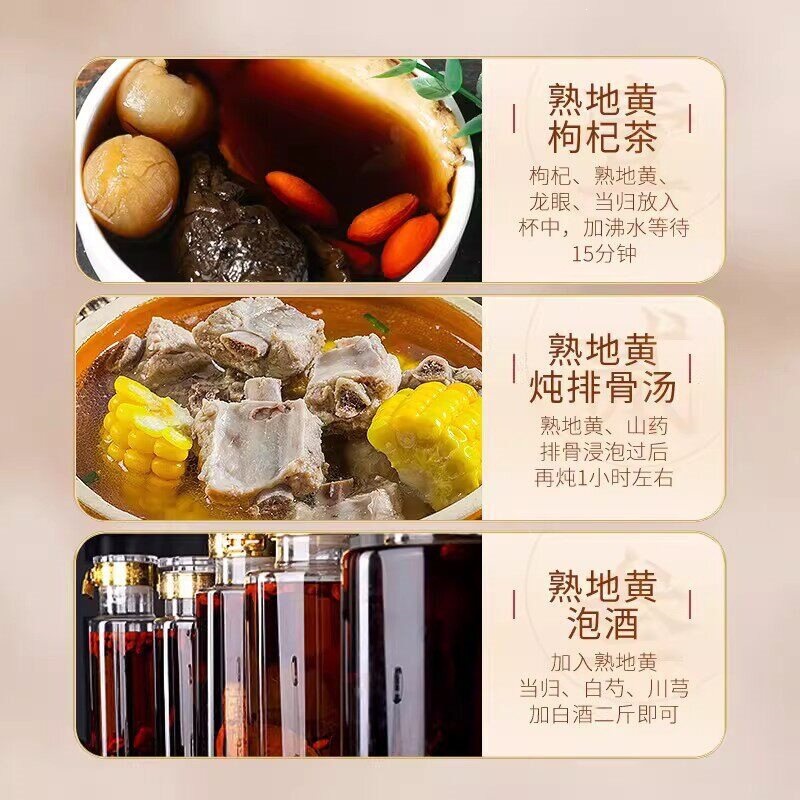
- Dried root decoction pieces for tea soup or congee
- Combination pack includes 250g rehmannia and 250g cistanche
Quality & Sensory
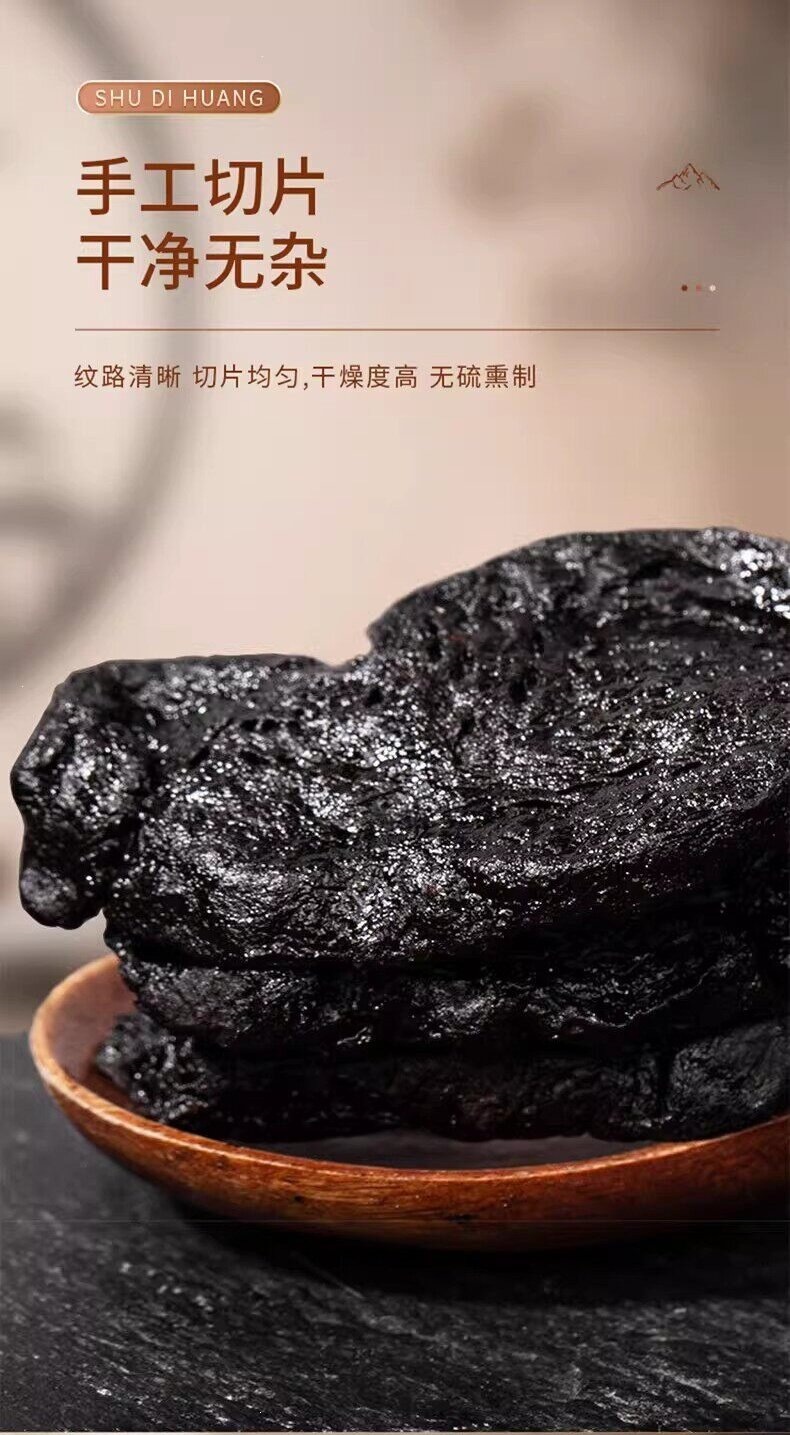
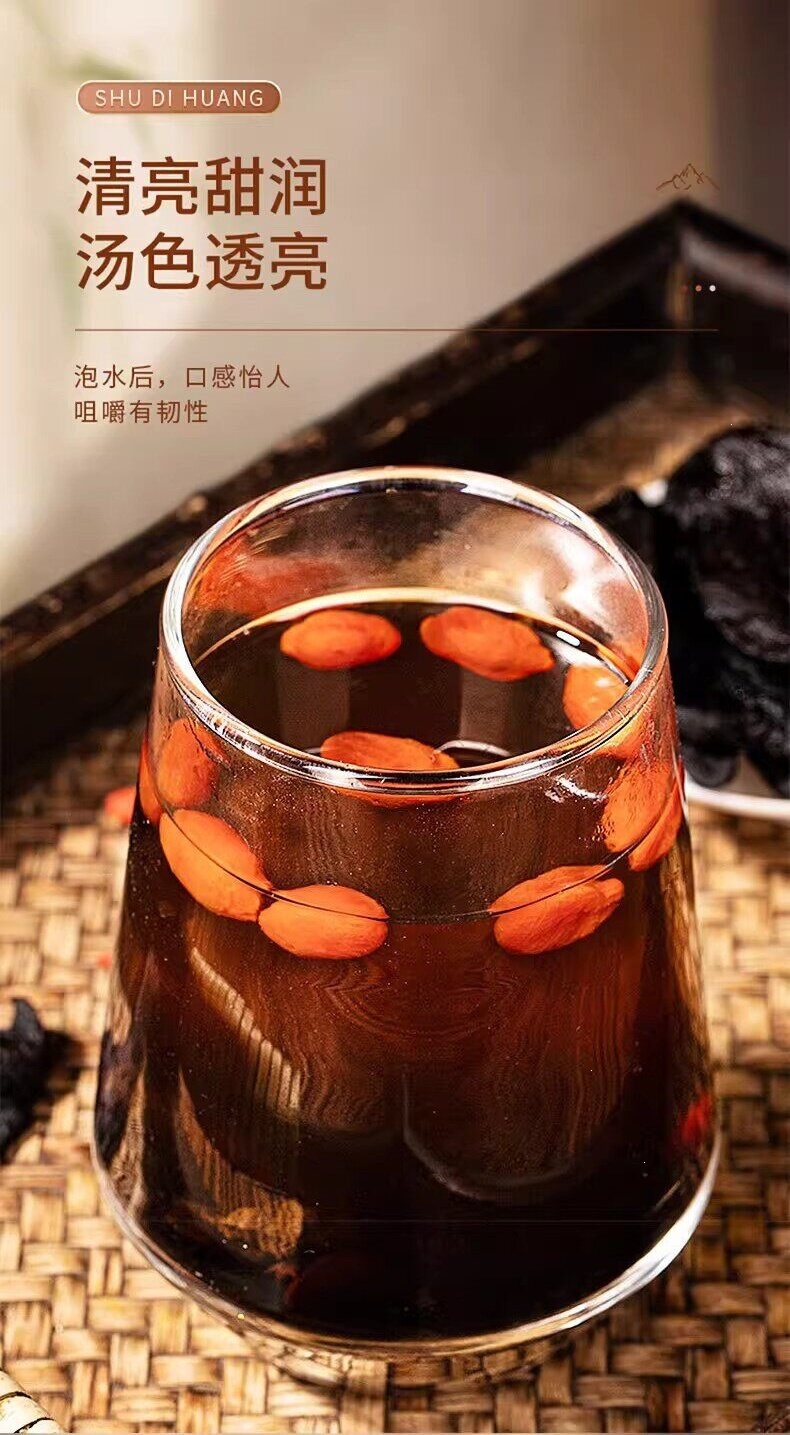
The slices are typically dark brown to black, moist and slightly sticky in texture, with a sweet, earthy aroma. When decocted or brewed, the liquid is typically dark and mildly sweet with a deep, mellow herbal taste.
Technical Specifications
| Product Type | Dried herbal decoction pieces |
|---|---|
| Chinese Name | 熟地黄 |
| Pinyin | Shu Di Huang |
| Botanical Name | Rehmannia glutinosa |
| Plant Part | Root |
| Form | Sliced dried root pieces |
Usage Scenarios
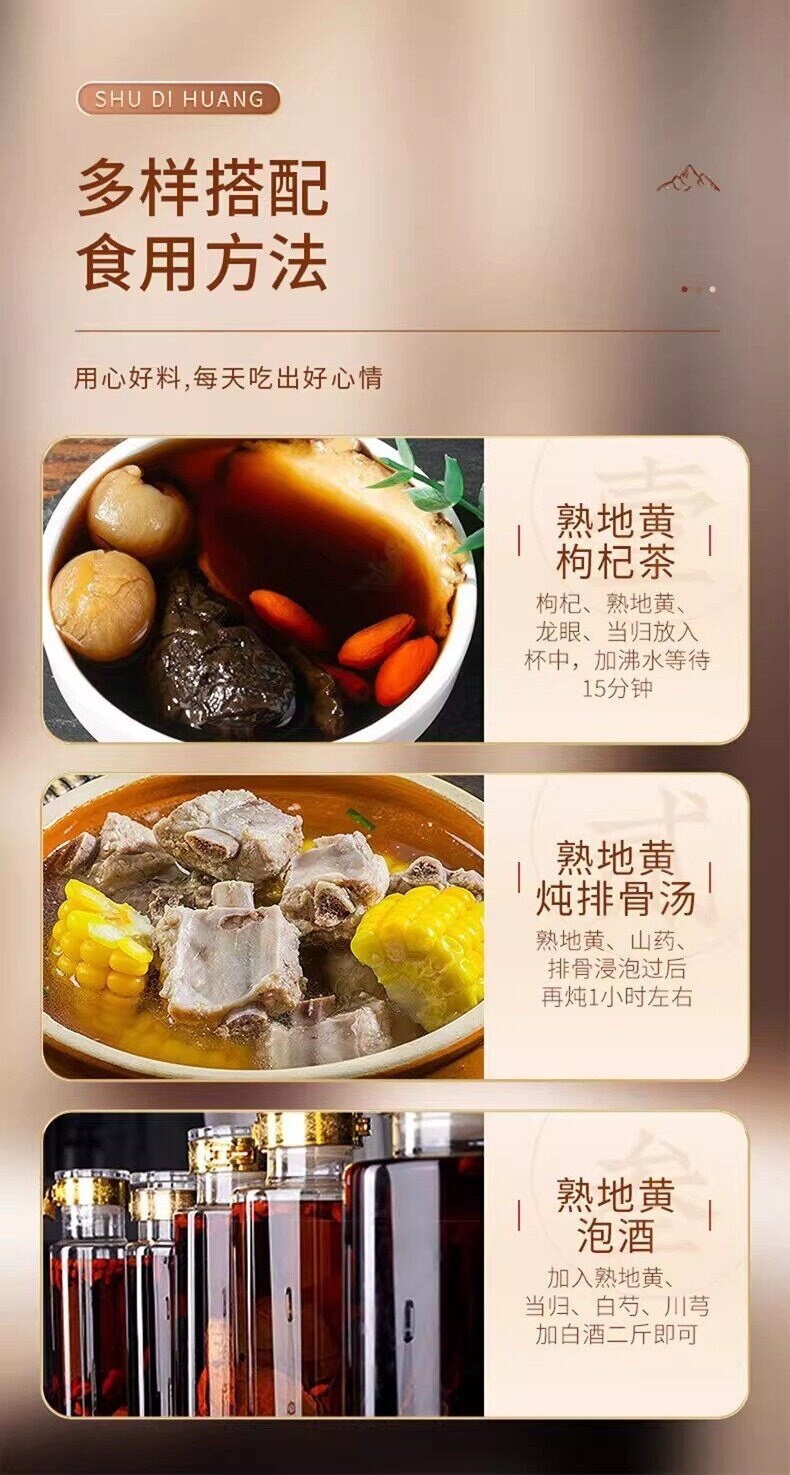
- Simmered as a solo herbal decoction or tea
- Added to traditional herbal soups
- Cooked into herbal congee
- Combined with cistanche in a decoction
- Used in seasonal nourishing food preparations
Traditional Uses
In TCM tradition, Shu Di Huang is often decocted alone or with herbs such as Cistanche, Angelica, and Astragalus in blood-nourishing and yin-supporting formulas. It is also commonly added to soups, congee, and slow-simmered tonic dishes for seasonal nourishment.
FAQ Q&A
Q: What is this product?
A: It is a combination pack of dried prepared rehmannia root slices and cistanche, traditionally known as Shu Di Huang and Rou Cong Rong.
Q: What is it traditionally used for?
A: In TCM theory, Shu Di Huang is associated with nourishing Yin and Blood, while cistanche is traditionally used to support Kidney Yang.
Q: How is it commonly prepared?
A: It is typically simmered as a decoction or tea, or added to soups and congee. Follow a trusted herbal reference for preparation.
Additional information
| Weight | N/A |
|---|---|
| Dimensions | N/A |
| Model | 尝鲜体验装 试用熟地黄30g, 人工 熟地黄100g, 人工 熟地黄250g, 人工 熟地黄500g, 组合 熟地黄250g 山茱萸250g, 组合 熟地黄250g 肉苁蓉250g |
Related products
-
Chai Hu Bupleurum Root Dried Herb 500g Traditional TCM Decoction Herb
Price range: $9.14 through $16.44 -
Dried Raspberry Fruit Fu Pen Zi 500g Whole Berries for Herbal Tea and Wine Infusion
Price range: $14.00 through $16.44 -
Dried Raspberry Fruit Fu Pen Zi Whole Berries for Herbal Tea and Wine Infusion 500g
Price range: $15.63 through $18.06 -
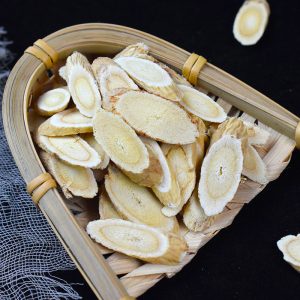
Astragalus Root Slices Huang Qi 500g Dried Herb for Soups and Teas
Price range: $7.36 through $22.11
Reviews
There are no reviews yet.