
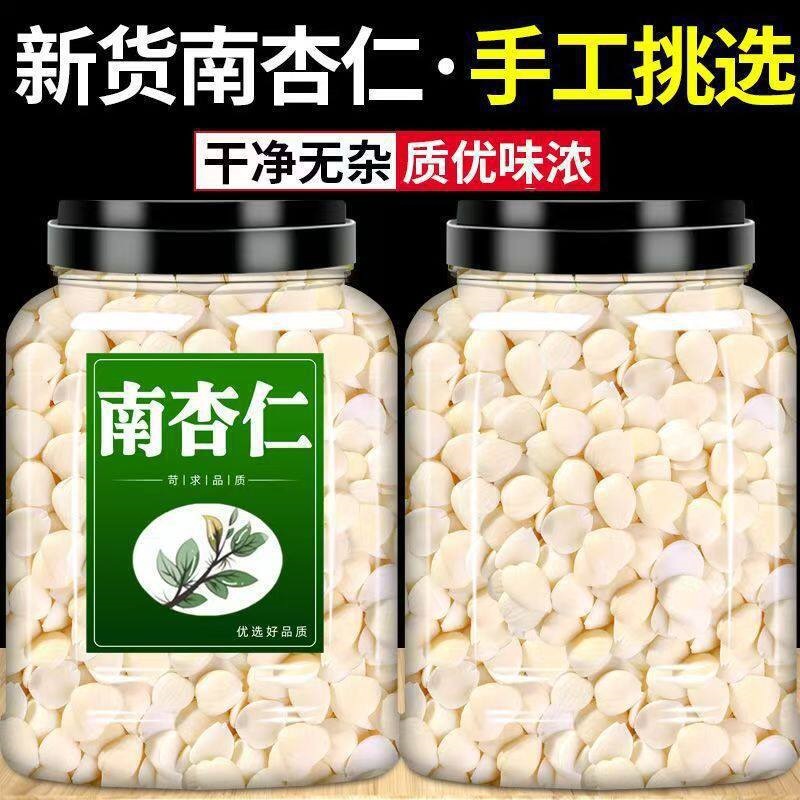
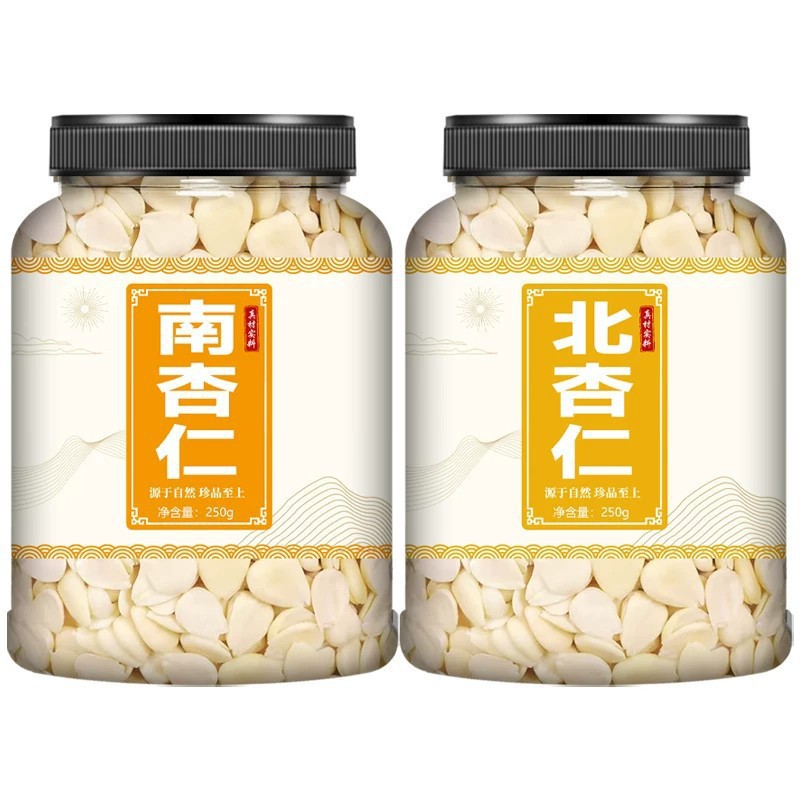
Peeled South Apricot Kernels Nan Xing Ren Sweet Almond Slices for Soy Milk and Soups 250g
Description
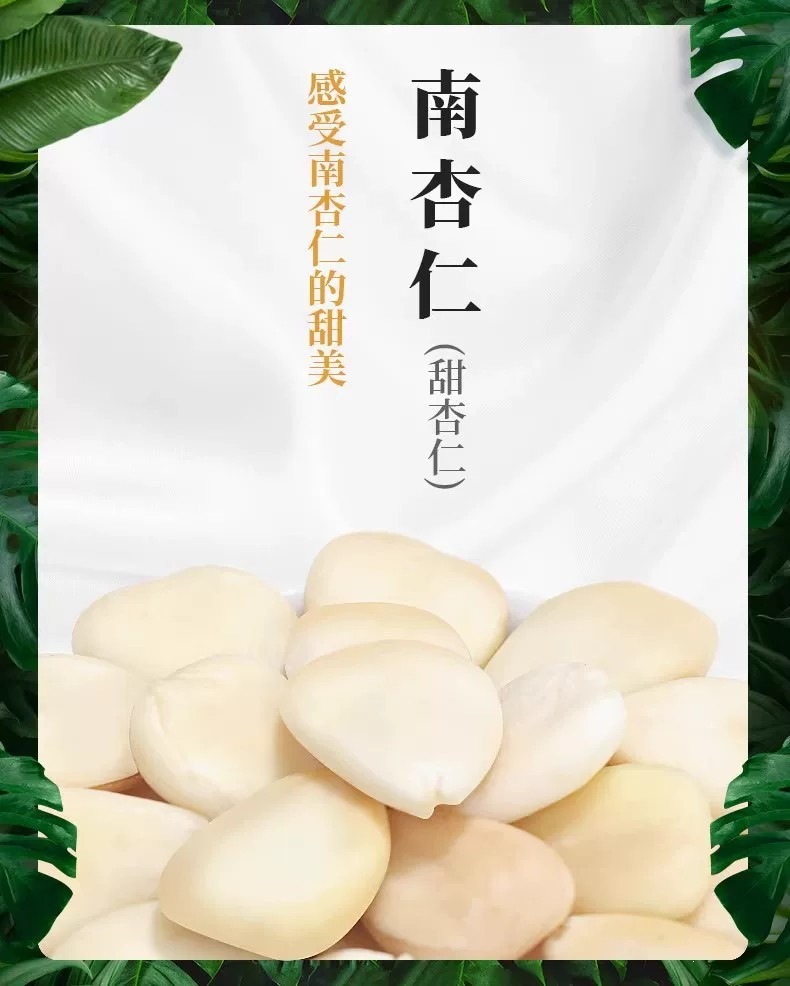
Peeled South Apricot Kernels, known in TCM as Nan Xing Ren (南杏仁), from Prunus armeniaca, are dried skinless seed slices. In TCM theory they are sweet, neutral, and enter the Lung and Large Intestine channels. Traditionally used to support moistening and gentle descending. Commonly soaked, blended into soy milk, or simmered in soups and congee.
Key Selling Points
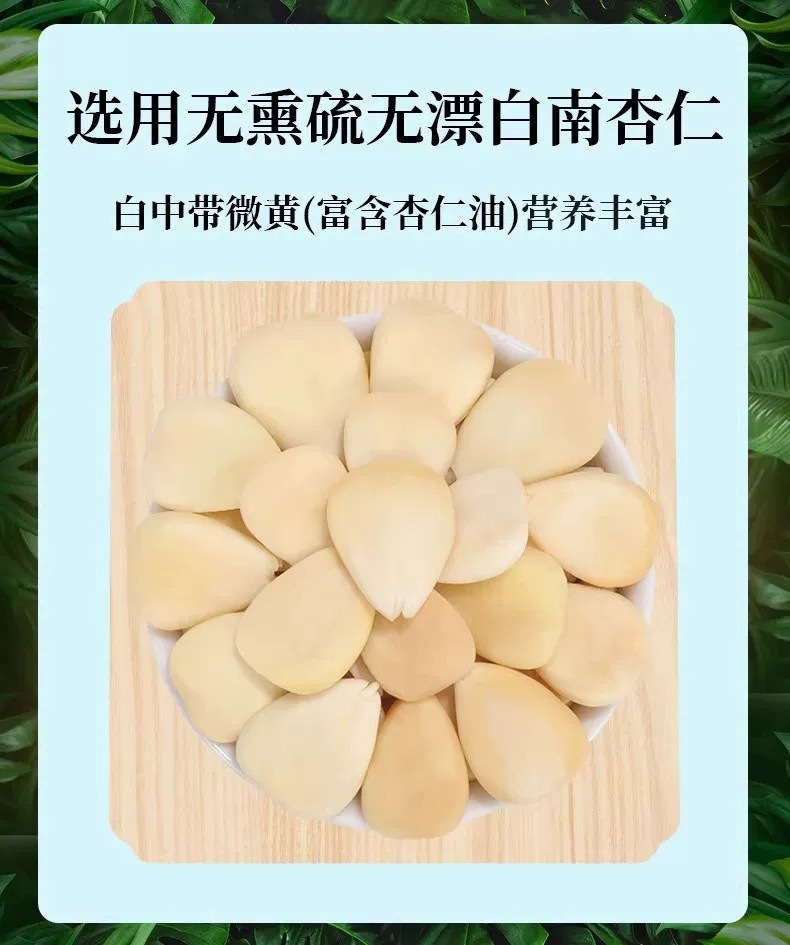
- Peeled and sliced South Apricot Kernels (Nan Xing Ren) with skins removed
- Botanical source Prunus armeniaca, dried seed kernels
- Sweet neutral nature in TCM theory, associated with Lung and Large Intestine channels
- Sun-dried processing for a clean mild flavor
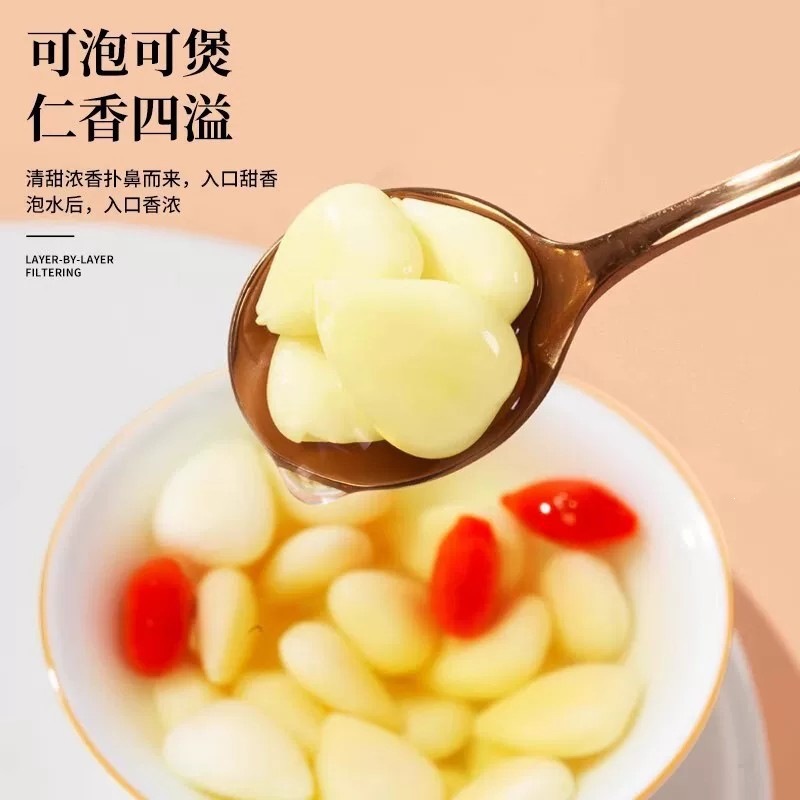
- Versatile for soy milk, soups, congee, and dessert decoctions
Quality & Sensory
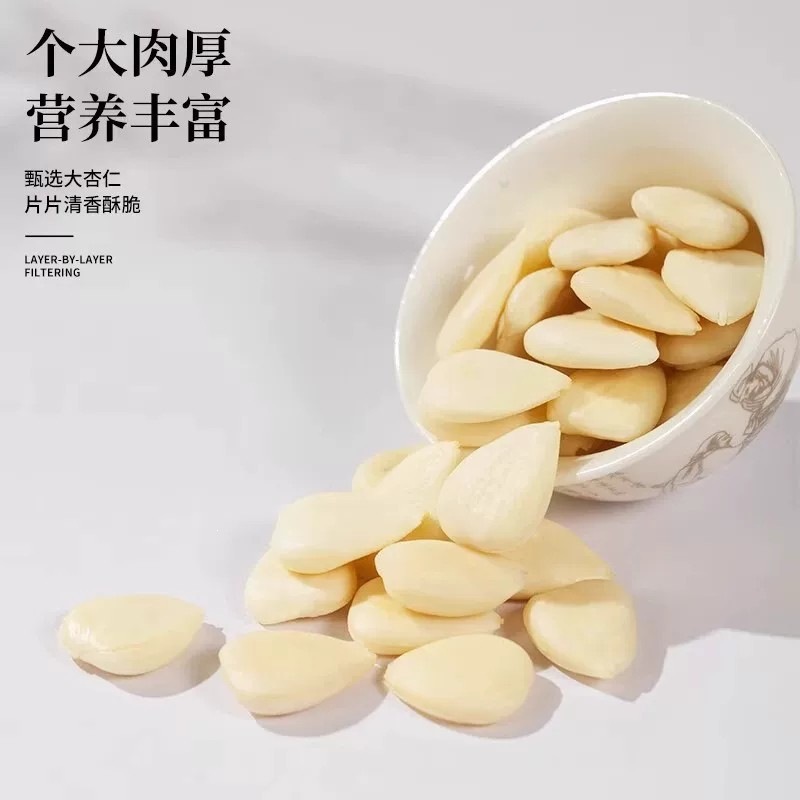
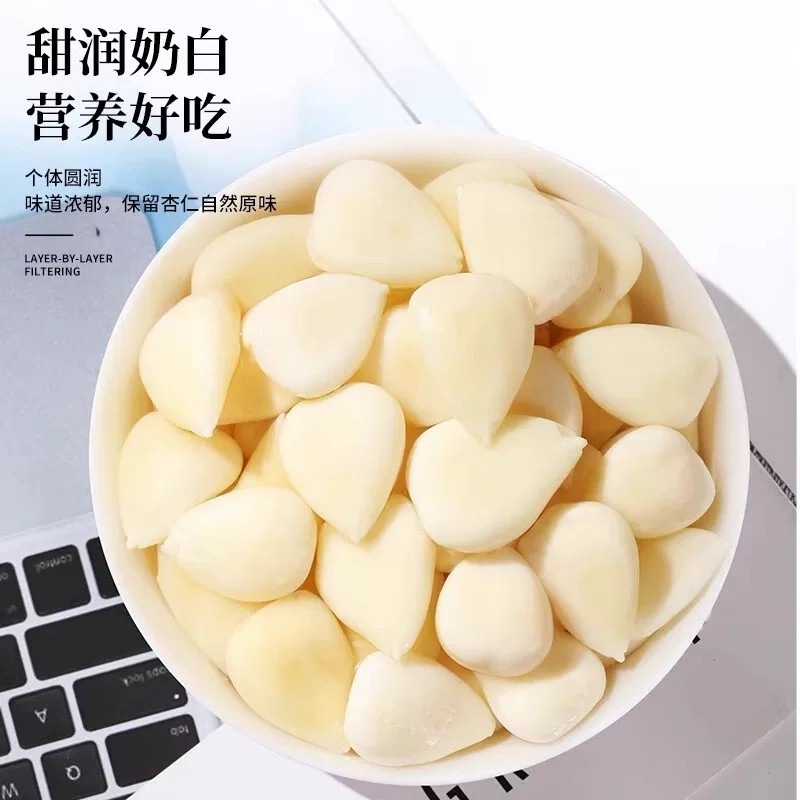
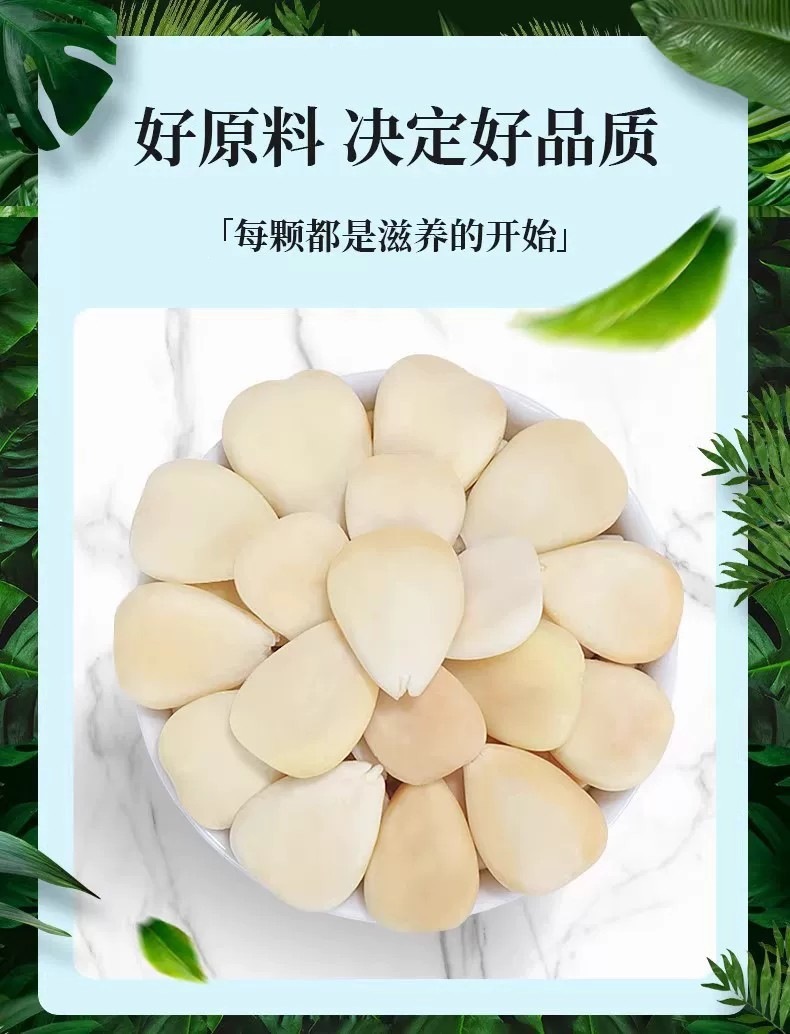
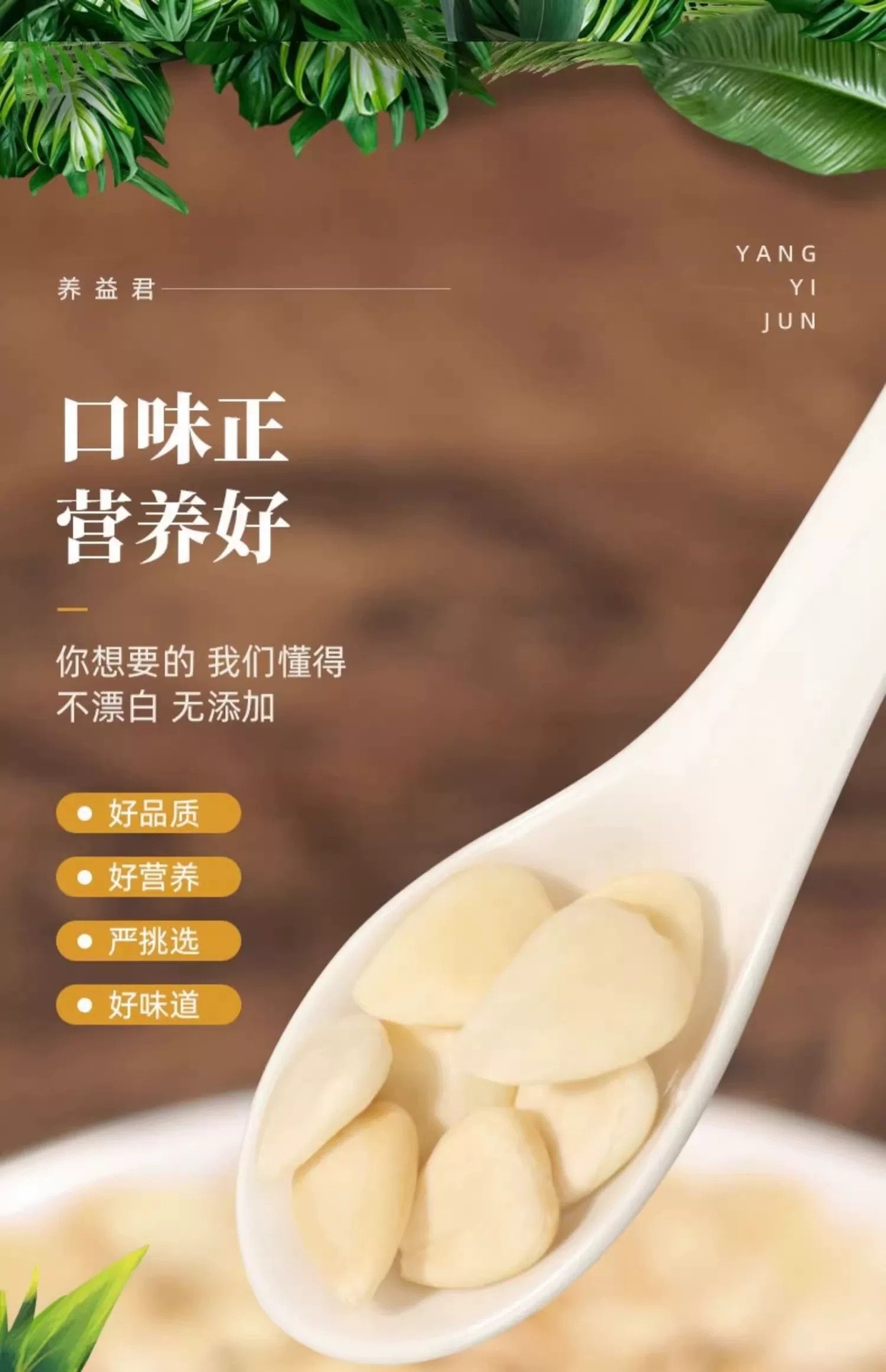
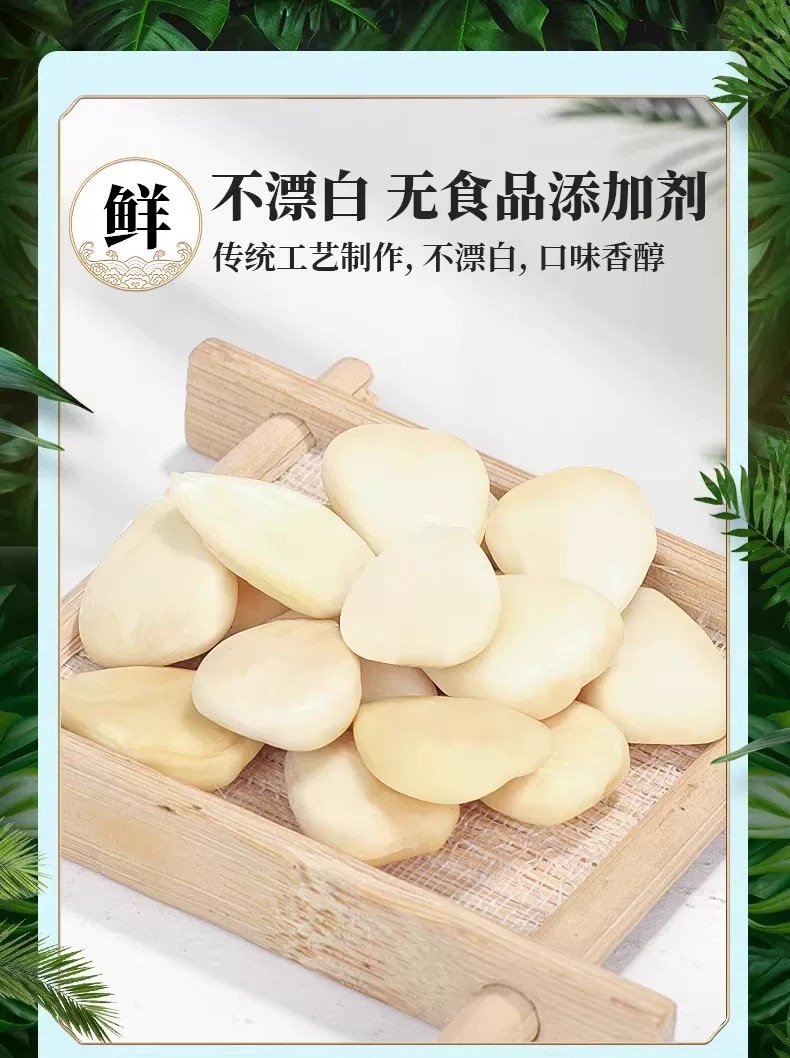
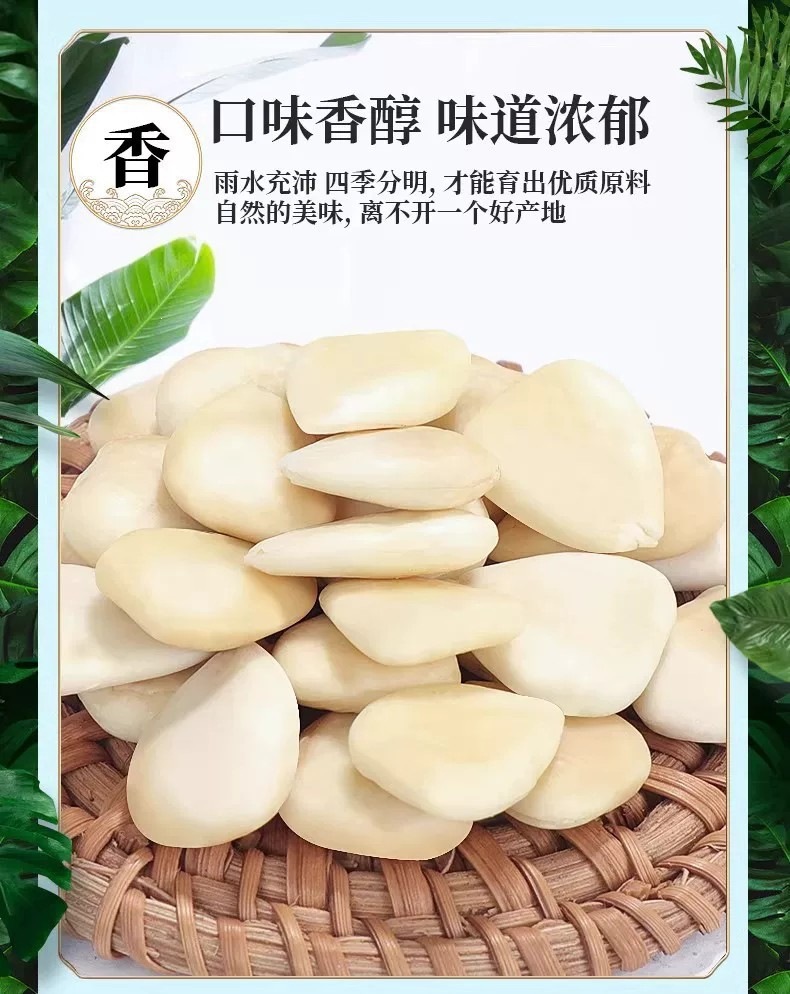
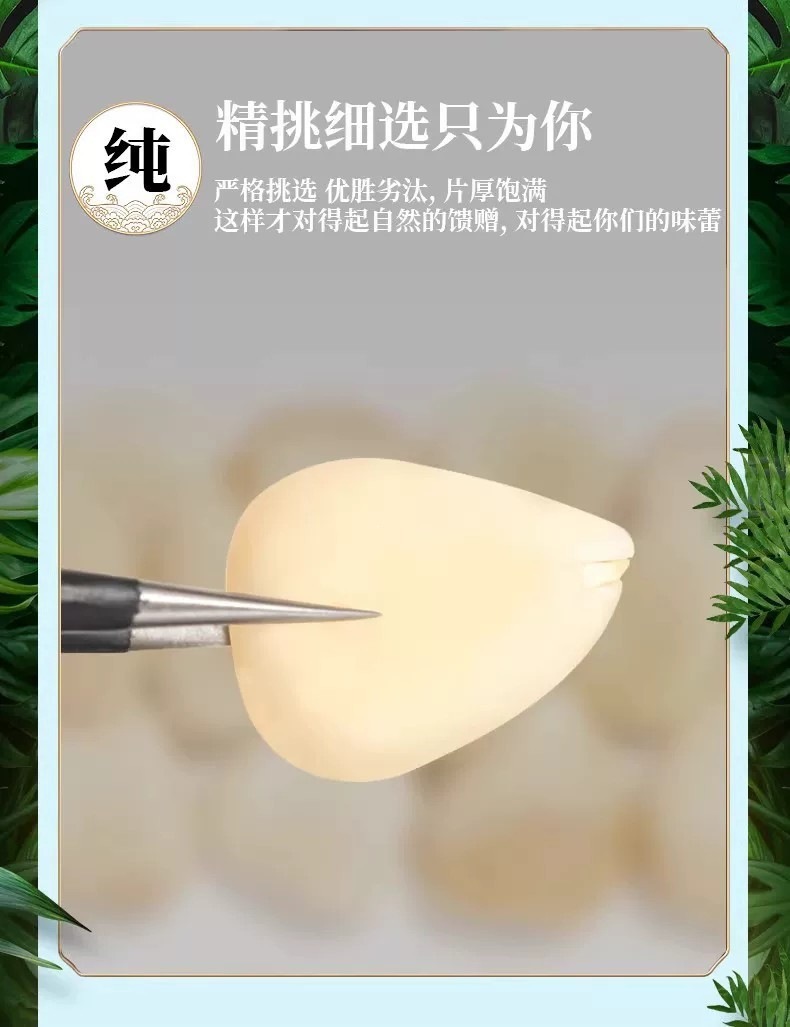
The slices are typically off-white to pale cream with a smooth, slightly crisp texture and a faint nutty aroma. After soaking or simmering they soften and taste mild, sweet, and creamy, blending well into soy milk and soups without bitterness.

Technical Specifications
| Product Type | Dried peeled apricot kernel slices |
|---|---|
| Chinese Name | 南杏仁 |
| Pinyin | Nan Xing Ren |
| Botanical Name | Prunus armeniaca |
| Plant Part | Seed kernel |
| Net Weight | 250g per can |
Usage Scenarios
- Blended into homemade soy milk or nut milk
- Simmered in sweet or savory soups
- Cooked into congee or rice porridge
- Used in traditional dessert decoctions
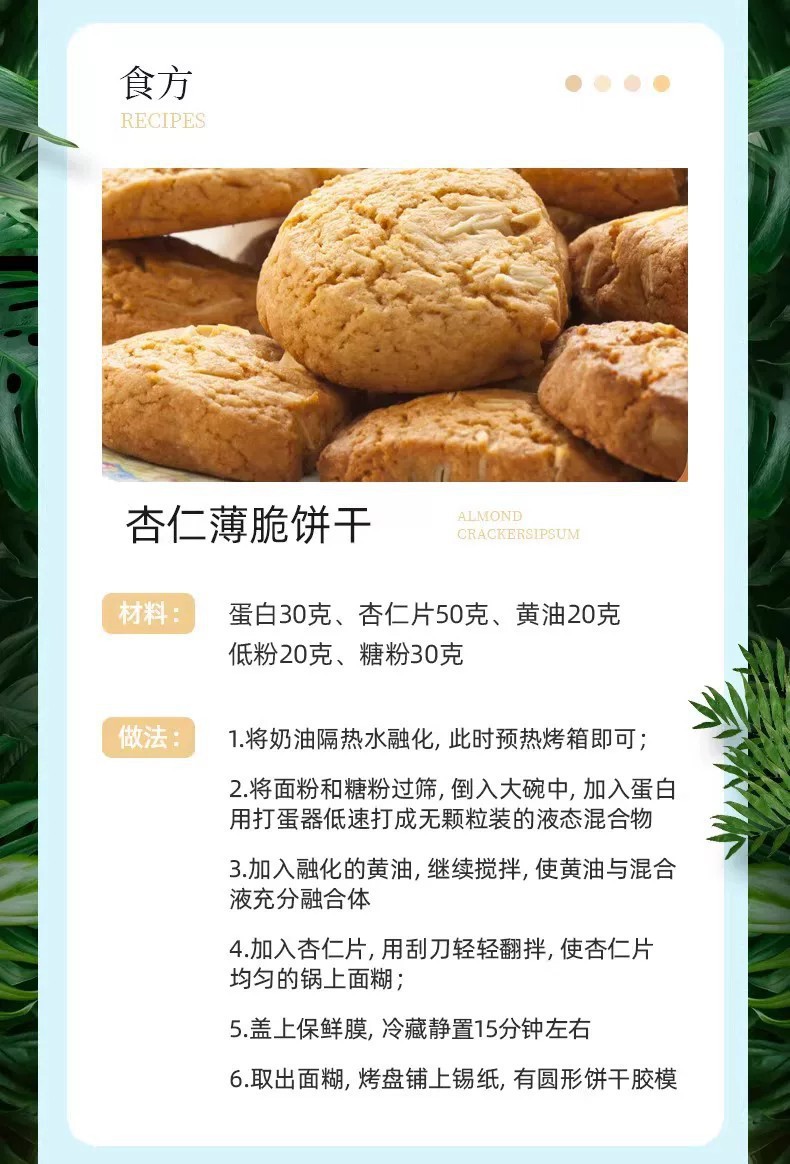
- Soaked and added to baked goods or pastes
Traditional Uses
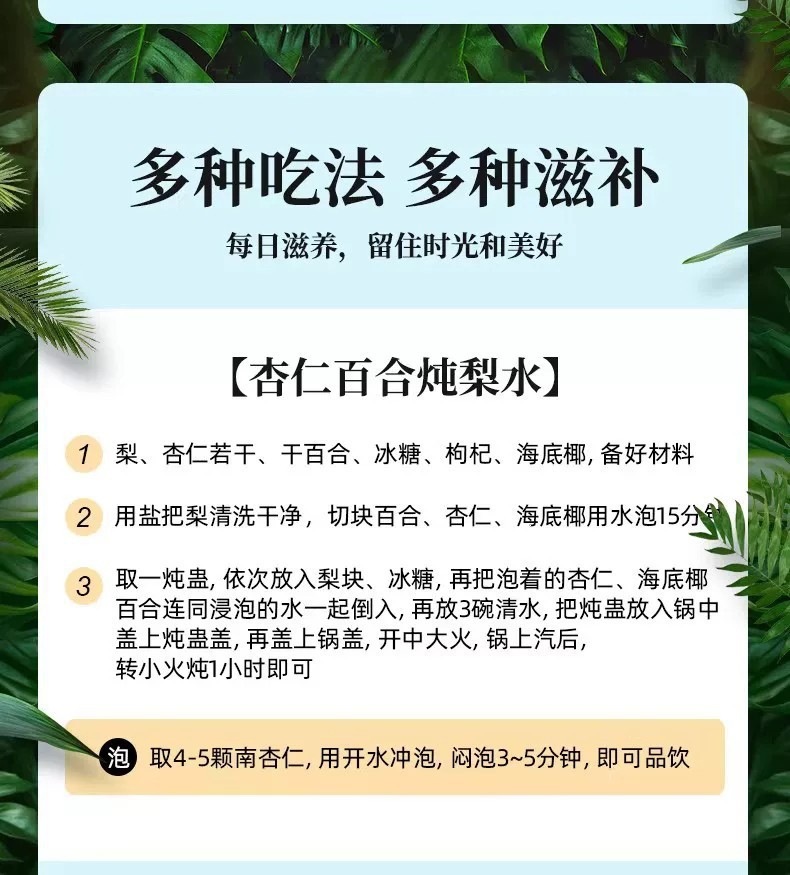
In TCM and folk practice, Nan Xing Ren is traditionally used in sweet soups, congee, and herbal decoctions, often paired with ingredients like lily bulb or snow pear. It is valued for its mild sweet nature and is commonly simmered or blended into everyday foods. It is not used as a stand-alone medicine.
FAQ Q&A
Q: What are these apricot kernels?
A: They are peeled and sliced South Apricot Kernels, known in TCM as Nan Xing Ren (南杏仁), from Prunus armeniaca.
Q: What is their traditional value?
A: In TCM theory they are considered sweet and neutral, associated with the Lung and Large Intestine channels, and traditionally used to support moistening.
Q: How are they commonly prepared?
A: They are typically soaked, then blended into soy milk or simmered in soups and congee. They can also be used in dessert decoctions.
Additional information
| Model | 1罐 去皮北杏仁 250g 1罐, 2罐 去皮南杏仁 去皮北杏仁500克 1组, 2罐 去皮北杏仁 250g 2罐, 3罐 去皮北杏仁 250g 3罐, 4罐 去皮北杏仁 250g 4罐, 1罐 去皮南杏仁 250g 1罐, 2罐 去皮南杏仁 250g 2罐 |
|---|
Related products
-

Dried Raspberry Fruit Fu Pen Zi Whole Berries for Herbal Tea and Wine Infusion 500g
Price range: $15.63 through $18.06 -
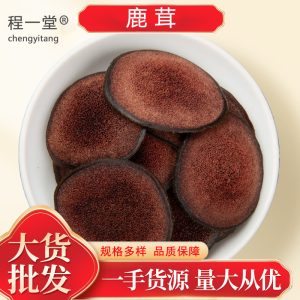
Deer Antler Slices Lu Rong 鹿茸片 Dried Slices for Wine Infusion and Soup 100g Wax Slices Pack
Price range: $68.29 through $92.59 -

Dried Raspberry Fruit Fu Pen Zi Whole Berries for Herbal Tea and Wine Infusion 500g
Price range: $15.63 through $18.06 -
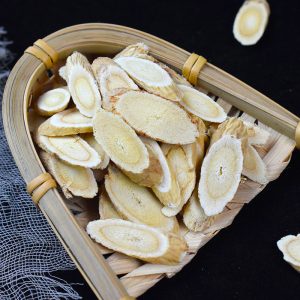
Astragalus Root Slices Huang Qi 500g Dried Herb for Soups and Teas
Price range: $7.36 through $22.11
Reviews
There are no reviews yet.