
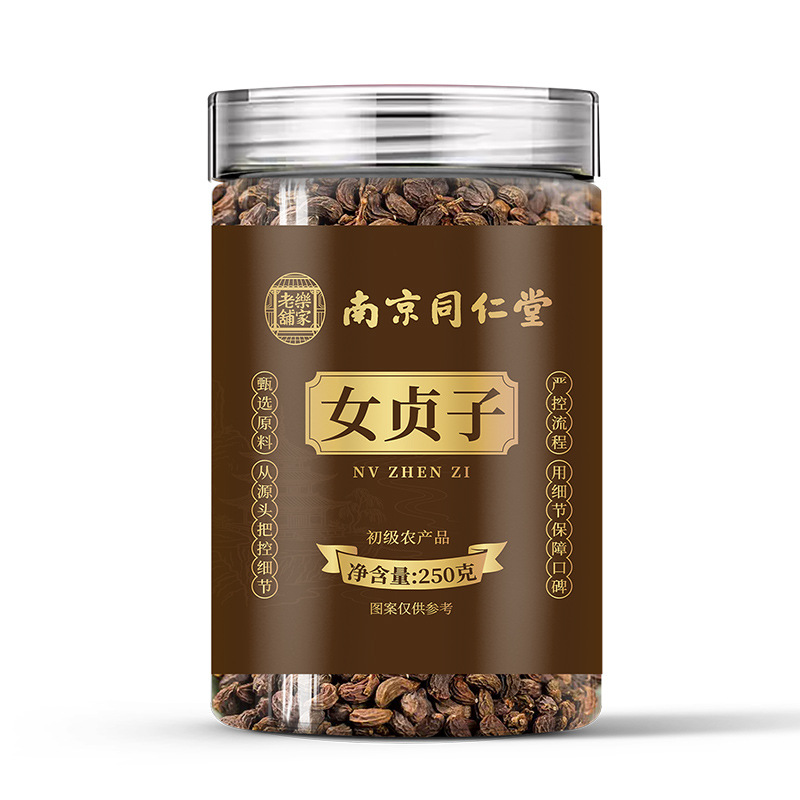
Dried Privet Fruit Nu Zhen Zi 250g Traditional Chinese Herbal Tea Ingredient
$5.81
9999 in stock
Description
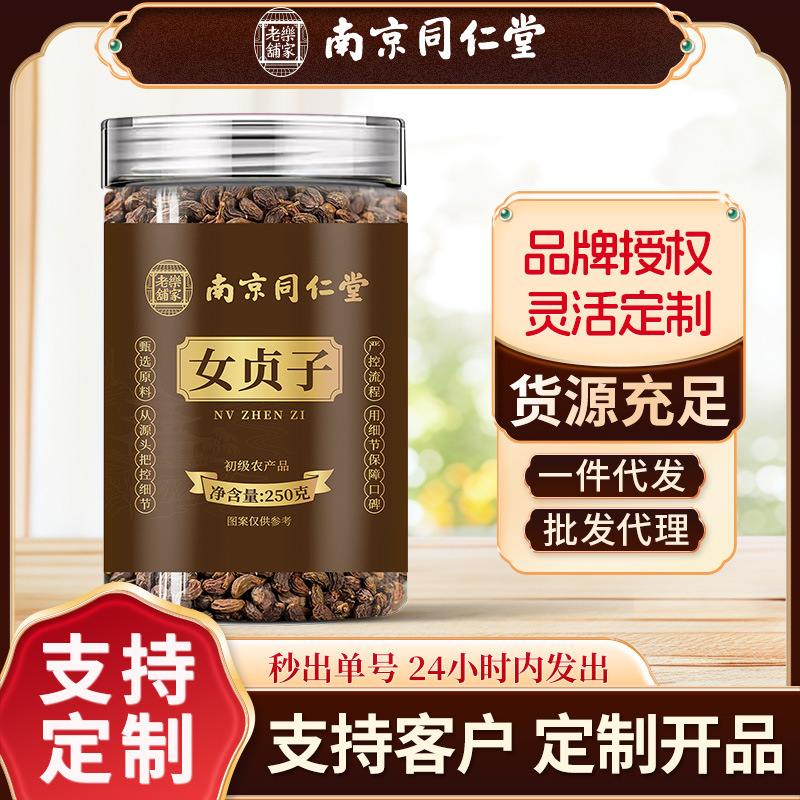
Dried Privet Fruit, known in TCM as Nu Zhen Zi (女贞子), from Ligustrum lucidum. This 250g jar contains sun-dried ripe fruit, a classic Chinese herbal ingredient traditionally used in decoctions and teas. In TCM theory it is considered sweet, slightly bitter, and cool, entering the Liver and Kidney channels. Traditionally associated with nourishing yin and supporting healthy aging. Commonly simmered or steeped as a daily herbal tea.
Key Selling Points
- Identified as Nu Zhen Zi (女贞子), the dried ripe fruit of Ligustrum lucidum
- Sun-dried processing preserves natural color and aroma
- Traditional TCM herb entering Liver and Kidney channels
- Versatile form for teas, decoctions, soups, and congee
- Sealed 250g jar for convenient storage
Quality & Sensory
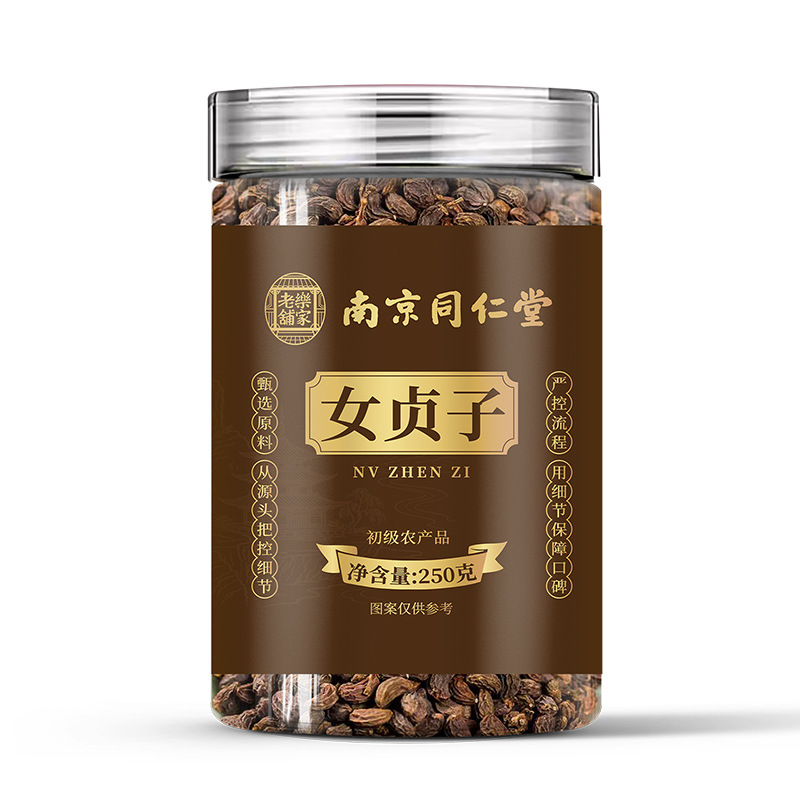
The dried fruits are typically small, oval, and dark purplish-black with a wrinkled surface. They have a mild, slightly sweet and bitter herbal aroma. When simmered or steeped, the liquid is typically light amber to brown with a gentle, subtly sweet and bitter taste.
Technical Specifications
| Product Type | Dried herbal fruit |
|---|---|
| Chinese Name | 女贞子 |
| Pinyin | Nu Zhen Zi |
| Botanical Name | Ligustrum lucidum |
| Plant Part | Ripe fruit |
| Net Weight | 250g |
Usage Scenarios
- Simmered as a single-herb decoction or tea
- Combined with other herbs in traditional soup recipes
- Added to congee for a nourishing breakfast
- Steeped in hot water for daily herbal tea
Traditional Uses
In TCM practice, Nu Zhen Zi is traditionally used in decoctions, often paired with herbs such as He Shou Wu or Han Lian Cao in classic yin-nourishing formulas. It is also simmered in soups and congee for seasonal nourishment. Folk use includes steeping the dried fruit alone as a mild daily tea.
FAQ Q&A
Q: What is this product?
A: It is dried ripe fruit of Ligustrum lucidum, known in TCM as Nu Zhen Zi (女贞子), supplied in a 250g jar.
Q: What is its traditional value?
A: In TCM theory it is considered sweet, slightly bitter, and cool, entering the Liver and Kidney channels, and is traditionally associated with nourishing yin.
Q: How is it commonly prepared?
A: It is typically simmered or steeped as a tea, or added to soups and congee. Follow traditional recipes or consult a qualified practitioner.
Additional information
| Weight | 0.68 kg |
|---|---|
| Dimensions | 15 × 15 × 15 cm |
Related products
-
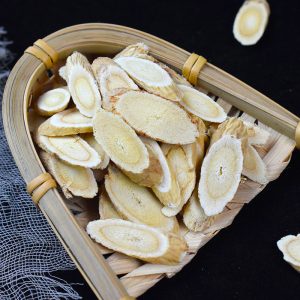
Astragalus Root Slices Huang Qi 500g Dried Herb for Soups and Teas
Price range: $7.36 through $22.11 -

Cabinda Bark Dried Herb 500g Traditional Herbal Infusion Ingredient
Price range: $12.38 through $37.50 -
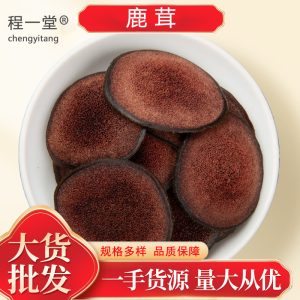
Deer Antler Slices Lu Rong 鹿茸片 Dried Slices for Wine Infusion and Soup 100g Wax Slices Pack
Price range: $68.29 through $92.59 -

Dried Huang Jing Slices Polygonatum Rhizome Chicken Head Huang Jing 500g Bulk Herbal Tea and Soup Ingredient
Price range: $9.14 through $18.87
Reviews
There are no reviews yet.