
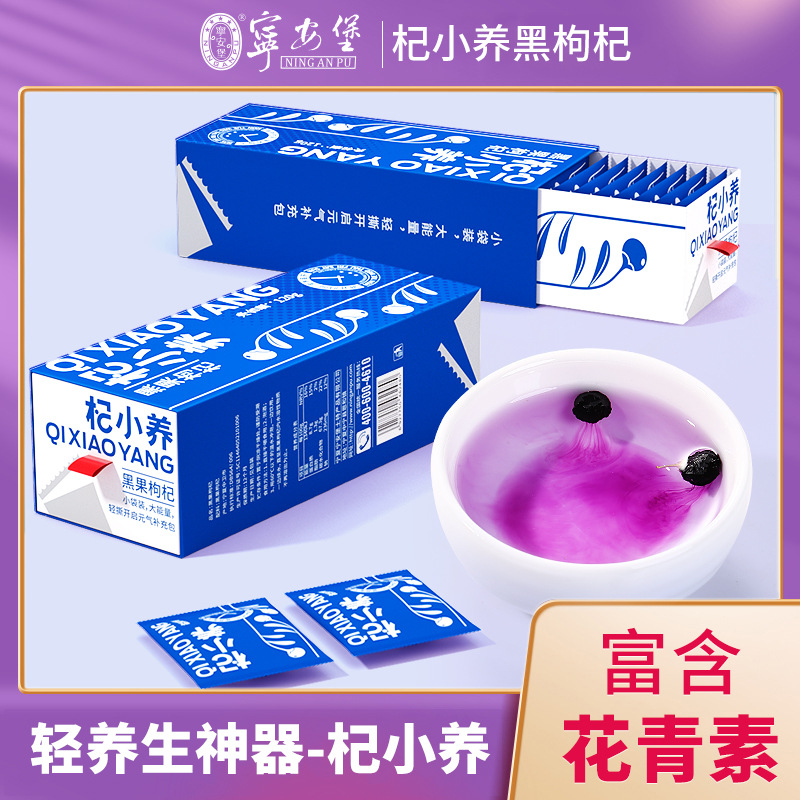
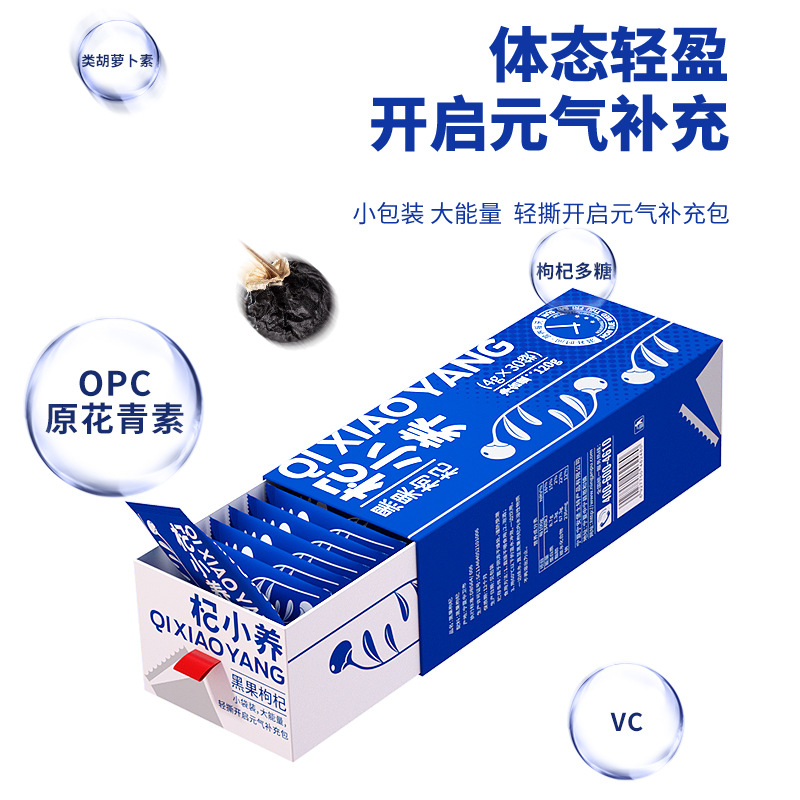
Black Goji Berry 120g Individually Packed Sachets Hei Gou Qi Zi Dried Fruit
$9.42
4502 in stock
Description
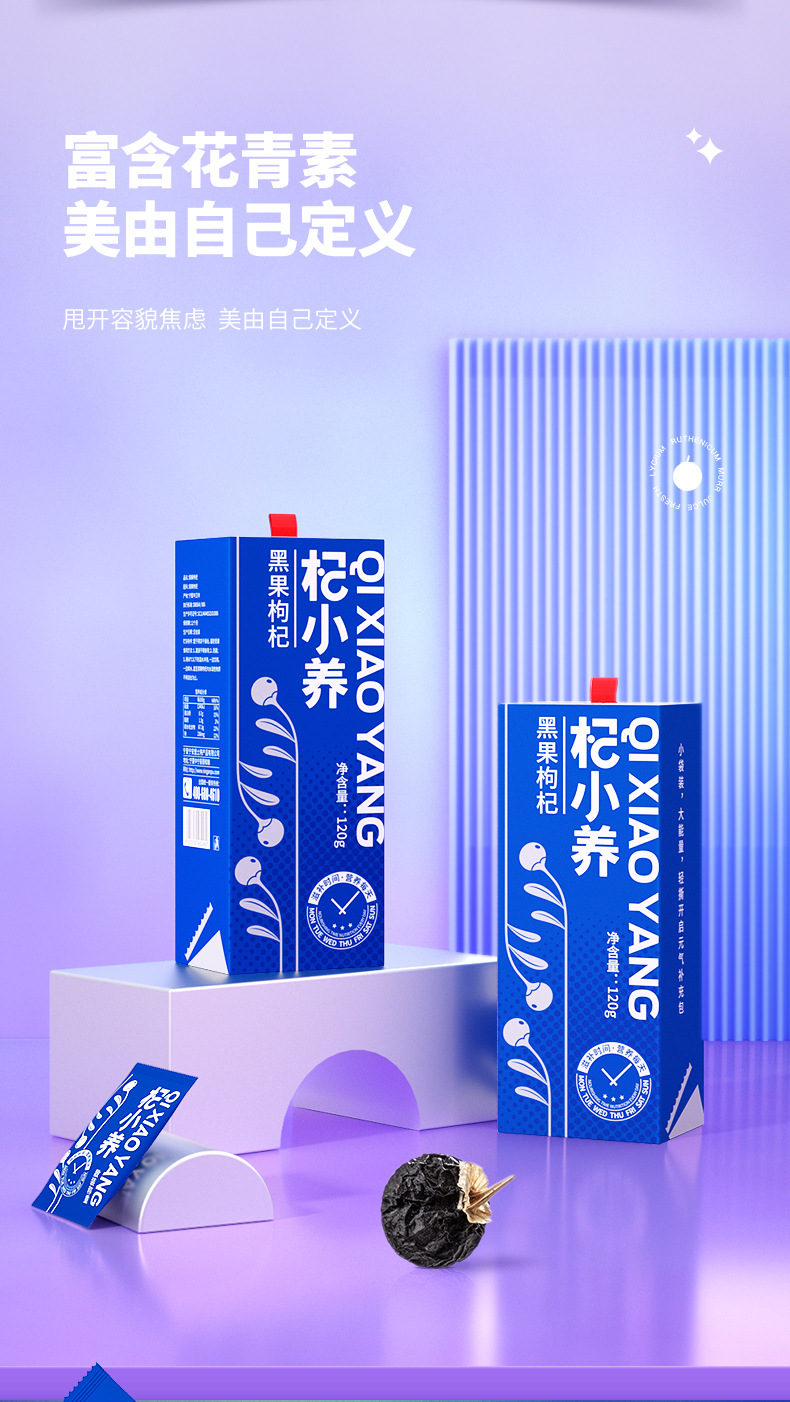
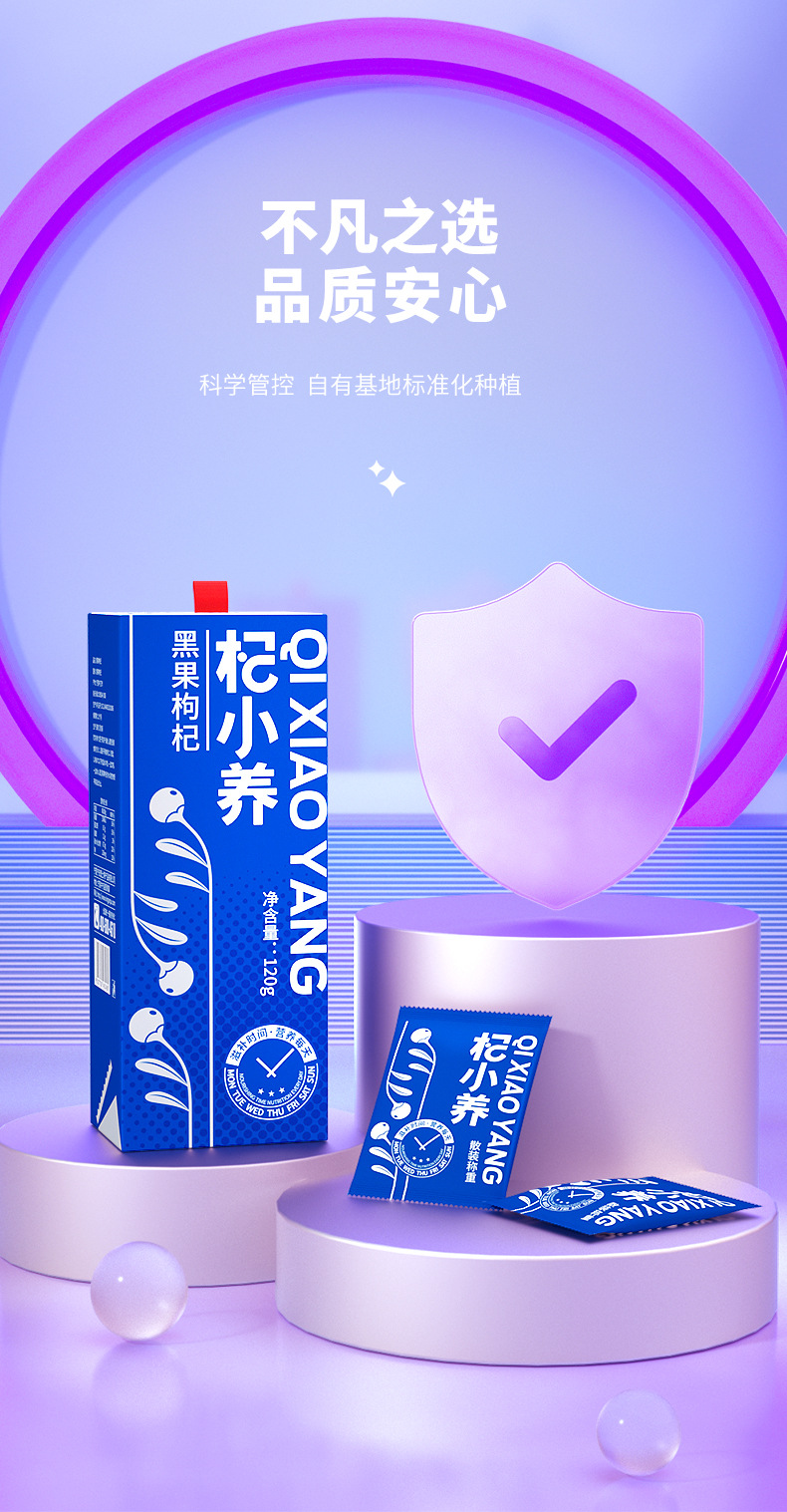
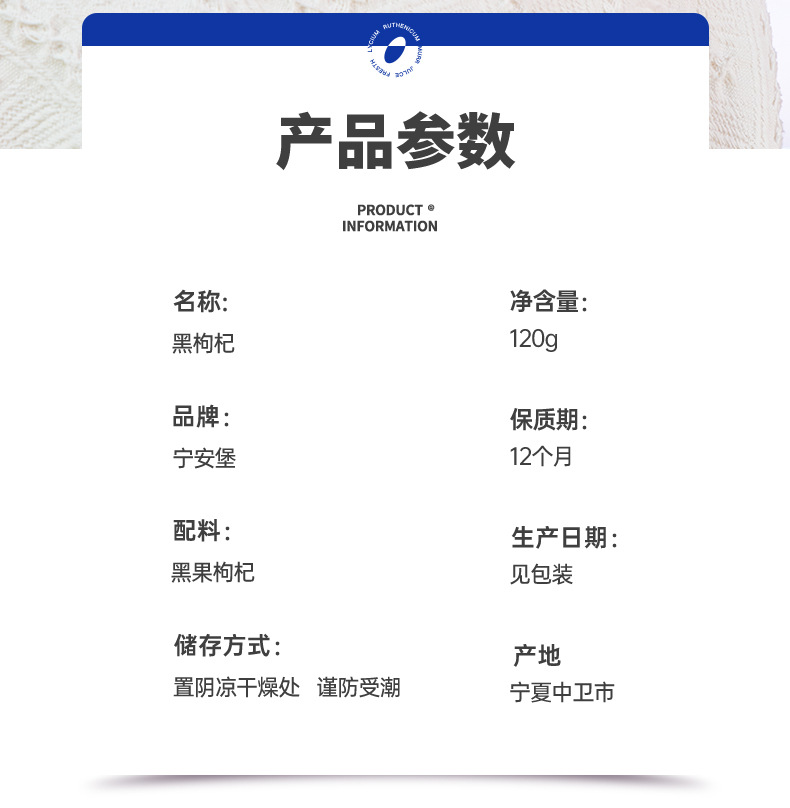
Black Goji Berry, known in TCM as Hei Gou Qi Zi (黑果枸杞), from Lycium ruthenicum Murr. Dried ripe fruit in 120g box with individual sachets. In TCM theory it is sweet and neutral, entering liver and kidney channels. Traditionally used to nourish kidney essence and support liver and kidney function. Convenient for daily tea, soup, or congee. Store in a cool dry place.
Key Selling Points
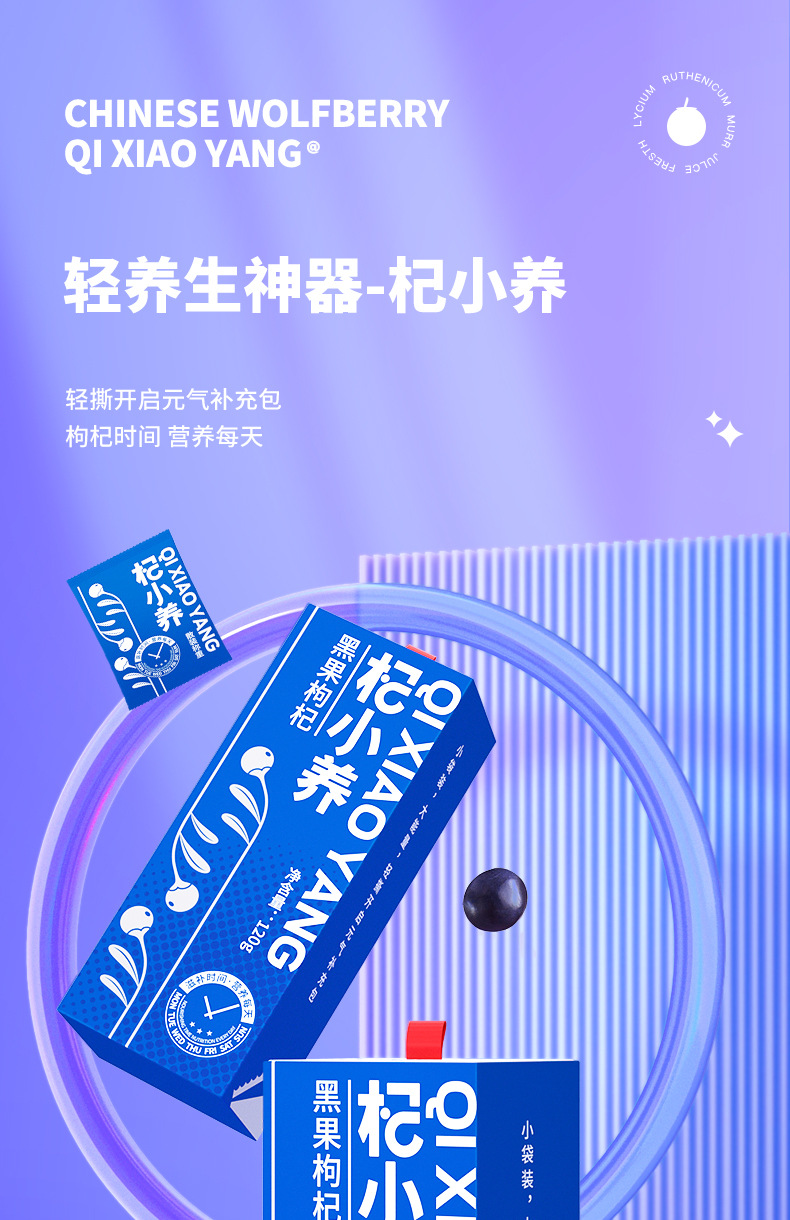
- Identified as Hei Gou Qi Zi (黑果枸杞), the dried fruit of Lycium ruthenicum
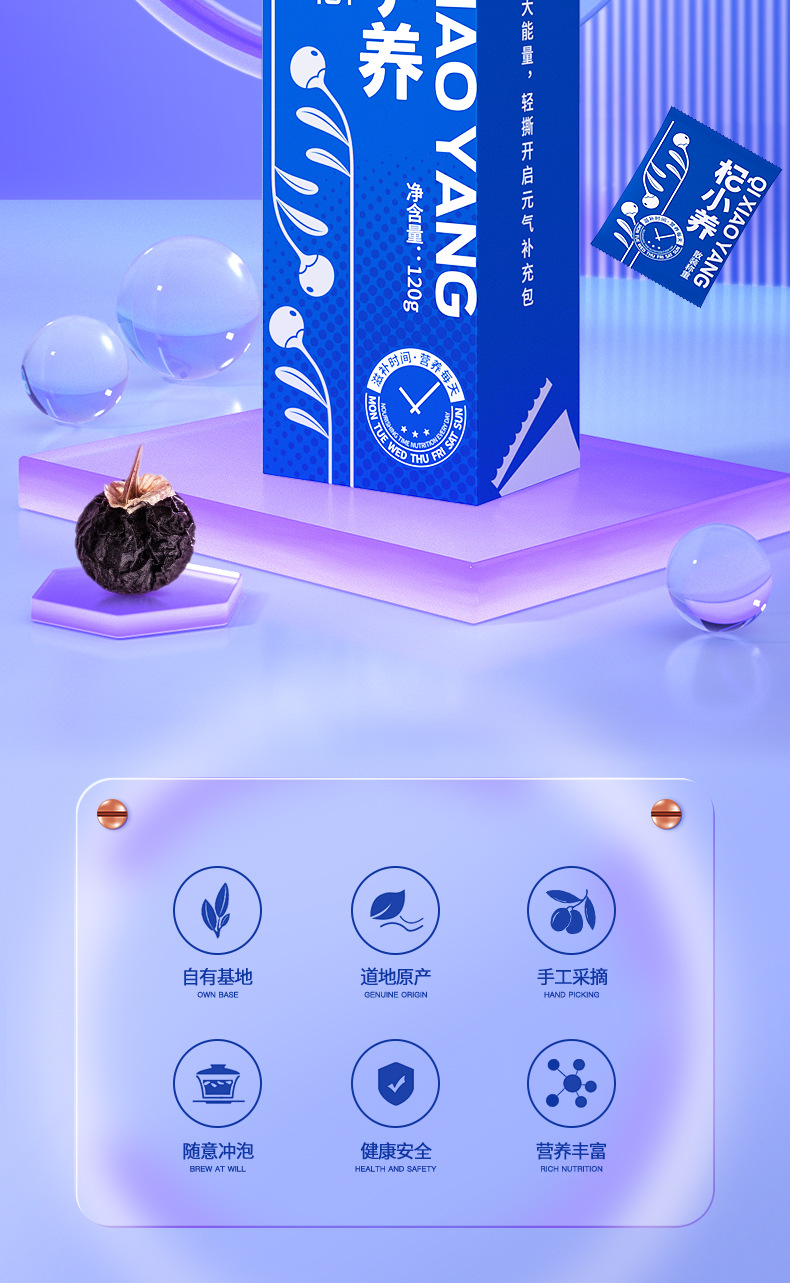
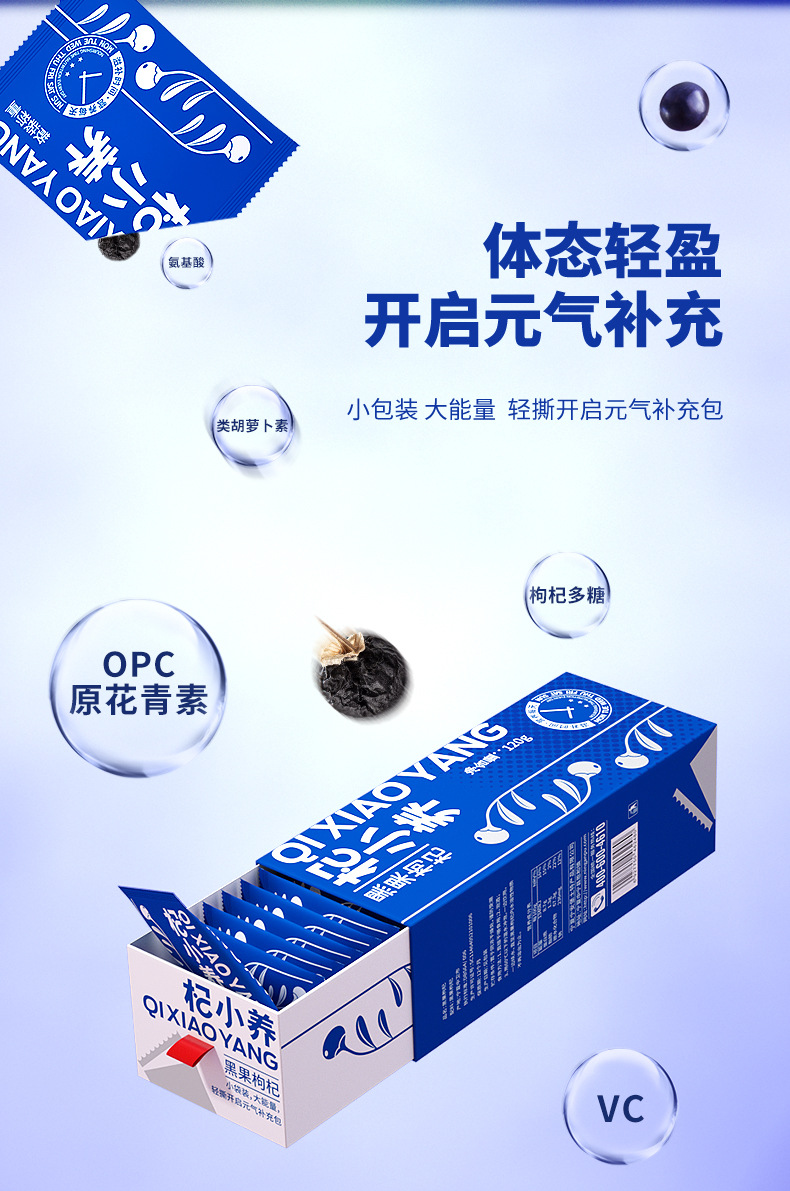
- 120g box contains individually wrapped sachets for easy daily use
- Sweet neutral TCM nature entering liver and kidney channels
- Traditionally used to nourish kidney essence and support liver and kidney function
- Convenient for tea, soup, congee, or direct chewing
Quality & Sensory
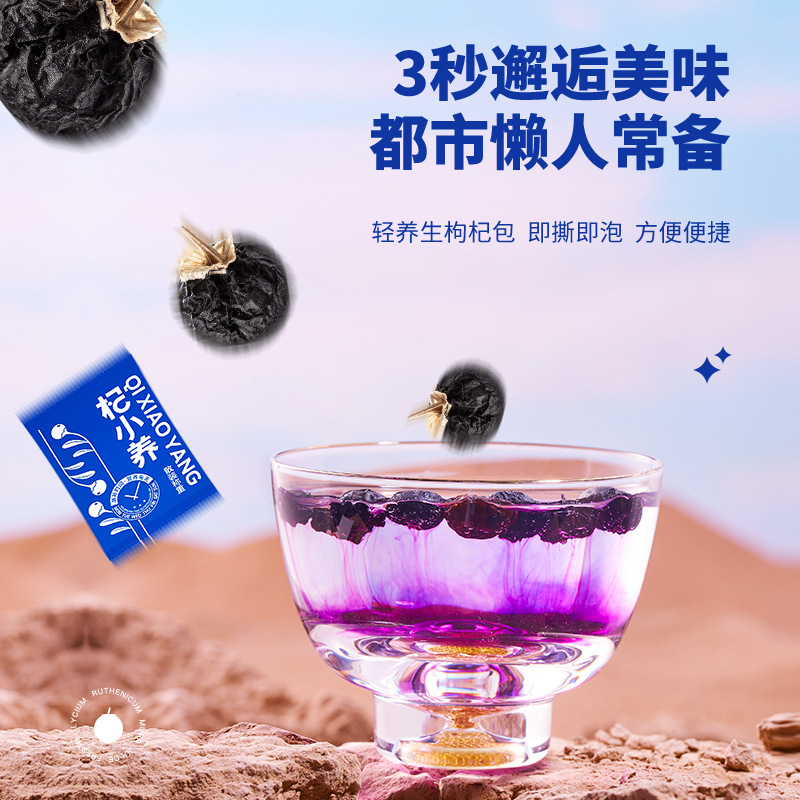
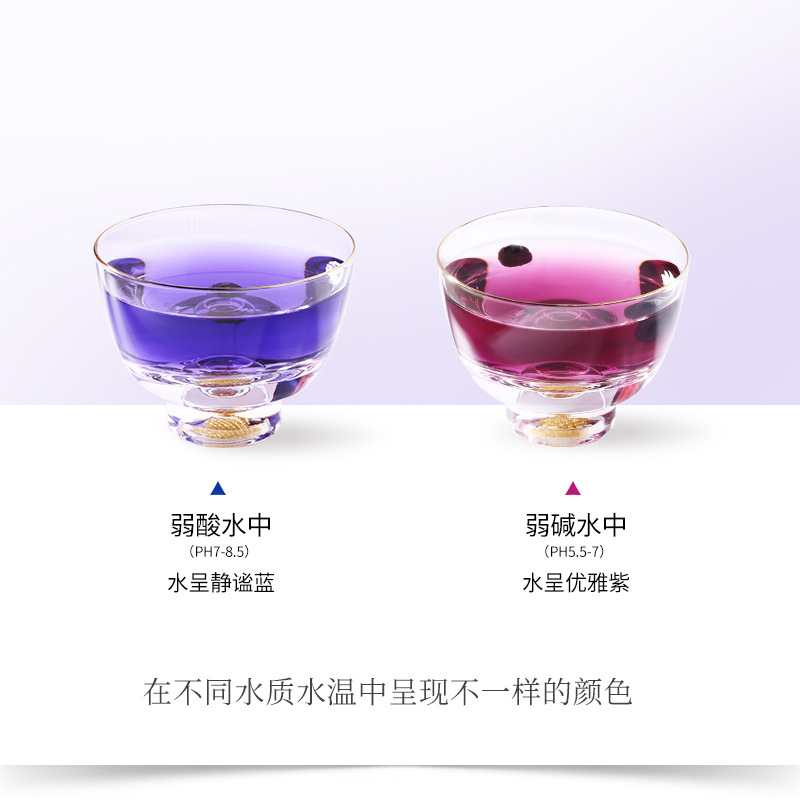
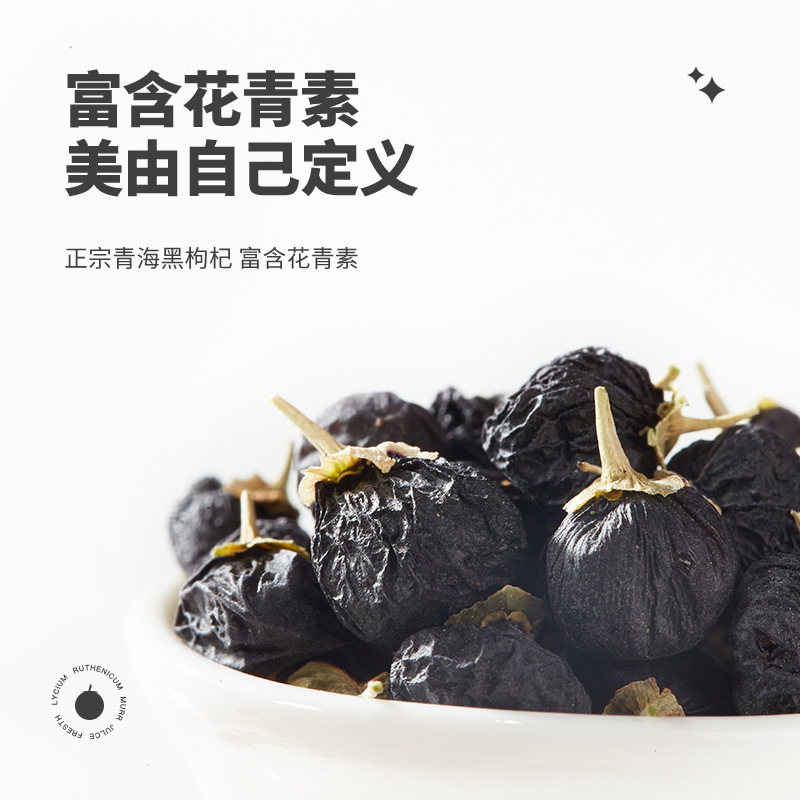
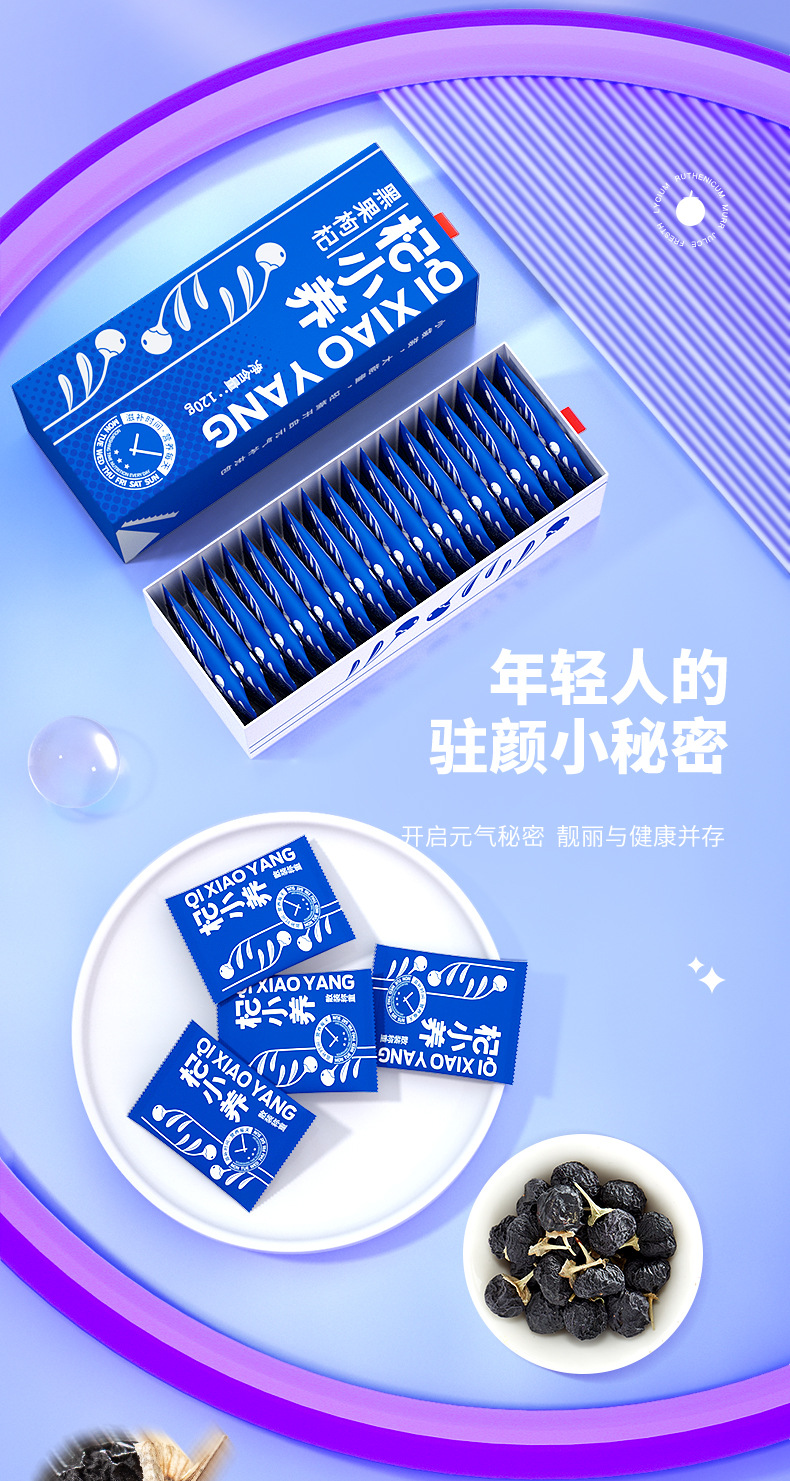
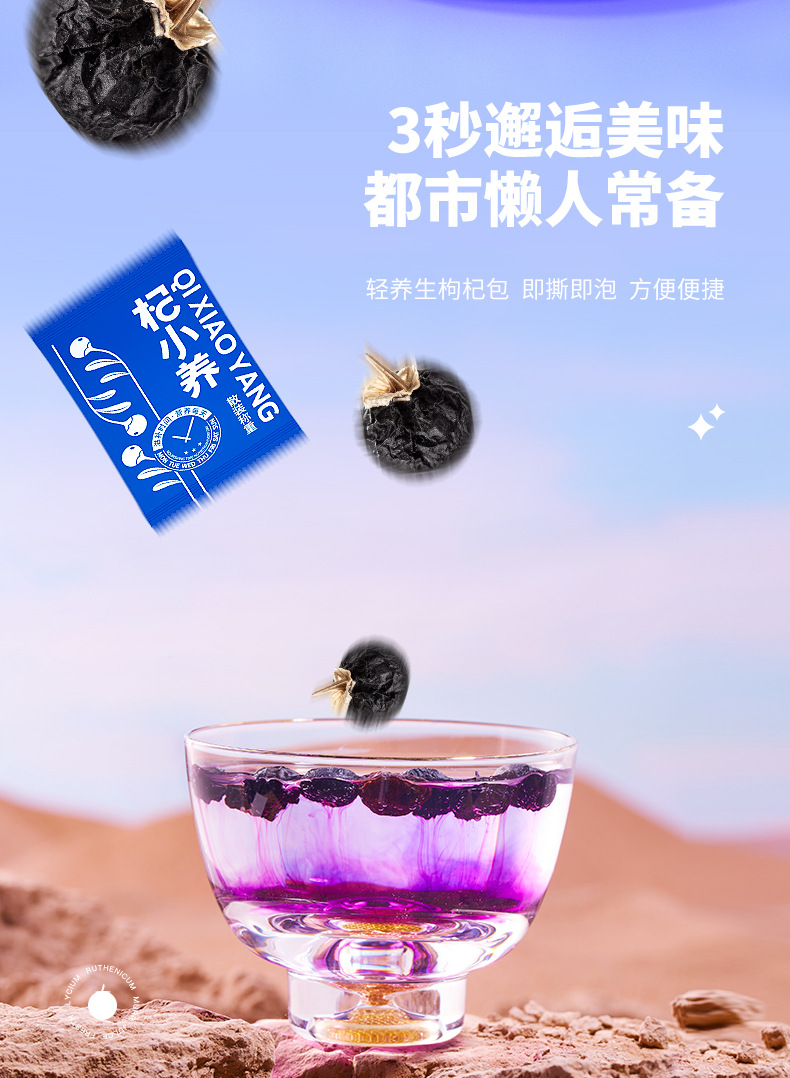
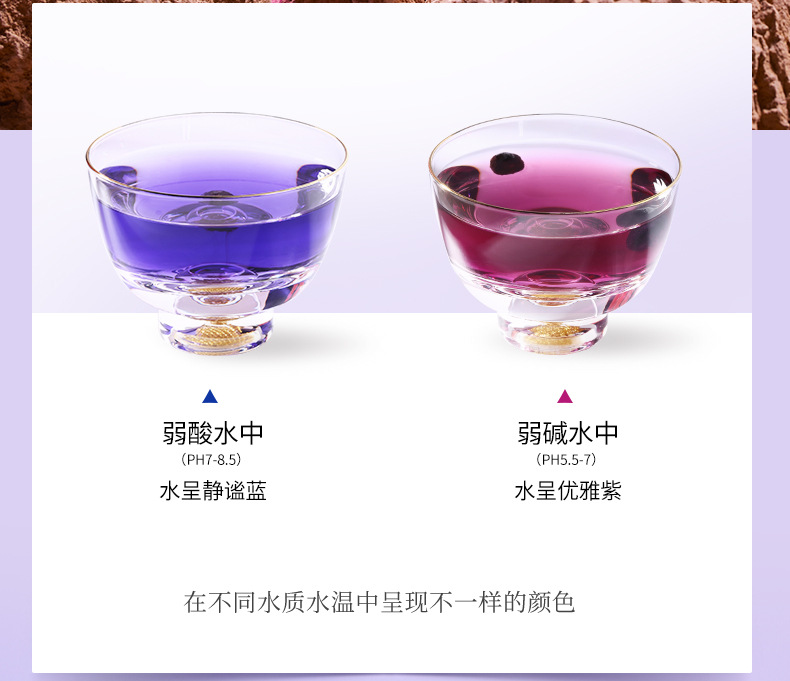
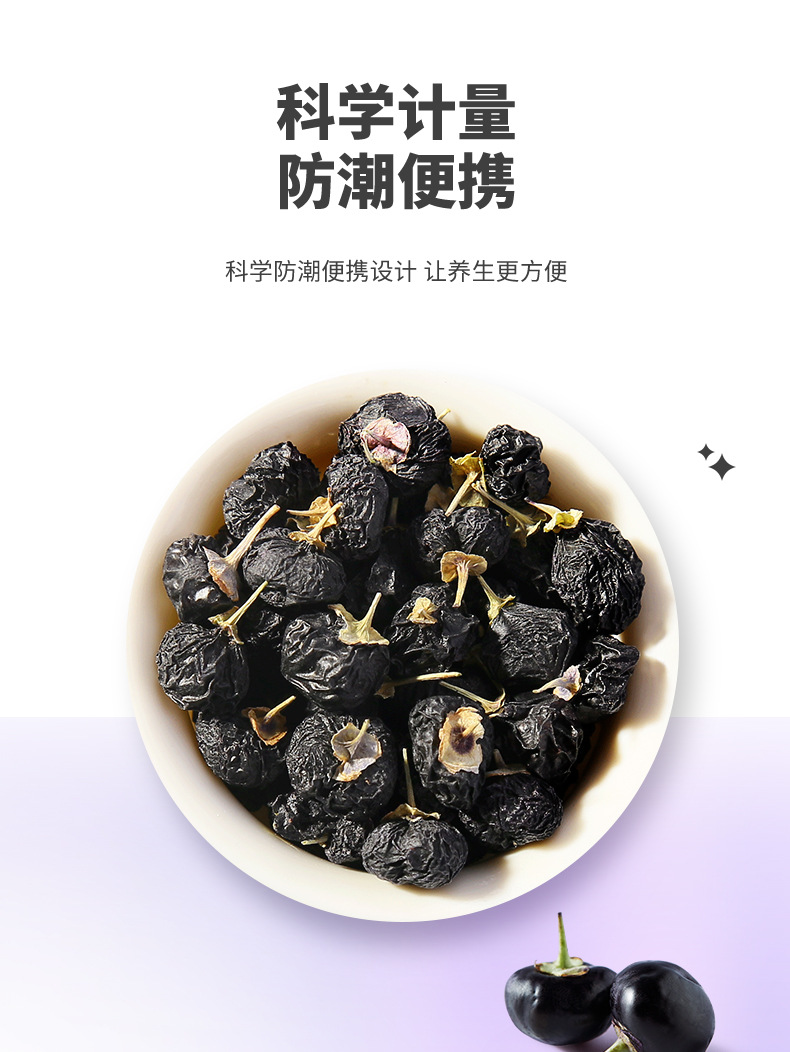
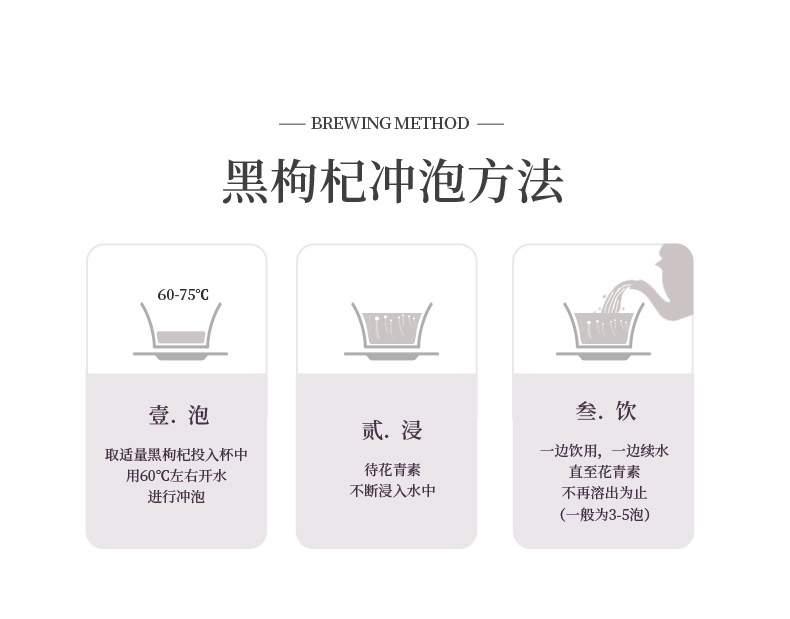
The dried berries are typically deep black to purple-black with a slightly wrinkled surface and firm, chewy texture. They have a mild, faintly sweet aroma. When brewed, the liquid turns deep blue-purple and tastes mildly sweet with subtle tartness. Color and taste may vary slightly by batch.
Technical Specifications
| Product Type | Dried fruit |
|---|---|
| Chinese Name | 黑果枸杞 |
| Pinyin | Hei Gou Qi Zi |
| Botanical Name | Lycium ruthenicum |
| Plant Part | Ripe fruit |
| Net Weight | 120g |
Usage Scenarios
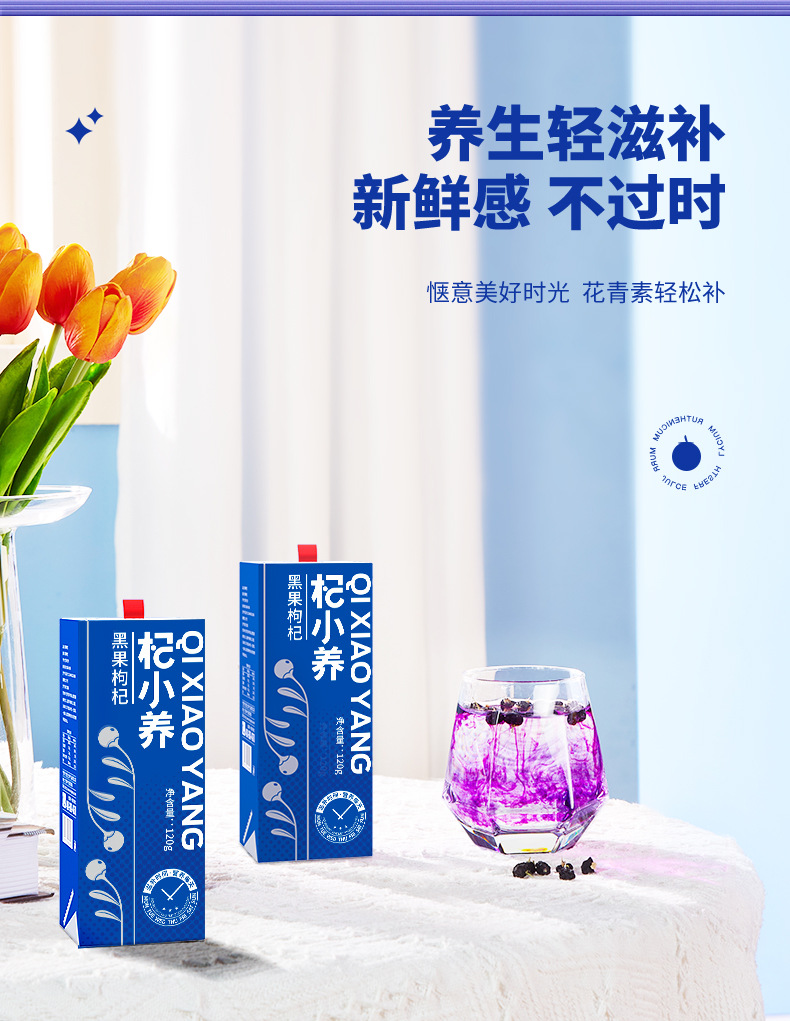
- Brewed as a daily herbal tea
- Added to soups or broths
- Cooked into congee
- Eaten directly as a snack
- Combined with other herbs in decoctions
Traditional Uses
In TCM theory, Hei Gou Qi Zi is traditionally used to nourish kidney essence and support liver and kidney function. It is often brewed alone as a daily tea or combined with chrysanthemum, goji berry, or jujube. It can also be added to soups, congee, or herbal decoctions. Traditional texts associate it with supporting vitality and healthy aging.
FAQ Q&A
Q: What is Black Goji Berry?
A: It is the dried ripe fruit of Lycium ruthenicum, known in TCM as Hei Gou Qi Zi (黑果枸杞).
Q: What is its traditional value?
A: In TCM theory it is sweet and neutral, entering liver and kidney channels, and is traditionally used to nourish kidney essence and support liver and kidney function.
Q: How is it commonly prepared?
A: It is commonly brewed as a tea, added to soups or congee, or eaten directly. It can also be combined with other herbs in decoctions.
Additional information
| Weight | 0.6 kg |
|---|---|
| Dimensions | 20 × 15 × 10 cm |
Related products
-
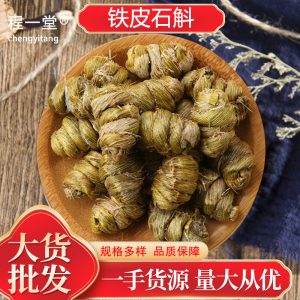
Tie Pi Shi Hu Dried Dendrobium Stems 500g Huoshan Fengdou for Soup and Tea
Price range: $35.88 through $108.80 -
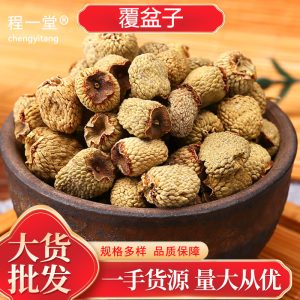
Dried Raspberry Fruit Fu Pen Zi Whole Berries for Herbal Tea and Wine Infusion 500g
Price range: $15.63 through $18.06 -
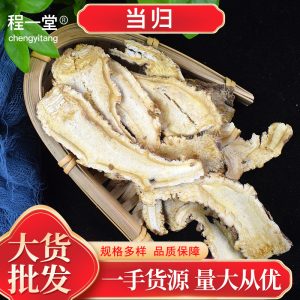
Dried Angelica Sinensis Slices Dang Gui 当归 500g Gansu Raw Herb for Decoction Soup and Tea
Price range: $16.44 through $35.88 -
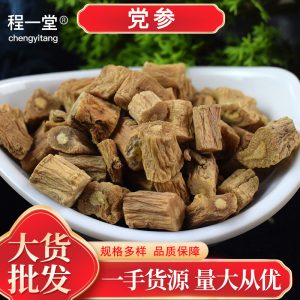
Dried Codonopsis Root Slices Dang Shen 500g Bulk Supply for Soups and Herbal Decoctions
Price range: $10.28 through $18.06
Reviews
There are no reviews yet.