
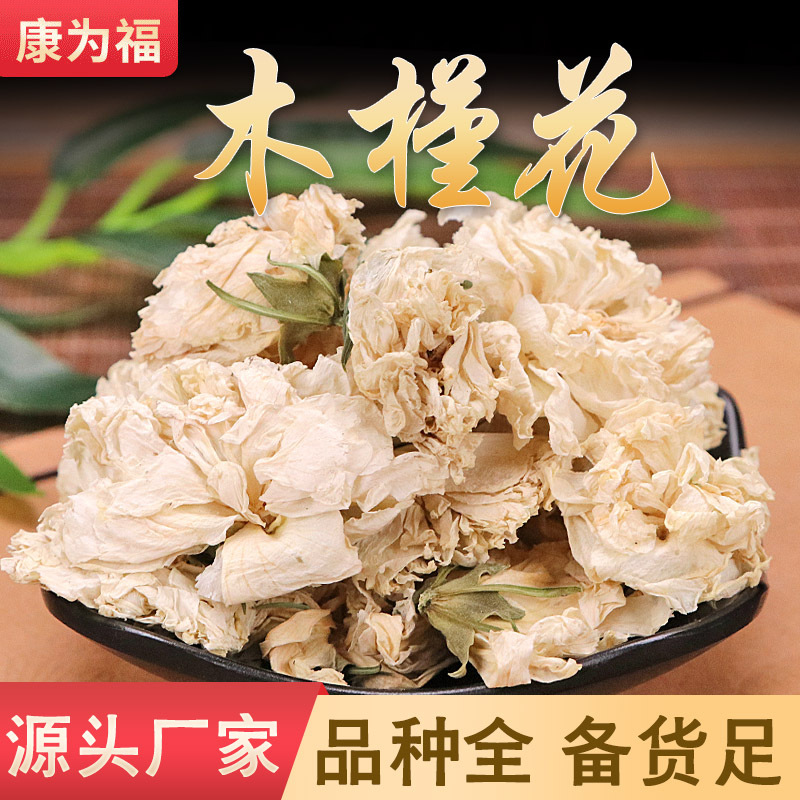
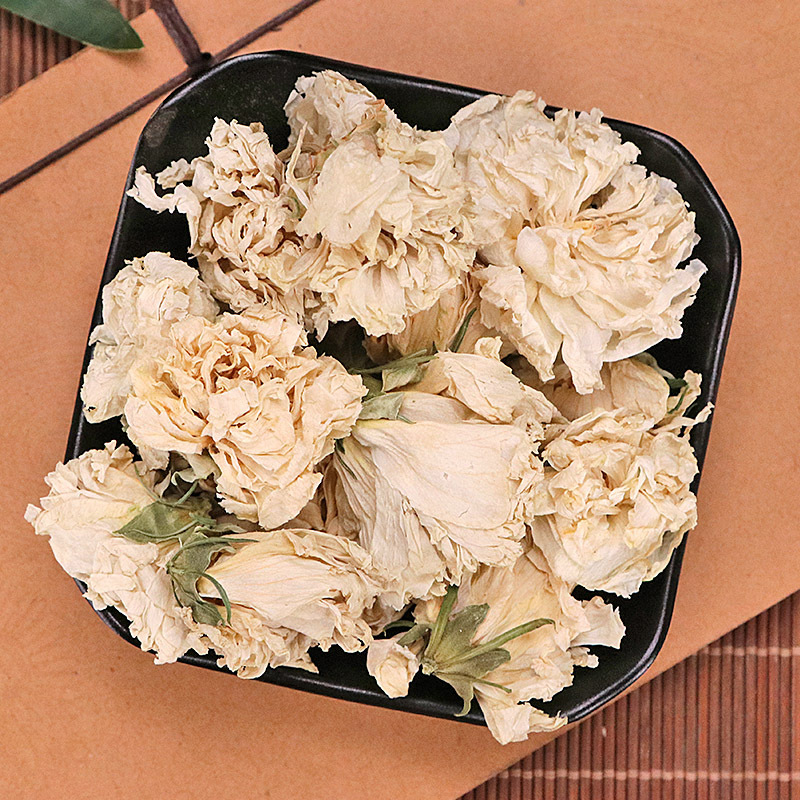
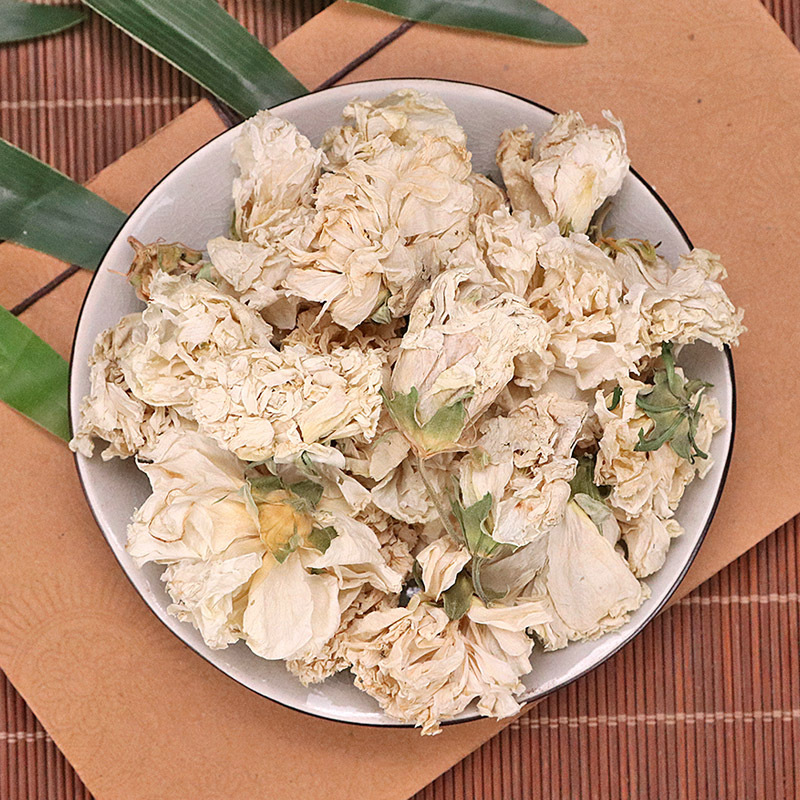
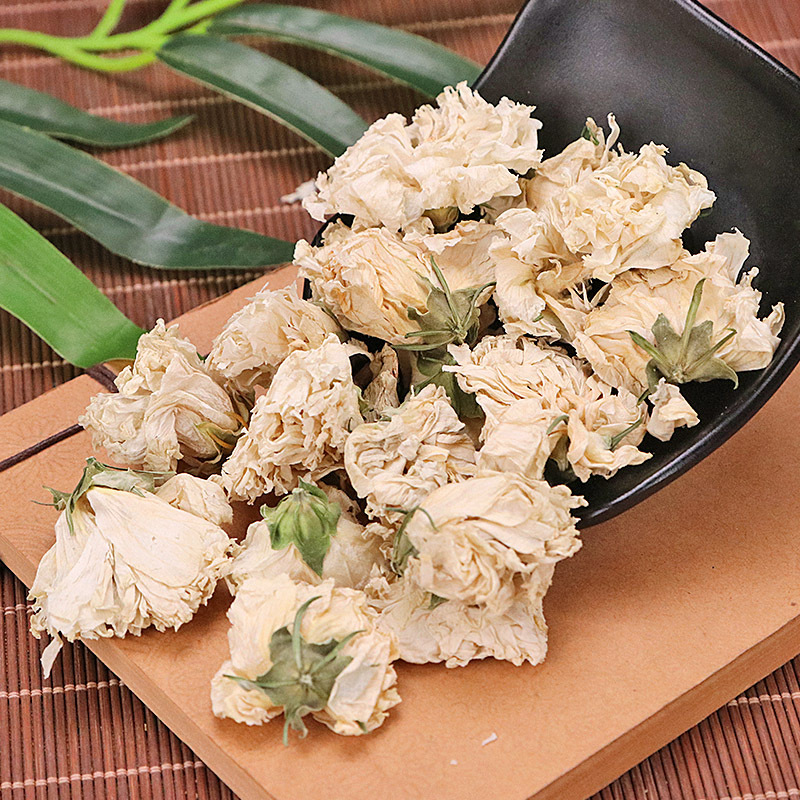
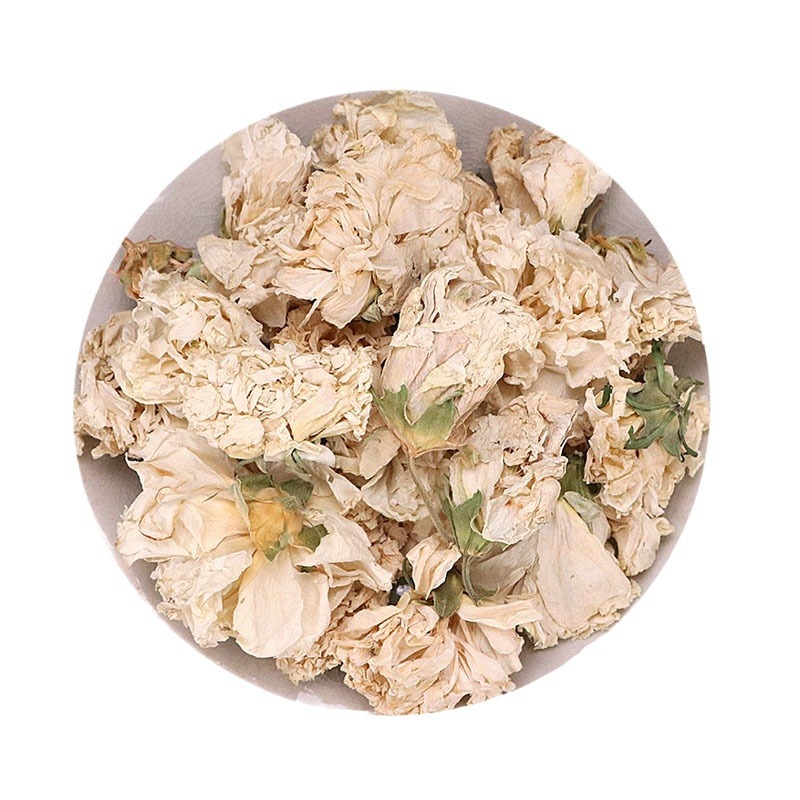
Mu Jin Hua Dried Flowers (Hibiscus syriacus) — Rose of Sharon Herbal Tea & Food Herb, 500g
$16.11
969840 in stock
Description
Mu Jin Hua (Hibiscus syriacus), also known as Rose of Sharon, is the dried flower of a beloved ornamental and food-herb plant known in Traditional Chinese Medicine (TCM) as Mù Jǐn Huā (木槿花). Long cherished as a gentle, cooling, and skin-nourishing herb, Mu Jin Hua has been used to clear heat, cool the blood, and support digestive ease. Its nature is sweet, slightly bitter, and cool, making it a mild yet refreshing herb for daily teas and seasonal wellness.


Key Selling Points
- Traditional heat-clearing food herb
- Dried Rose of Sharon flowers
- Hibiscus syriacus
- Suitable for tea, soup, and congee
- 500g value pack, freshly stocked


Quality & Sensory
Each batch is carefully harvested and shade-dried to preserve the flower's delicate pale pink to white hue, soft petal texture, and faint floral aroma. When steeped, the petals unfurl and release a light, subtly sweet infusion with a gentle grassy-floral note, while in soups they soften and lend a mild, refreshing character without overpowering other ingredients.


Technical Specifications
| Product Type | Dried Flowers |
|---|---|
| Common Name | Mu Jin Hua |
| Botanical Name | Hibiscus syriacus |
| Form | Dried Whole Flowers |
| Net Weight | 500g |
| Shelf Life | 24 months |


Usage Scenarios
- Herbal tea blends
- Chinese-style soup and broth
- Congee and grain porridge
- Seasonal cooling drinks
- Daily floral infusion


Traditional Uses
In folk herbal practice, Mu Jin Hua is decocted into light teas, soups, and congee to support the body during warm seasons. It is a common ingredient in summer cooling drinks, where it pairs with ingredients like chrysanthemum, honeysuckle, and mung bean. As a tea, it is brewed alone or blended with other flowers for a delicate, mildly sweet infusion that brings a touch of floral freshness to daily routines.


FAQ Q&A
Q: What is Mu Jin Hua?
A: Mu Jin Hua is the common Chinese name for the dried flowers of Hibiscus syriacus, also known as Rose of Sharon. It is a traditional food herb used in tea and soup.
Q: What is the traditional wellness value of Mu Jin Hua?
A: In traditional Chinese food wellness culture, Mu Jin Hua is associated with clearing heat, cooling the blood, and supporting digestive ease. It is often used in teas and soups for daily seasonal nourishment.
Q: How do I use dried Mu Jin Hua flowers?
A: Rinse the flowers and steep them in hot water as a tea, or add them to soups and congee during the final stages of cooking. Adjust the quantity to your recipe and taste preference.
Additional information
| Weight | 0.72 kg |
|---|---|
| Dimensions | 25 × 18 × 8 cm |
Related products
-
Chuan Xiong Slices (Ligusticum chuanxiong) — Sichuan Sun-Dried Rhizome Pieces, 500g
Price range: $4.44 through $6.06 -
Goji Berries (Lycium barbarum) — Ningxia Zhongning Dried Red Goji, Sulfur-Free First Harvest
Price range: $7.52 through $8.66 -
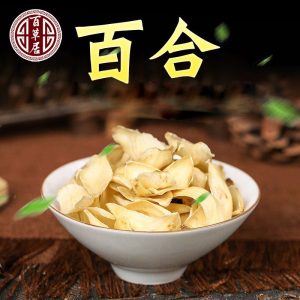
Bai He Dried Lily Bulb (Lilium lancifolium) — Sulfur-Free Hunan Lily for Tea, Soup & Congee
$11.25 -
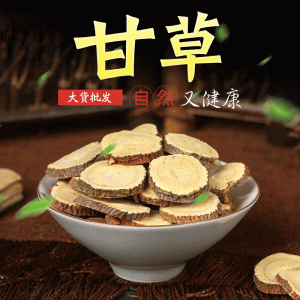
Sheng Gan Cao Slices (Glycyrrhiza uralensis) — Sulfur-Free Licorice Root Pieces, 500g
Price range: $4.28 through $6.71
Reviews
There are no reviews yet.