
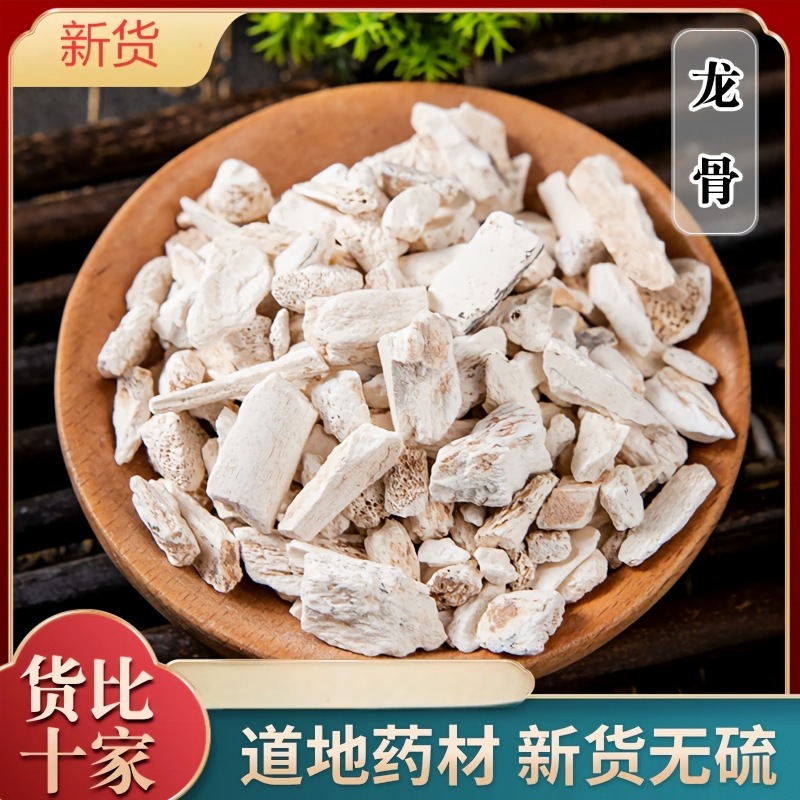
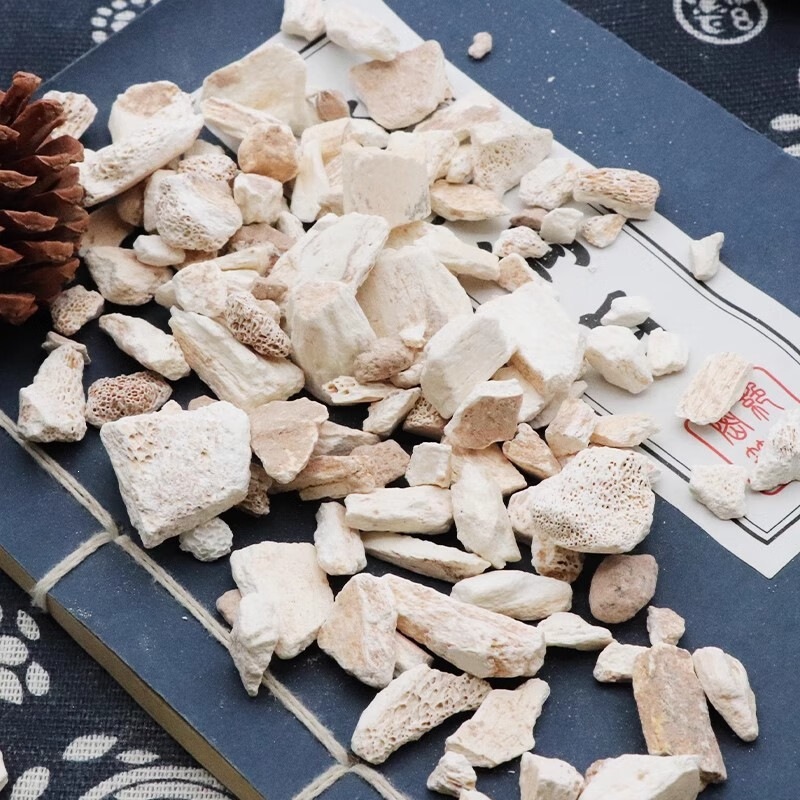
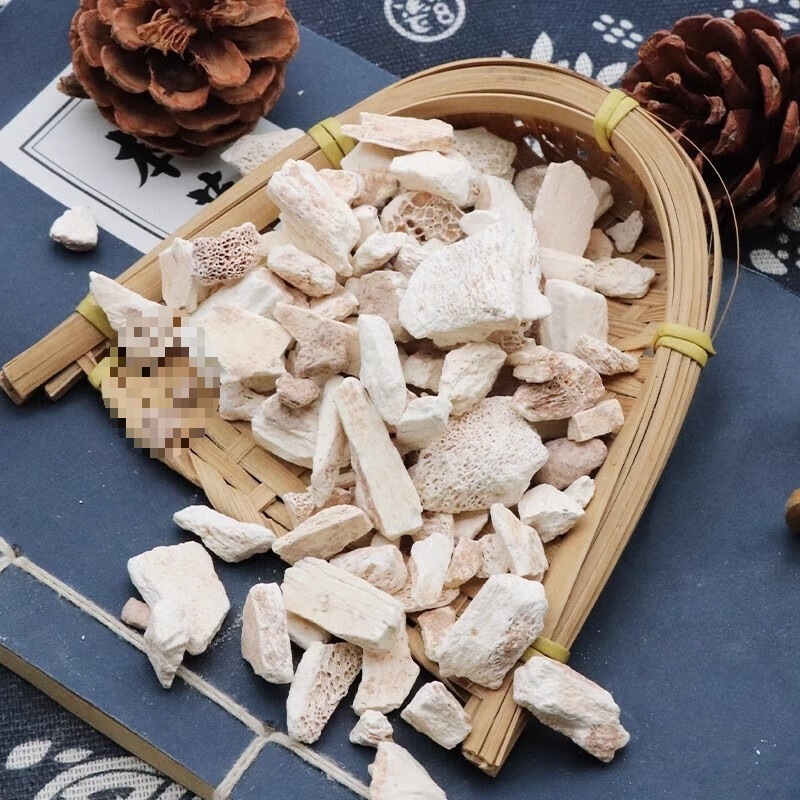
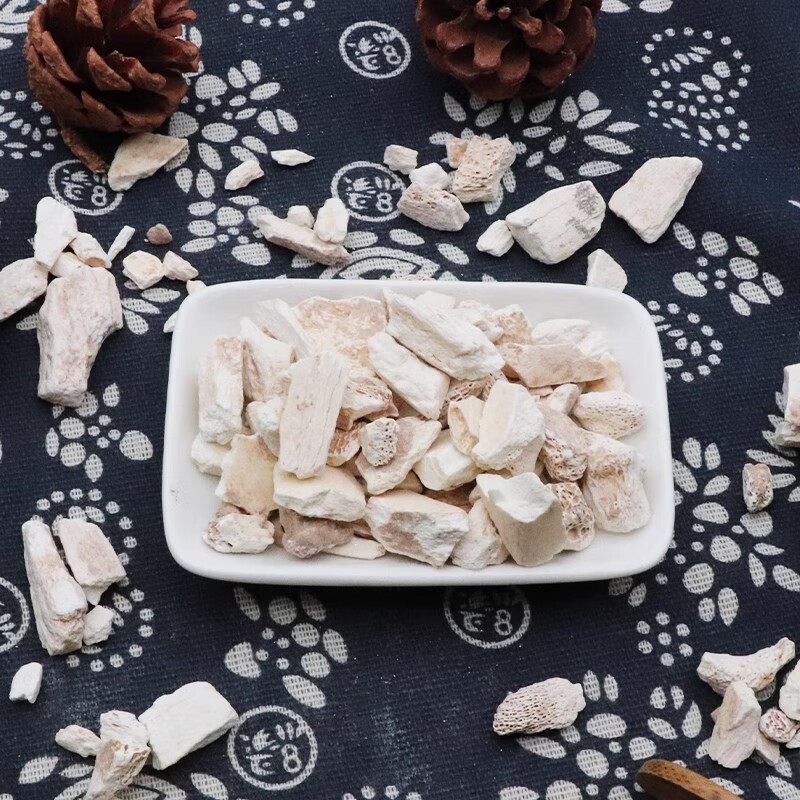
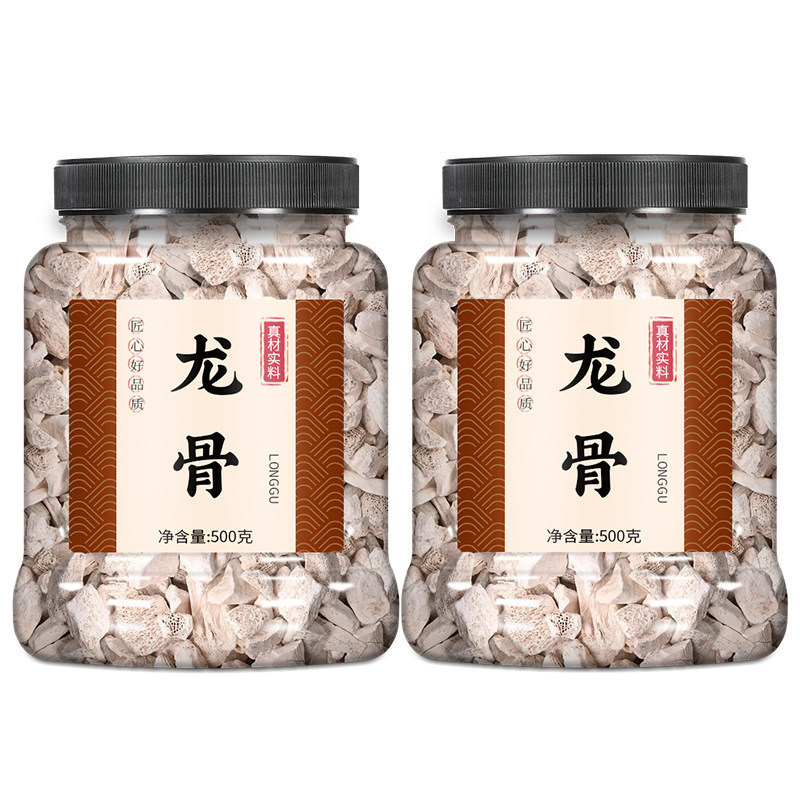
Dried Dragon Bone Fossil Os Draconis Long Gu for Herbal Decoction and Soup 250g
Price range: $6.03 through $12.32
Description
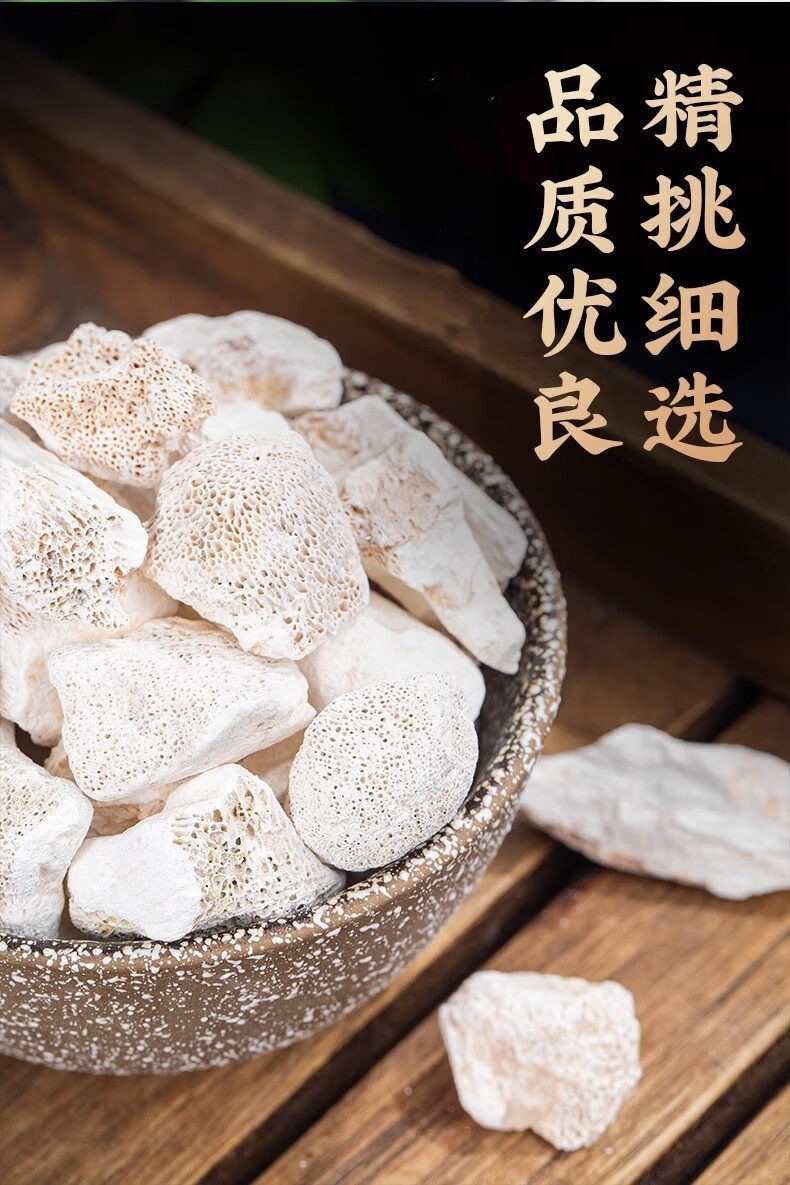
Dried Dragon Bone, known in TCM as Long Gu (龙骨), is the fossilized skeletal material traditionally used in Chinese herbal medicine. In TCM theory it is associated with a sweet and astringent flavor and a neutral to slightly warm nature, entering the heart, liver, and kidney channels. Traditionally used in decoctions and soups, often paired with Gui Zhi and Mu Li. Store in a cool dry place.
Key Selling Points
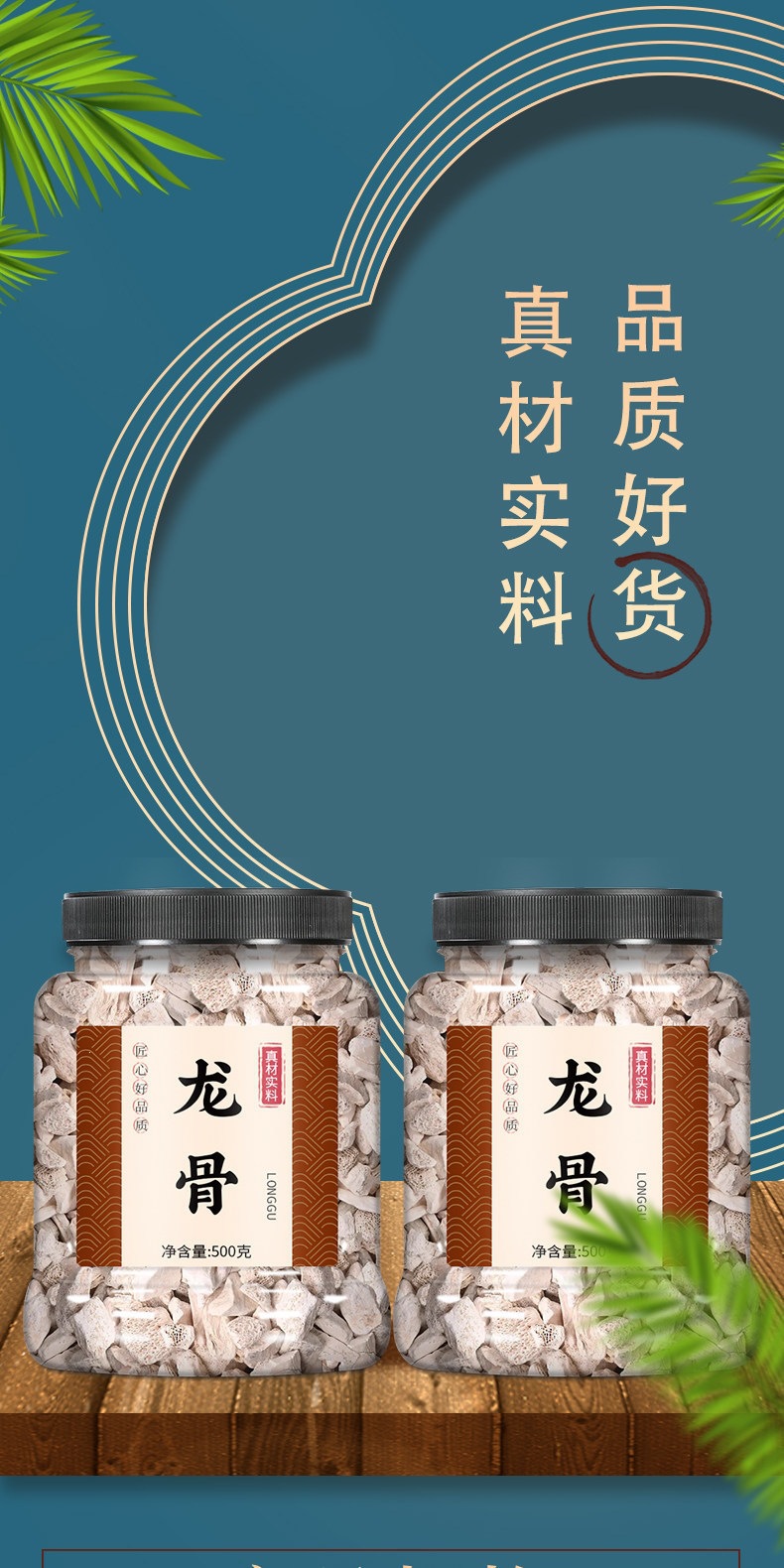
- Traditional Chinese herbal ingredient known as Long Gu (龙骨)
- Fossilized skeletal material used in classic TCM formulas
- Sun-dried processing for stable storage
- Commonly paired with Gui Zhi and Mu Li in decoctions
- 250g net weight in a resealable jar
Quality & Sensory
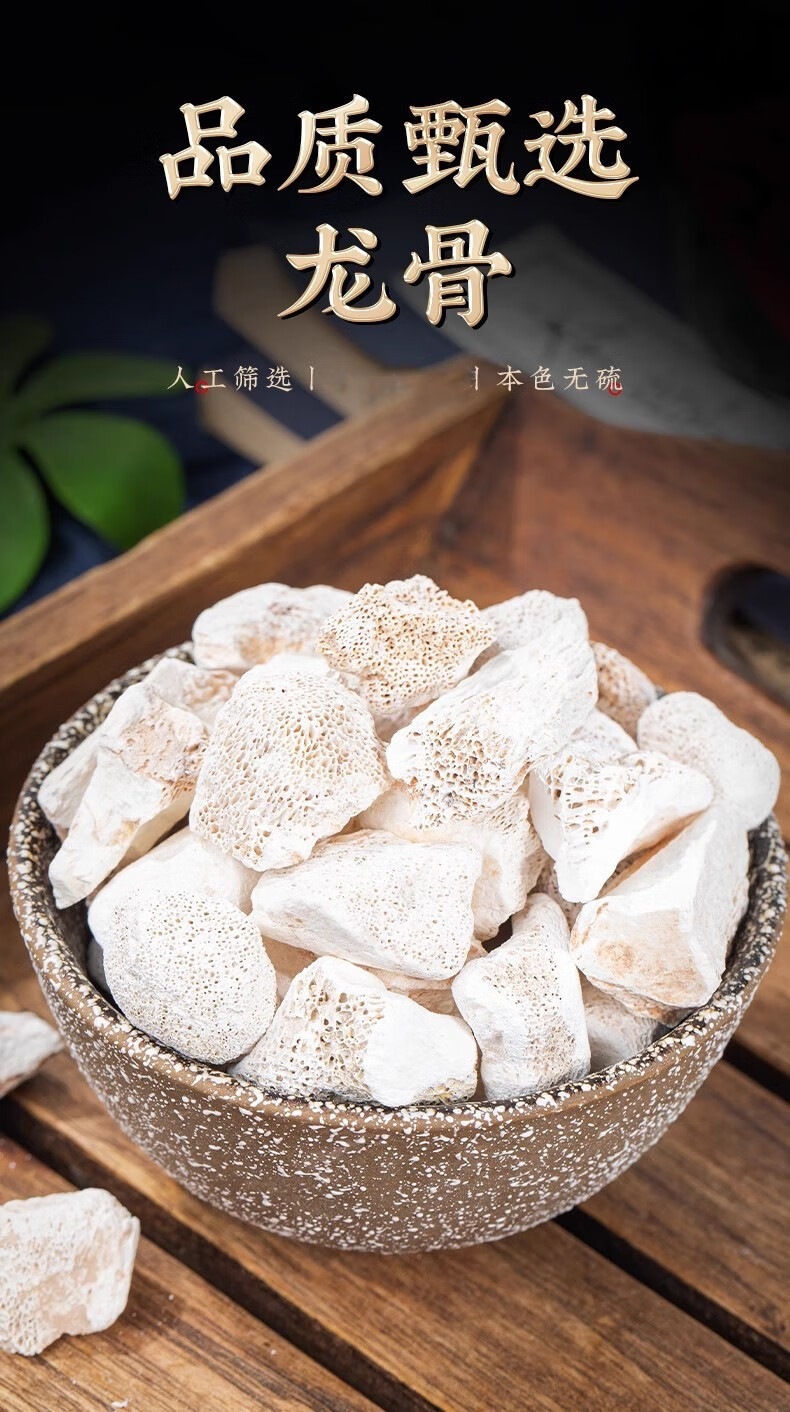
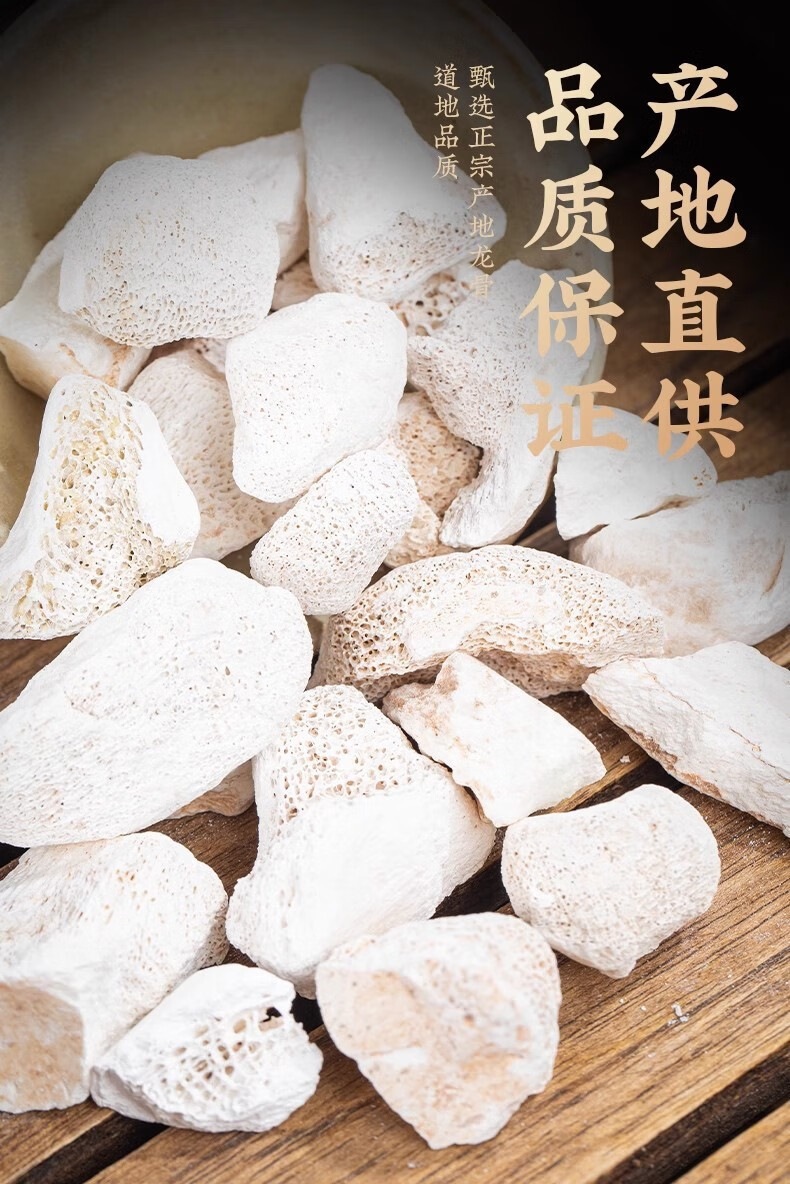
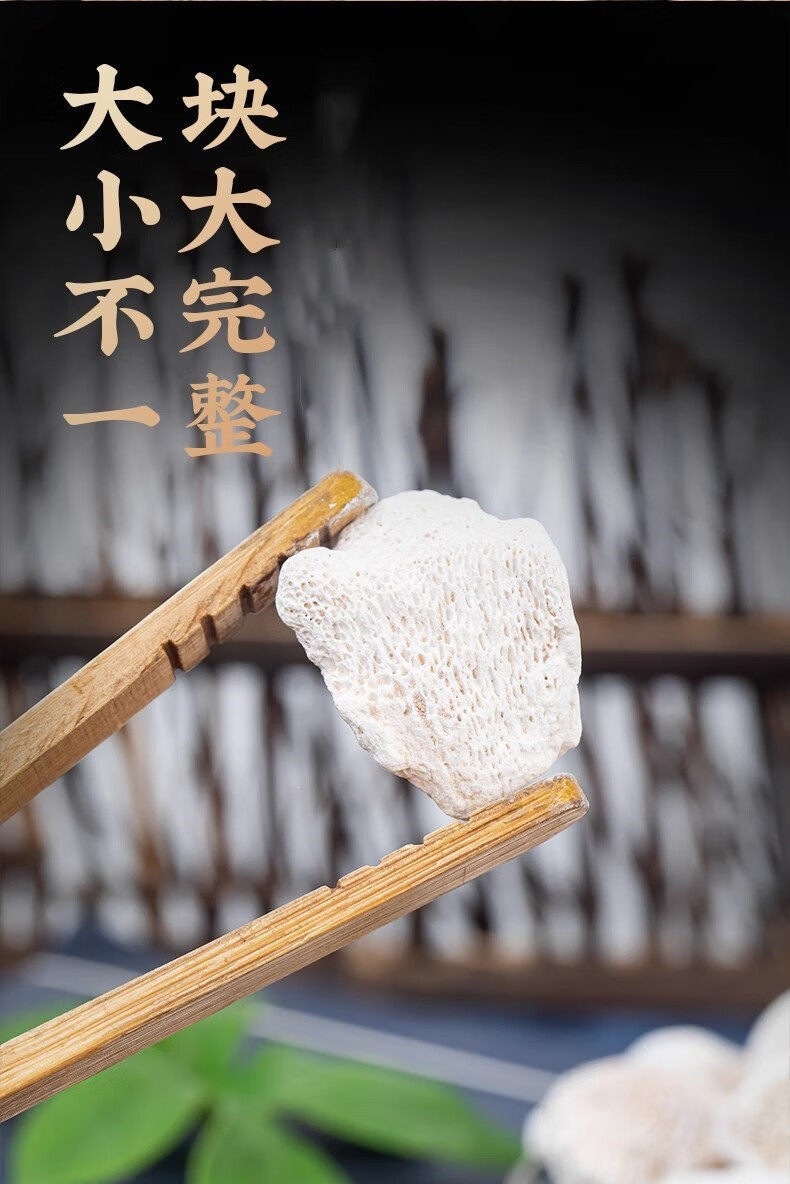
Typically off-white to greyish fossilized material with a dense, stony texture and minimal aroma. When decocted it contributes a neutral, earthy taste to the broth. Batch appearance may vary slightly due to natural fossil formation.
Technical Specifications
| Product Type | Dried fossilized skeletal material |
|---|---|
| Chinese Name | 龙骨 |
| Pinyin | Long Gu |
| Botanical Name | |
| Form | Dried pieces |
| Net Weight | 250g |
Usage Scenarios
- Herbal decoction with Gui Zhi and Mu Li
- Traditional soup preparation
- Combined with other TCM herbs in formulas
Traditional Uses
In TCM theory, Long Gu is traditionally used in decoctions, often combined with Gui Zhi and Mu Li in classic formulas. It is also used in soups and congee in folk herbal practice. Traditionally associated with calming and astringent properties. Preparation typically involves simmering with other herbs for an extended period.
FAQ Q&A
Q: What is this product?
A: It is dried fossilized skeletal material known in TCM as Long Gu (龙骨), sold as dried pieces for herbal use.
Q: What is its traditional value?
A: In TCM theory, Long Gu is associated with a sweet and astringent flavor and neutral to slightly warm nature, entering the heart, liver, and kidney channels.
Q: How is it commonly prepared?
A: It is typically simmered in decoctions with other herbs such as Gui Zhi and Mu Li, or added to soups.
Additional information
| Weight | N/A |
|---|---|
| Dimensions | N/A |
| Model | 2罐 龙骨500g 2罐, 1罐 龙骨500g 1罐, 1罐 龙骨100g 1罐 |
Related products
-

Dried Huang Jing Slices Polygonatum Rhizome Chicken Head Huang Jing 500g Bulk Herbal Tea and Soup Ingredient
Price range: $9.14 through $18.87 -
Dried Raspberry Fruit Fu Pen Zi Whole Berries for Herbal Tea and Wine Infusion 500g
Price range: $15.63 through $18.06 -
Dried Raspberry Fruit Fu Pen Zi 500g Whole Berries for Herbal Tea and Wine Infusion
Price range: $14.00 through $16.44 -

Ningxia Goji Berries Gou Qi Zi 500g Dried Red Wolfberry for Tea Soup and Snacking
Price range: $7.20 through $16.44
Reviews
There are no reviews yet.