
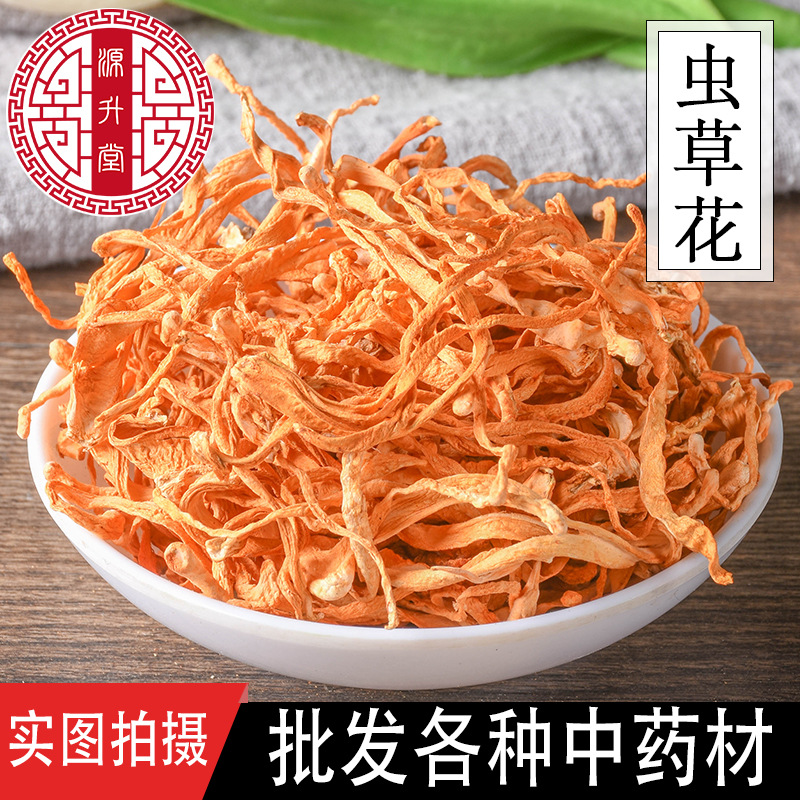
Dried Cordyceps Flower Mushroom Chong Cao Hua Premium North Cordyceps for Herbal Soups and Teas
Price range: $10.30 through $16.96
Description
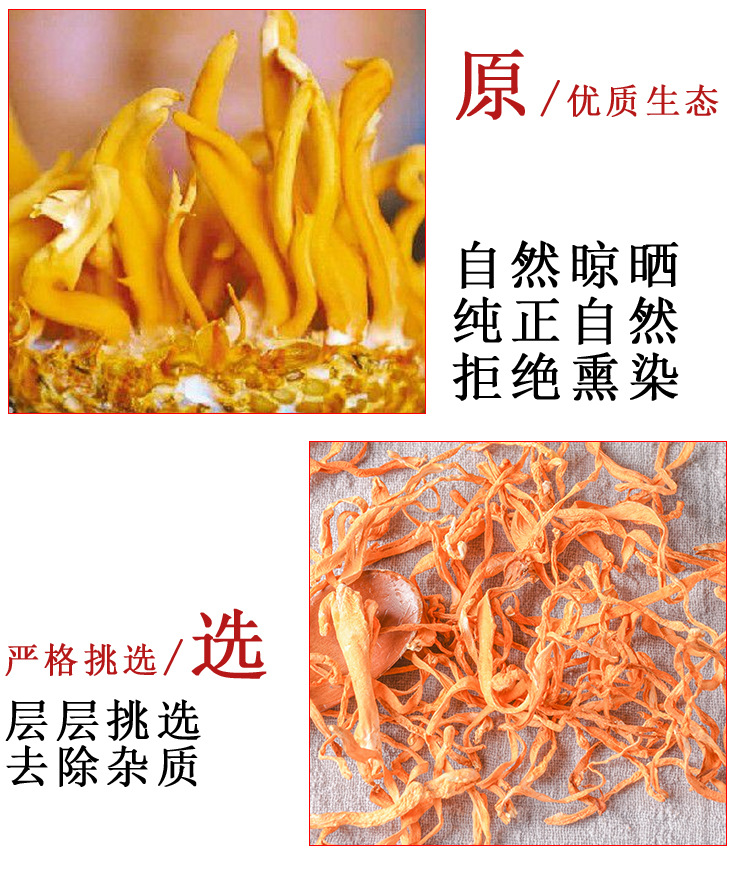
Dried Cordyceps Flower, known in TCM as Chong Cao Hua (虫草花), is the cultivated fruiting body of Cordyceps militaris. It is a golden-orange, food-grade mushroom used as a tonic food in traditional Chinese wellness practice. In TCM theory it is considered sweet and neutral, associated with the Lung and Kidney channels. It is commonly simmered in soups or brewed as a daily herbal tea.


Key Selling Points
- Cultivated Cordyceps militaris fruiting bodies, not wild Cordyceps sinensis
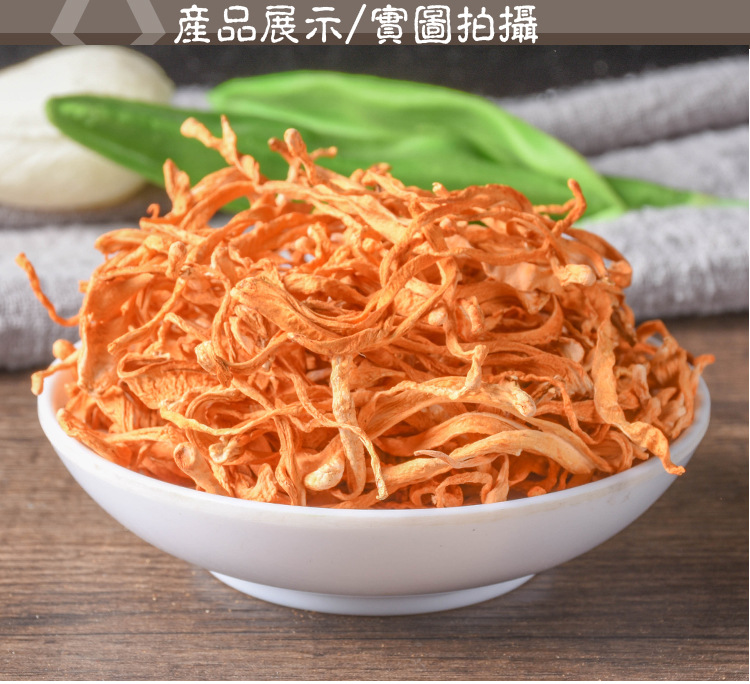
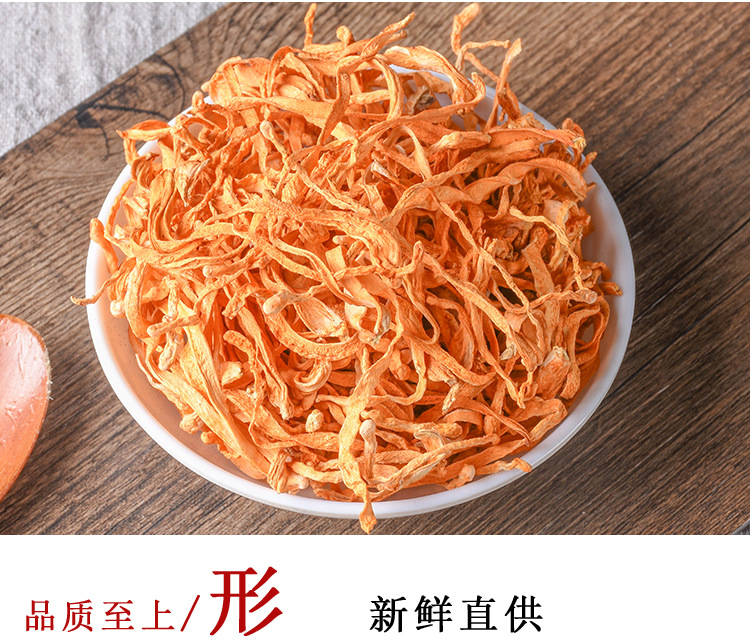
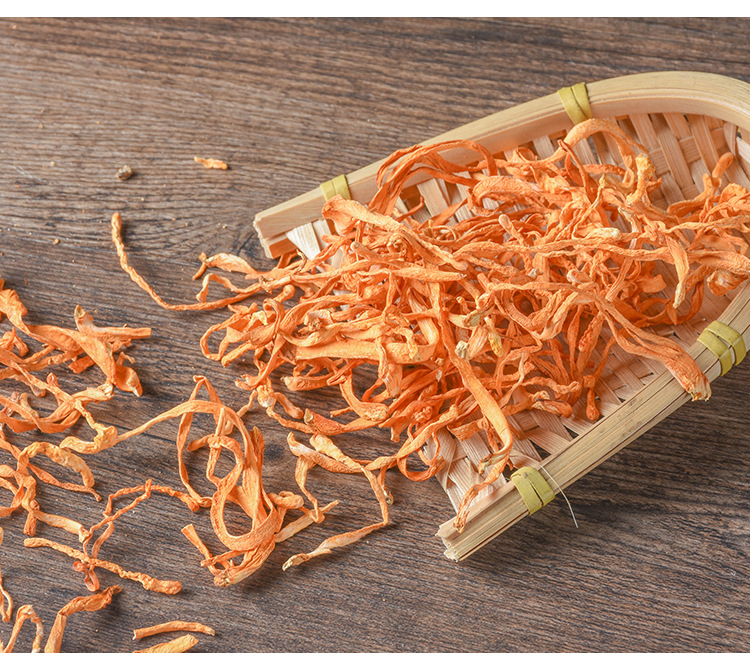
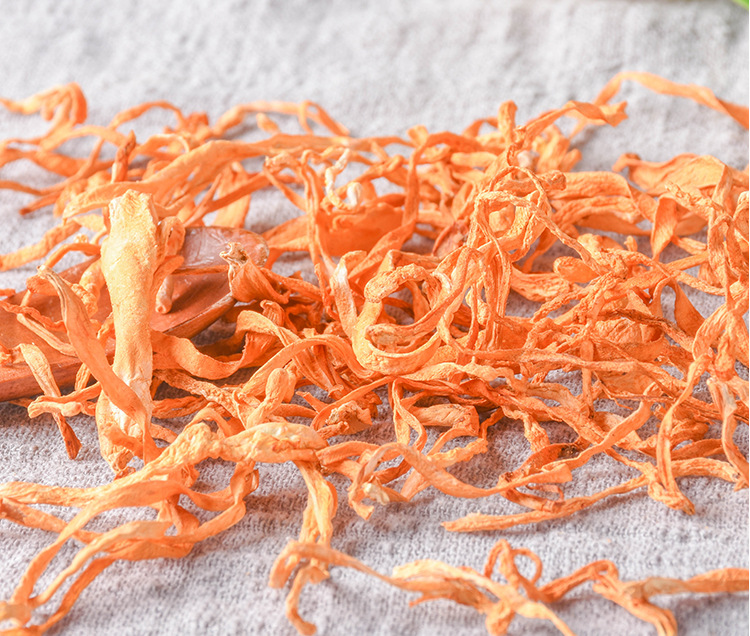
- Golden-orange dried flower form with 99% or higher intactness
- Low impurity content at 1% or less and moisture at 13% or less
- Food-grade agricultural product suitable for soups and teas
- Simple bulk packaging ideal for regular kitchen or teahouse use
Quality & Sensory
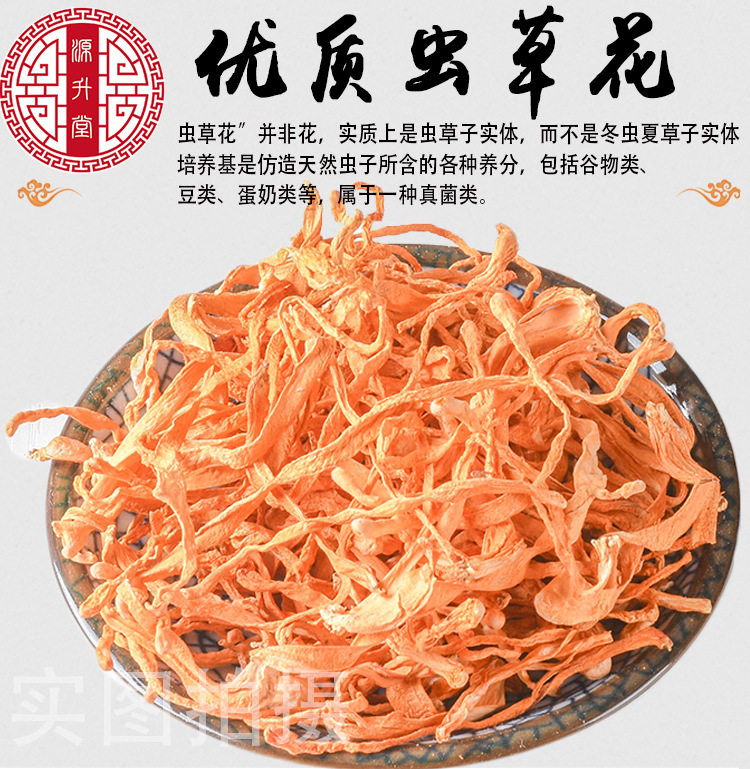
The dried flowers are typically golden-orange to amber in color with a firm, slightly fibrous texture. They have a mild earthy mushroom aroma. After simmering or brewing, the liquid is typically light golden with a gentle sweet and savory mushroom taste.
Technical Specifications
| Product Type | Dried edible mushroom |
|---|---|
| Chinese Name | 虫草花 |
| Pinyin | Chong Cao Hua |
| Botanical Name | Cordyceps militaris |
| Plant Part | Fruiting body |
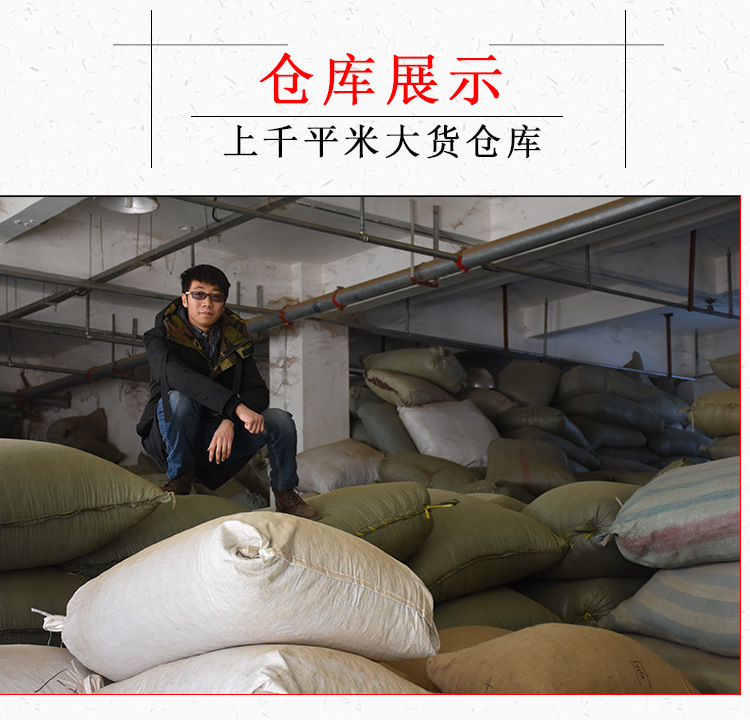
| Net Weight | 2 jin (1 kg) |
Usage Scenarios
- Simmered in chicken or pork soup
- Brewed as a daily herbal tea
- Cooked into congee
- Added to seasonal nourishing broths


Traditional Uses
In TCM theory, Chong Cao Hua is traditionally used as a gentle tonic food associated with the Lung and Kidney channels. It is commonly simmered in soups with chicken, pork, or goji berries, or brewed alone as a daily tea. Folk practice often pairs it with Chinese yam or lotus seed in congee for seasonal nourishment.


FAQ Q&A
Q: What is Cordyceps Flower?
A: It is the dried fruiting body of Cordyceps militaris, a cultivated mushroom used as a tonic food in Chinese herbal practice.
Q: What is its traditional value?
A: In TCM theory it is considered sweet and neutral, associated with the Lung and Kidney channels, and traditionally used as a gentle tonic food.
Q: How is it commonly prepared?
A: It is typically simmered in soups or brewed as a tea, often paired with chicken, pork, or goji berries.



Additional information
| Weight | N/A |
|---|---|
| Dimensions | N/A |
| Model | 虫草花 乱草 一斤 件, 虫草花排草 一斤 件, 2斤乱草, 2斤排草 |
Related products
-
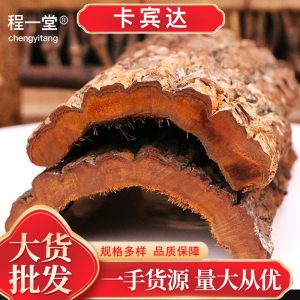
Cabinda Bark Dried Herb 500g Traditional Herbal Infusion Ingredient
Price range: $12.38 through $37.50 -
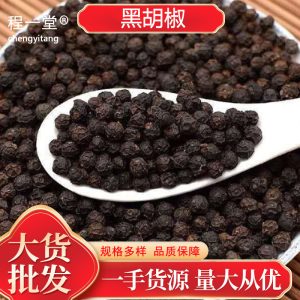
Black Pepper Whole Peppercorns Hu Jiao 500g Bulk Culinary Spice for Cooking and Seasoning
Price range: $8.33 through $9.14 -
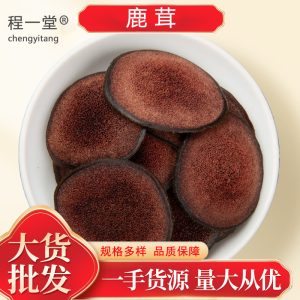
Deer Antler Slices Lu Rong 鹿茸片 Dried Slices for Wine Infusion and Soup 100g Wax Slices Pack
Price range: $68.29 through $92.59 -
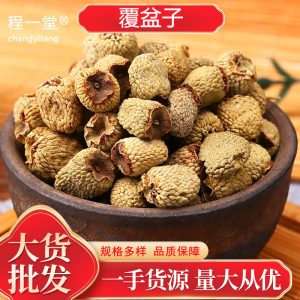
Dried Raspberry Fruit Fu Pen Zi 500g Whole Berries for Herbal Tea and Wine Infusion
Price range: $14.00 through $16.44
Reviews
There are no reviews yet.