
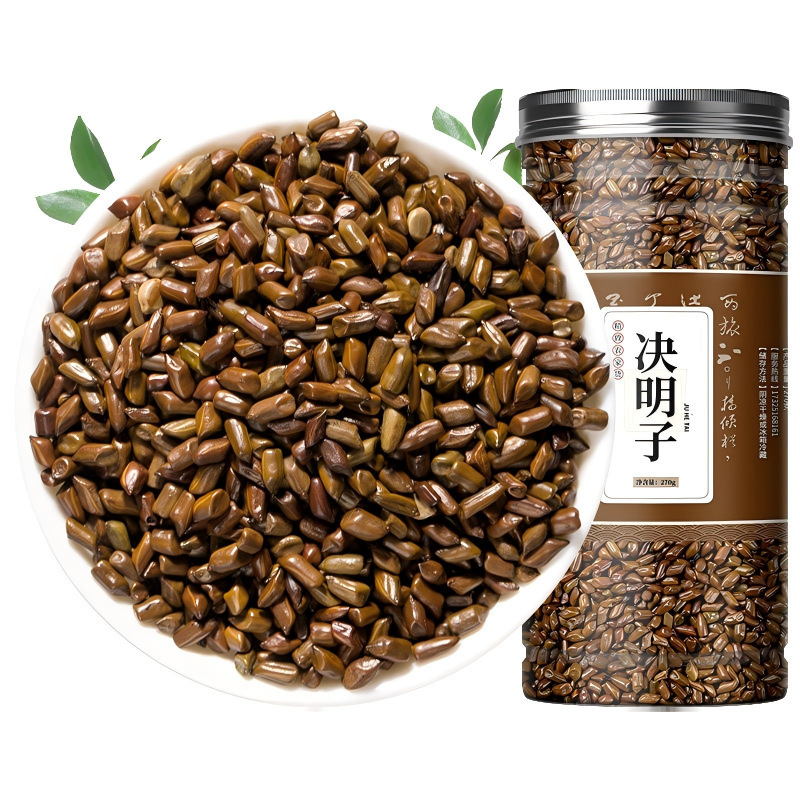
Roasted Cassia Seed Jue Ming Zi 300g Chinese Herbal Tea for Daily Brewing
Description
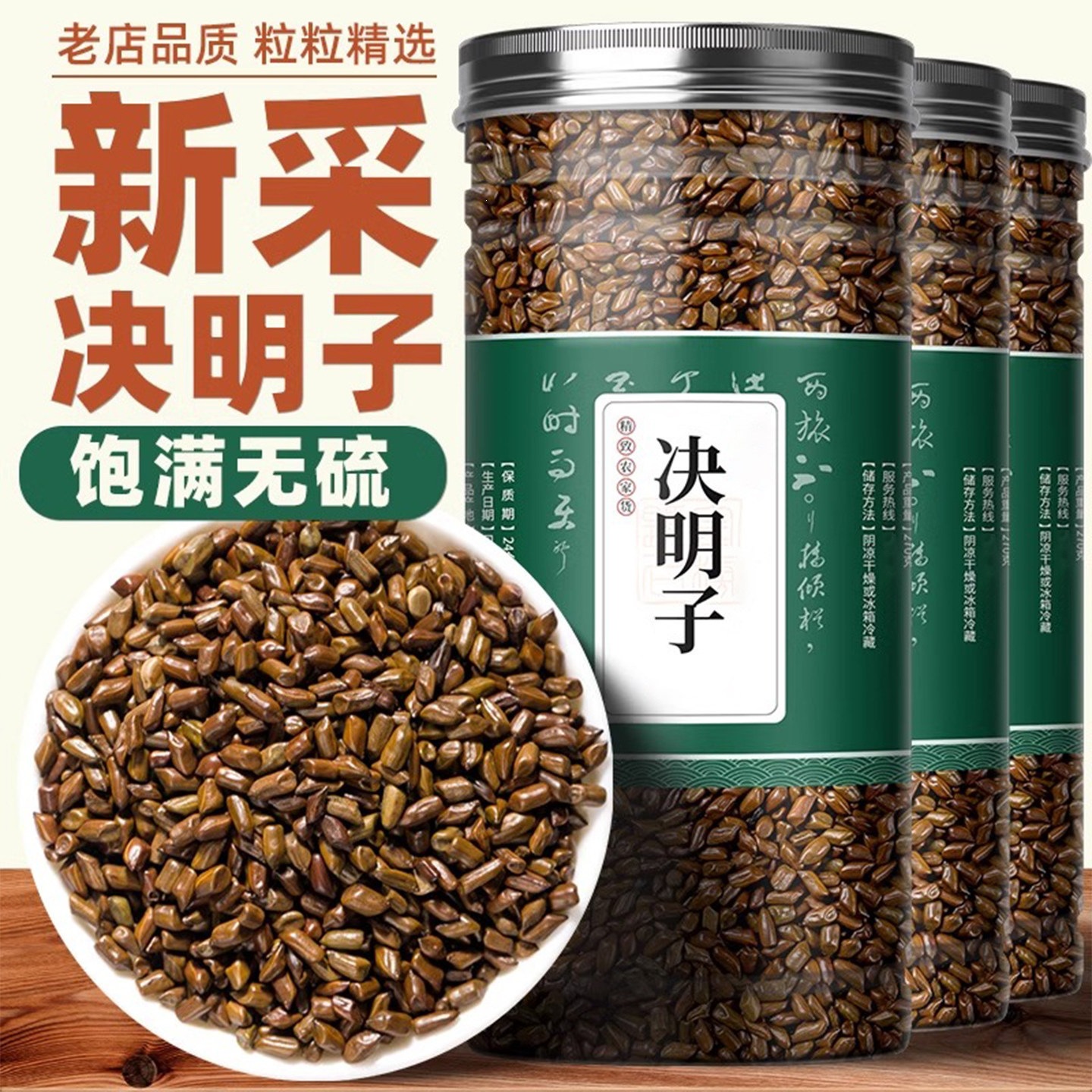
Roasted Cassia Seed, known in TCM as Jue Ming Zi (决明子), from Senna obtusifolia or Senna tora. These pre-roasted seed decoction pieces are traditionally used in Chinese herbal practice for daily tea brewing. In TCM theory, cassia seed is associated with a sweet, bitter, and slightly cold nature, entering the Liver and Large Intestine channels. It is commonly prepared as a simple infusion or combined with red goji berries for a balanced everyday herbal drink.
Key Selling Points
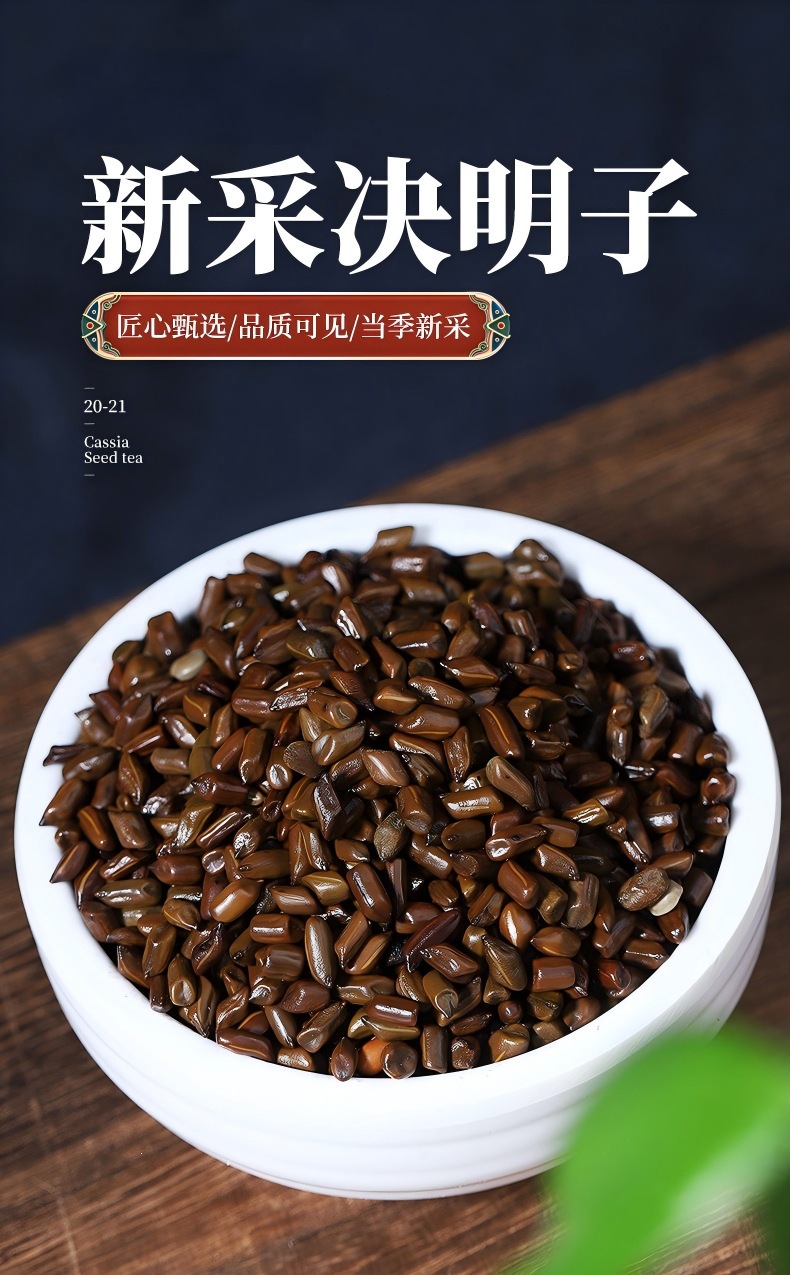
- Pre-roasted cassia seed decoction pieces ready for brewing
- Known in TCM as Jue Ming Zi (决明子) from Senna obtusifolia or Senna tora
- Low-temperature drying preserves the seed's natural roasted character
- Traditionally associated with the Liver and Large Intestine channels in TCM
- Sold as a food agricultural product for home tea preparation
Quality & Sensory
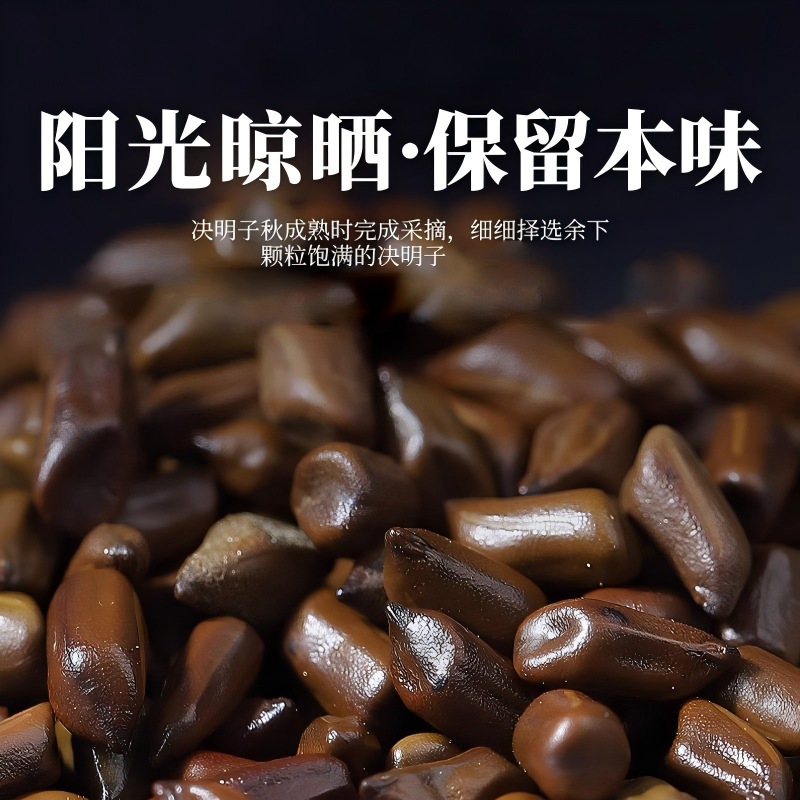
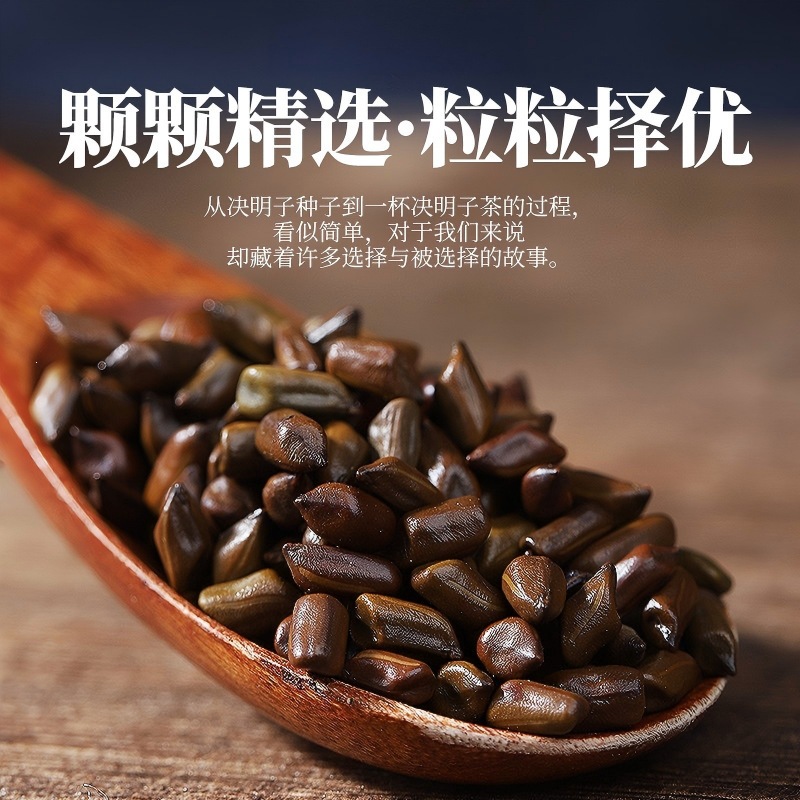
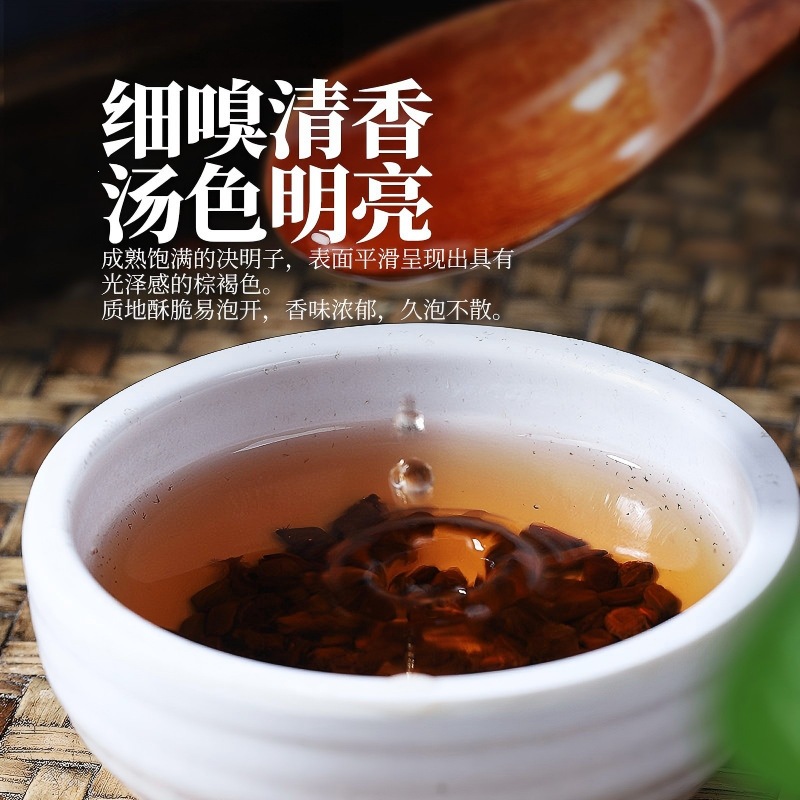
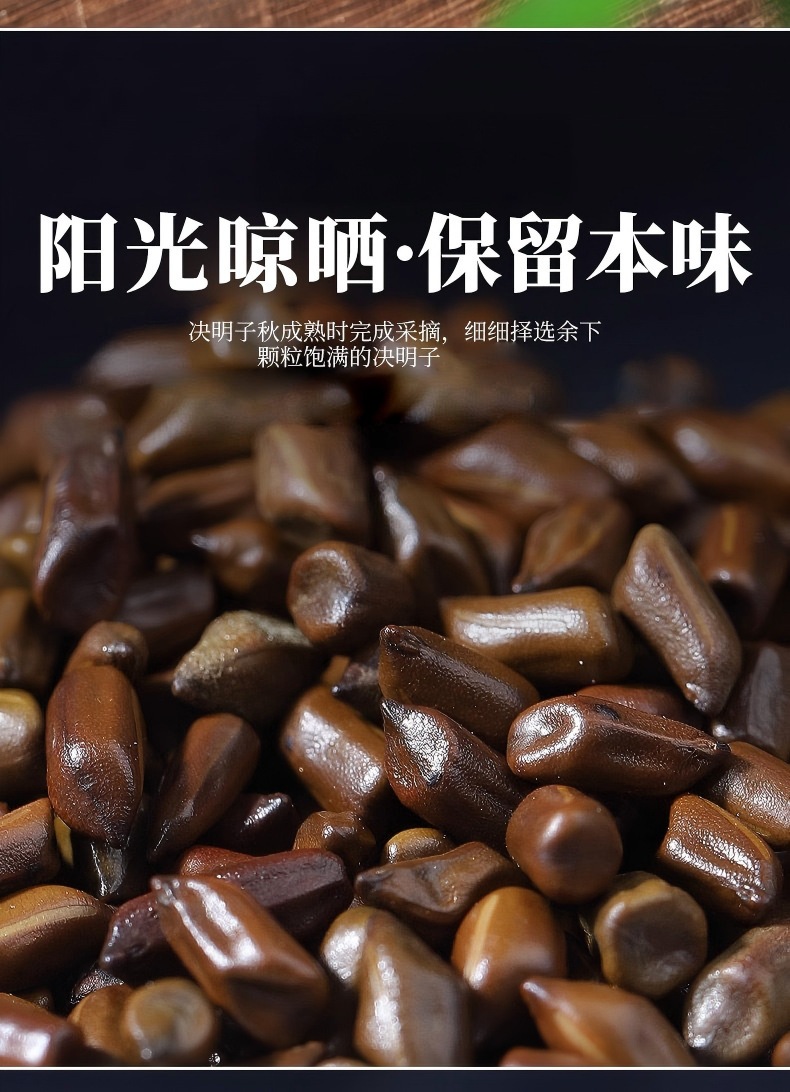
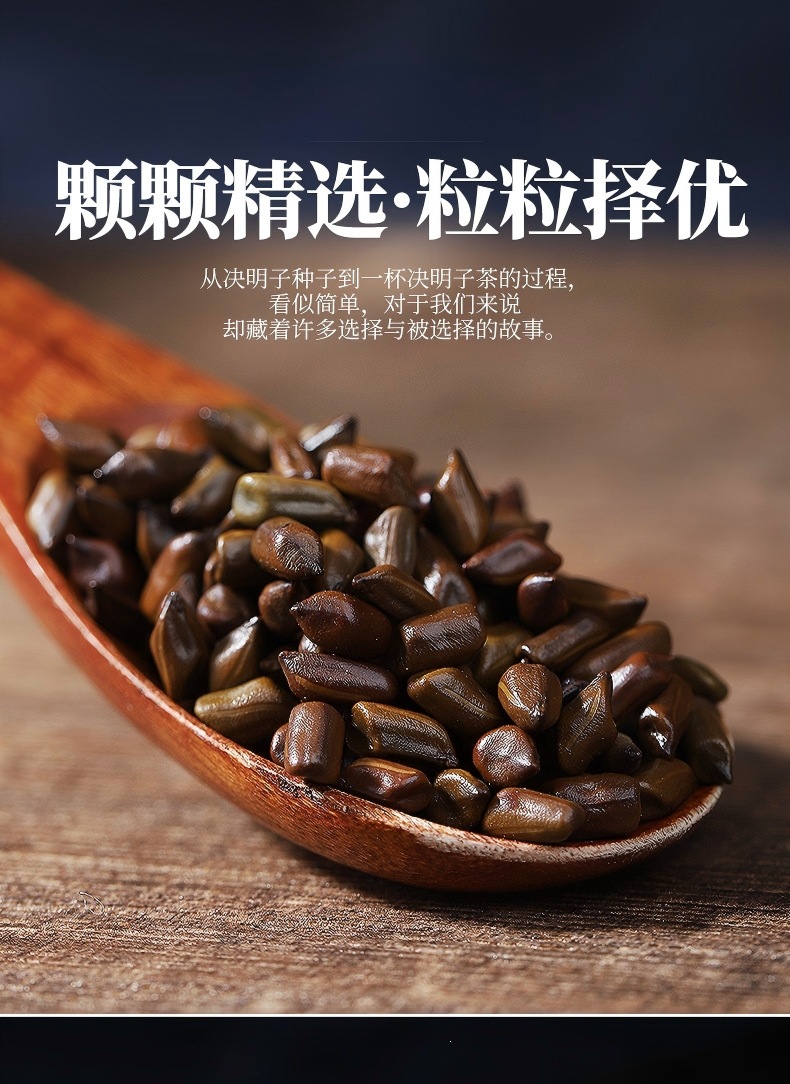
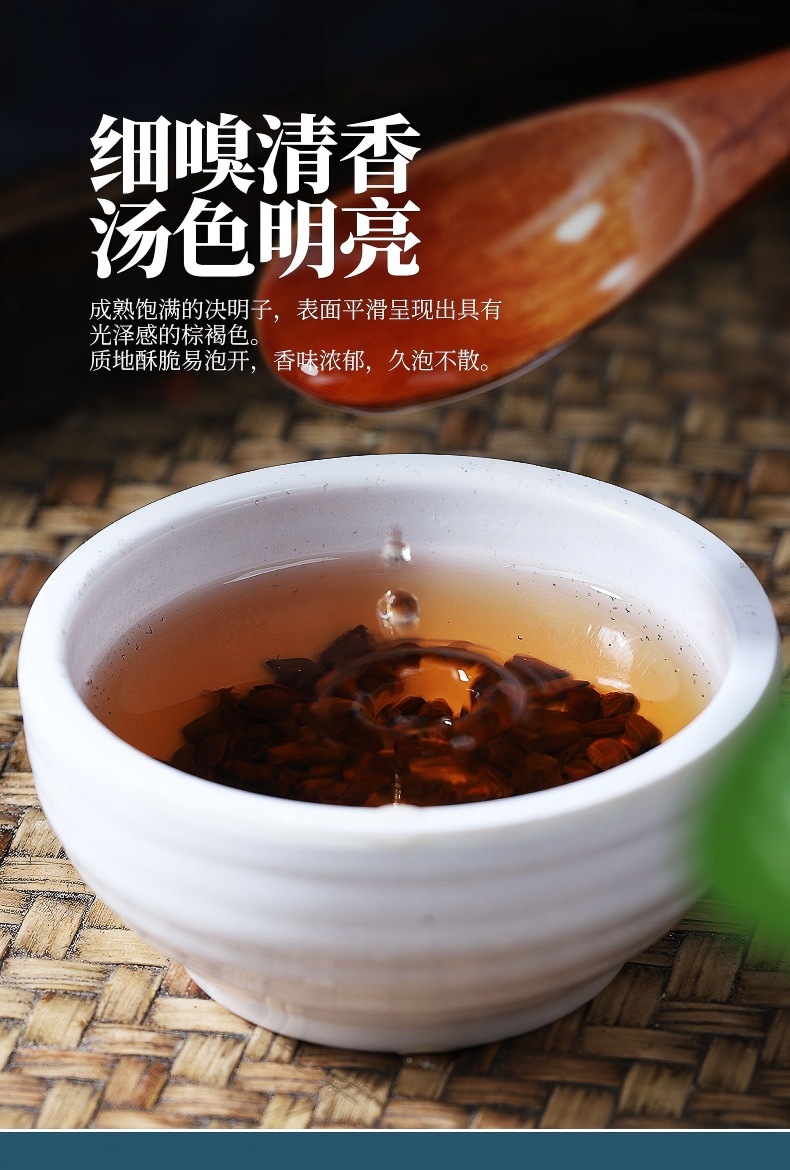
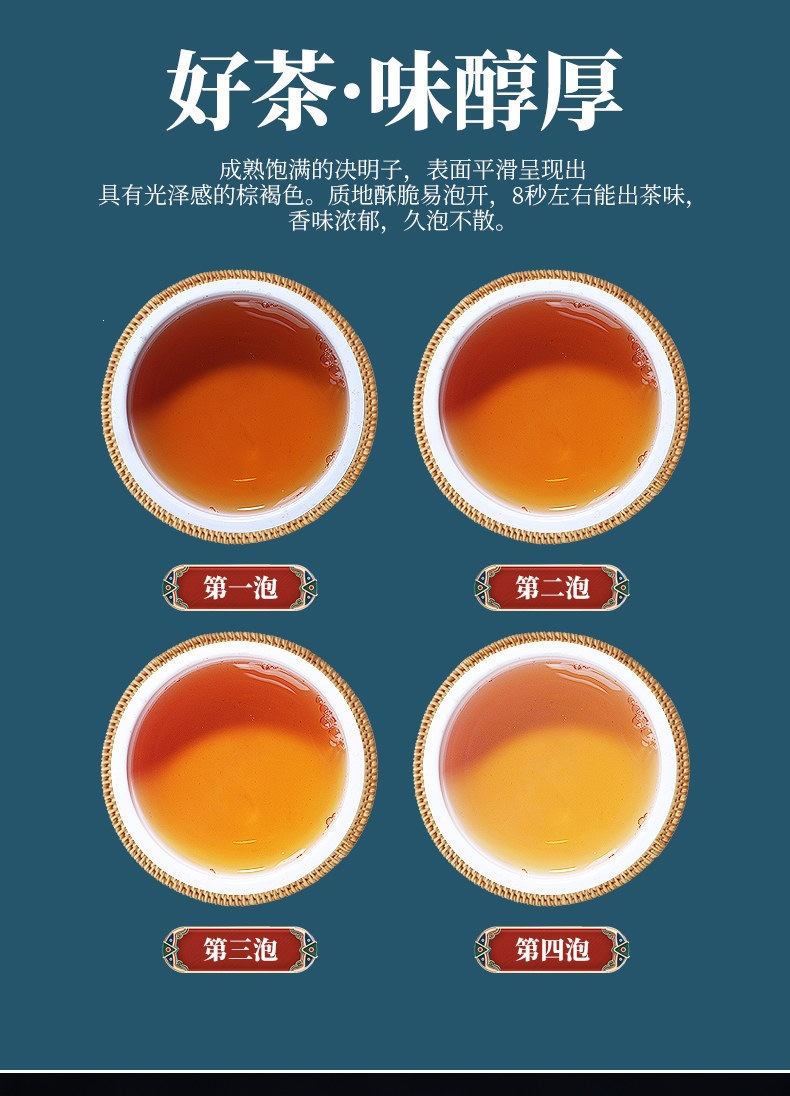
The roasted seeds are typically small, hard, and glossy with a dark brown to reddish-brown color. They carry a warm, nutty, slightly roasted aroma. When brewed, the liquid is typically light amber to golden brown with a mild, subtly sweet and gently bitter taste.
Technical Specifications
| Product Type | Roasted cassia seed decoction pieces |
|---|---|
| Chinese Name | 决明子 |
| Pinyin | Jue Ming Zi |
| Botanical Name | Senna obtusifolia or Senna tora |
| Plant Part | Seed |
| Processing | Low-temperature drying and roasting |
Usage Scenarios
- Daily herbal tea brewed with hot water
- Combined with red goji berries for a balanced infusion
- Added to congee or soup in traditional Chinese cooking
- Used as a base for homemade herbal decoctions
Traditional Uses
In TCM theory, Jue Ming Zi is traditionally used in decoctions and teas, often paired with red goji berries, chrysanthemum, or hawthorn. It is commonly prepared by steeping the roasted seeds in hot water or simmering briefly. Folk practice also includes adding it to congee or soups for seasonal wellness routines.
FAQ Q&A
Q: What is roasted cassia seed?
A: It is the roasted seed of Senna obtusifolia or Senna tora, known in TCM as Jue Ming Zi (决明子). It is sold as a food agricultural product for brewing.
Q: What is its traditional value in TCM?
A: In TCM theory, cassia seed is associated with a sweet, bitter, and slightly cold nature, entering the Liver and Large Intestine channels. It is traditionally used in herbal teas and decoctions.
Q: How is it commonly prepared?
A: It is typically brewed with hot water as a simple tea or simmered briefly in decoctions. It can also be combined with red goji berries or added to congee.
Additional information
| Model | 决明子270克 1罐装, 决明子540克 2罐装, 决明子270克 胎菊40克, 决明子270克 牛蒡根80克, 决明子270克 金银花30克, 决明子270克 红枸杞150克 |
|---|
Related products
-
Dried Polygala Root Yuan Zhi 500g Traditional Chinese Herb for Decoction
Price range: $18.87 through $24.54 -
Dried Raspberry Fruit Fu Pen Zi 500g Whole Berries for Herbal Tea and Wine Infusion
Price range: $14.00 through $16.44 -
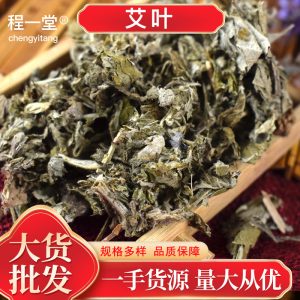
Dried Mugwort Leaf Ai Ye 500g Chinese Herbal Bath Foot Soak and Smoke Cleansing Herb
Price range: $4.77 through $5.25 -
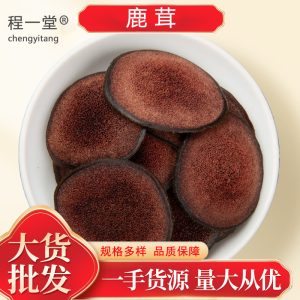
Deer Antler Slices Lu Rong 鹿茸片 Dried Slices for Wine Infusion and Soup 100g Wax Slices Pack
Price range: $68.29 through $92.59
Reviews
There are no reviews yet.