
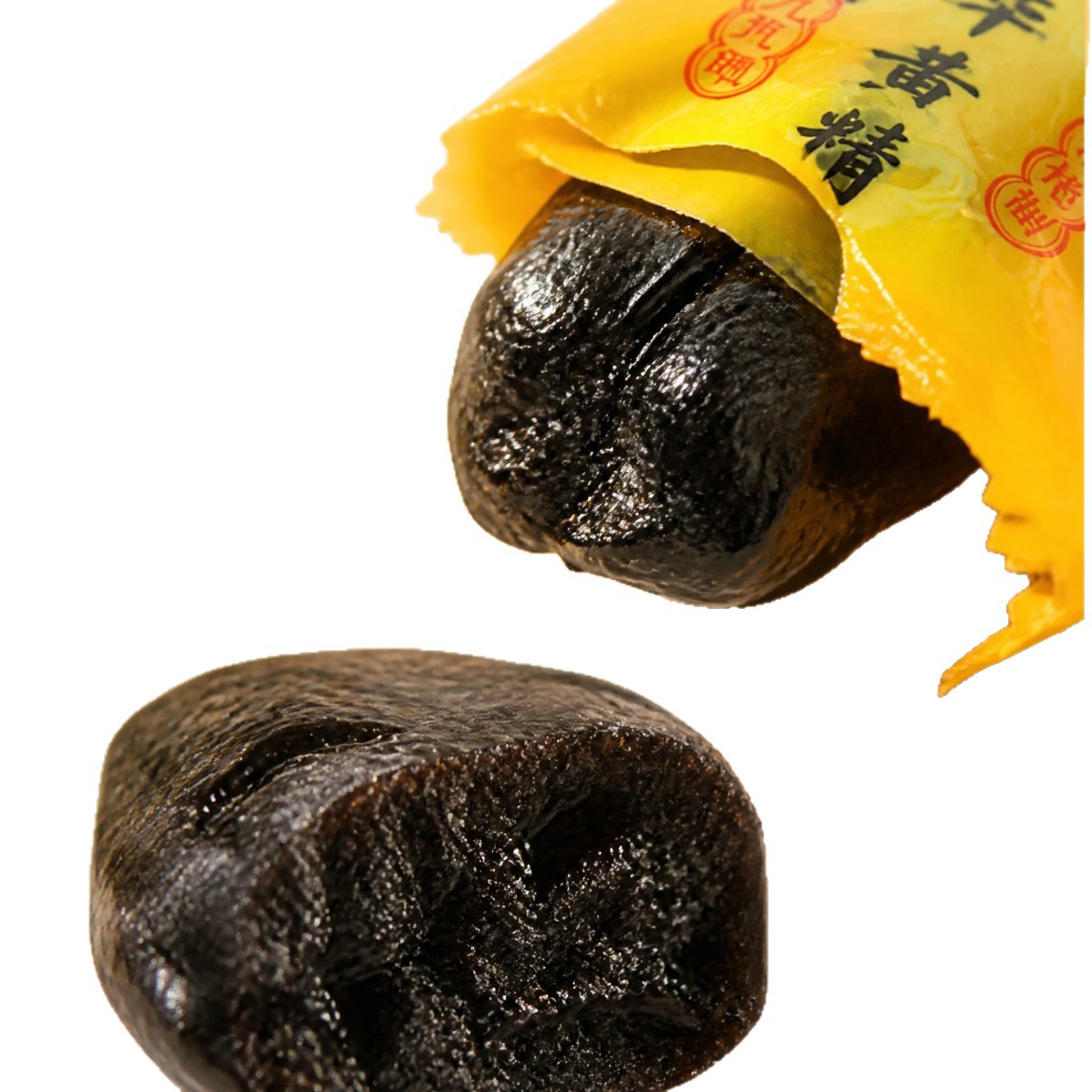
Huang Jing Fruit Nine Times Steamed and Sun Dried Polygonatum Tea Grade 500g Loose Pack
$17.69
10000 in stock
Description
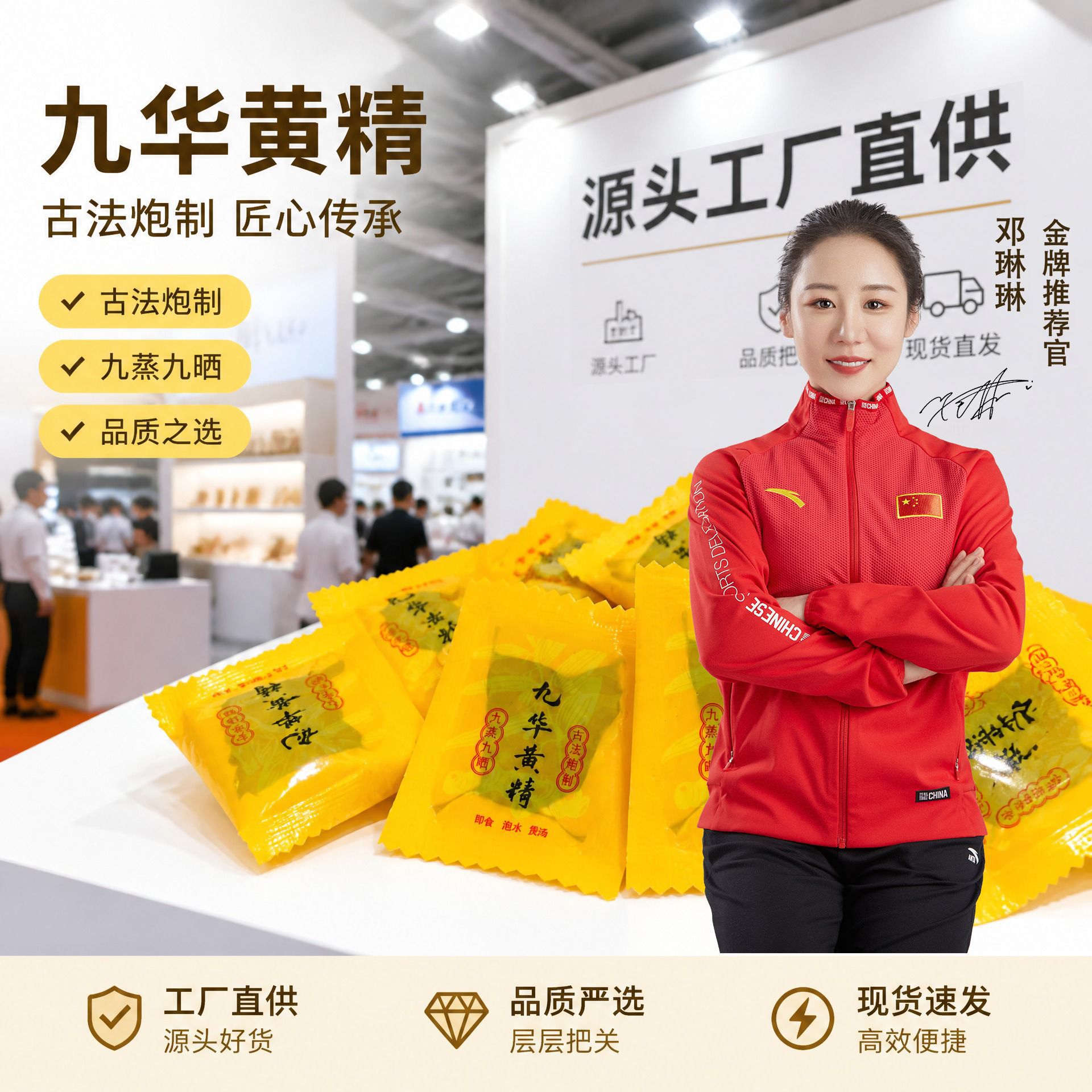
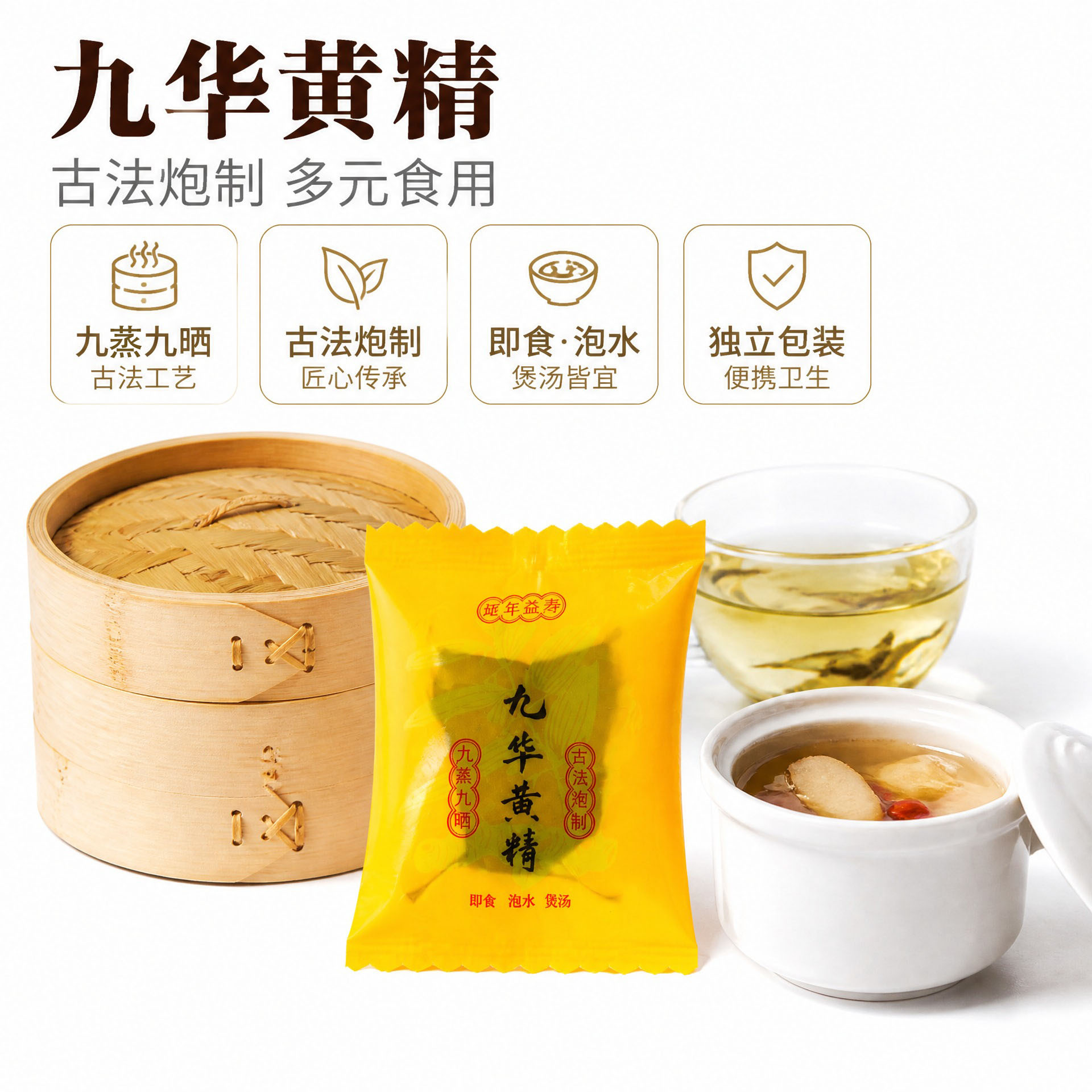
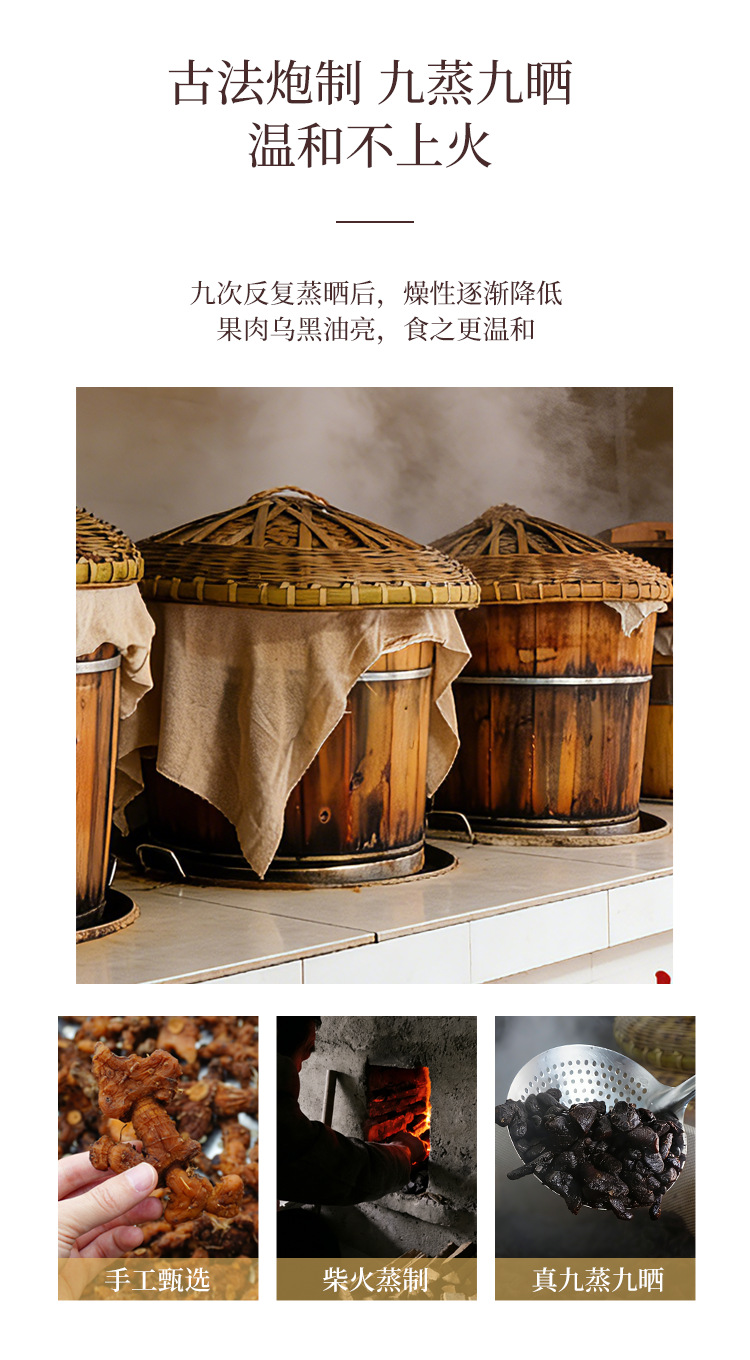
Huang Jing Fruit (黄精果, Huáng Jīng Guǒ) is prepared from the rhizome of Polygonatum species, a classic tonic herb in Traditional Chinese Medicine. This product is processed using the traditional nine times steaming and nine times sun drying method, which is traditionally believed to mellow the herb's character and enhance its sweet, nourishing qualities. In TCM theory, Huang Jing is sweet in flavor and associated with the lung, spleen, and kidney channels. It is commonly enjoyed as a chewed snack, steeped in hot water, or simmered in soups and congee. Store at room temperature or refrigerated.
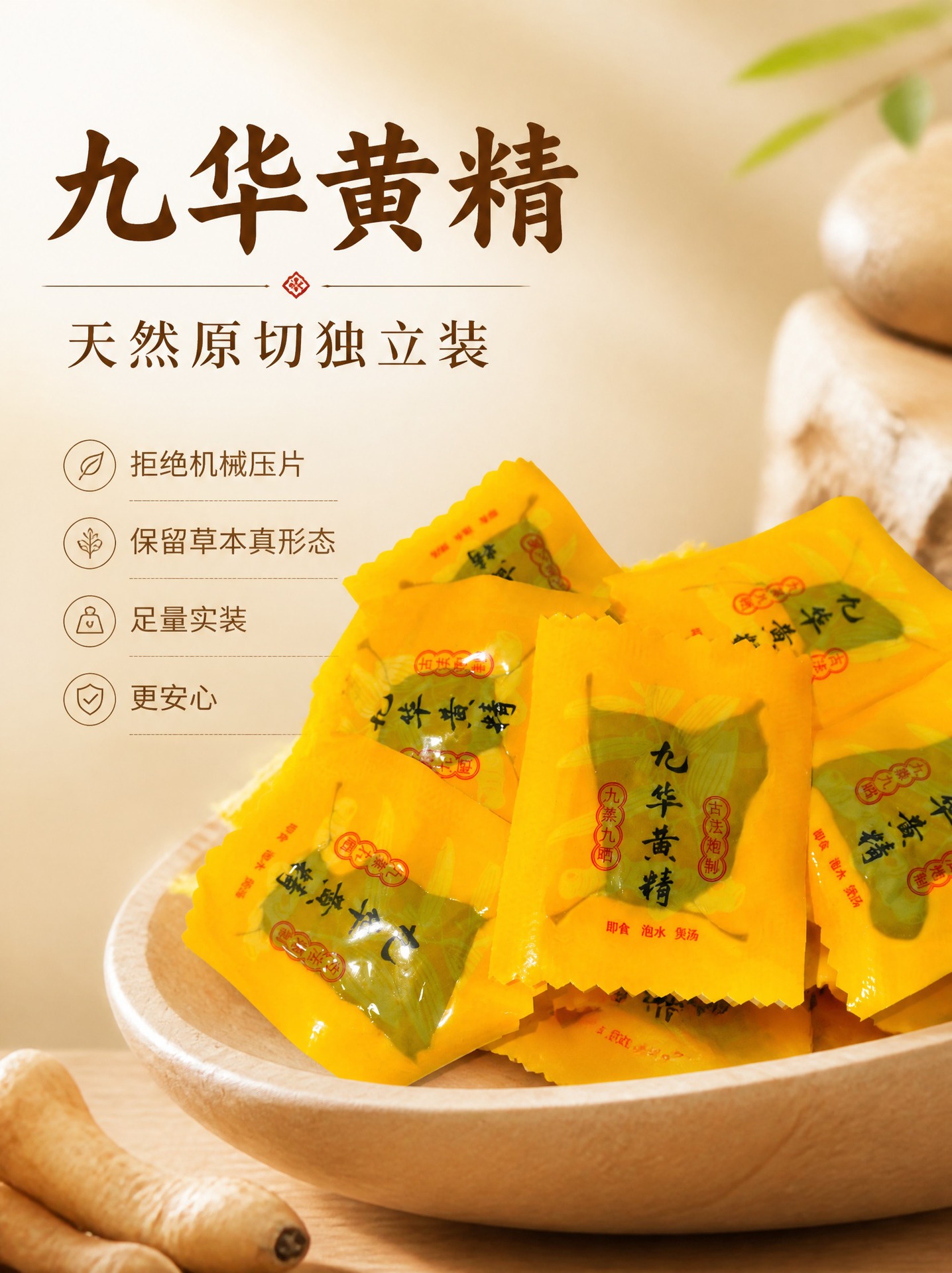
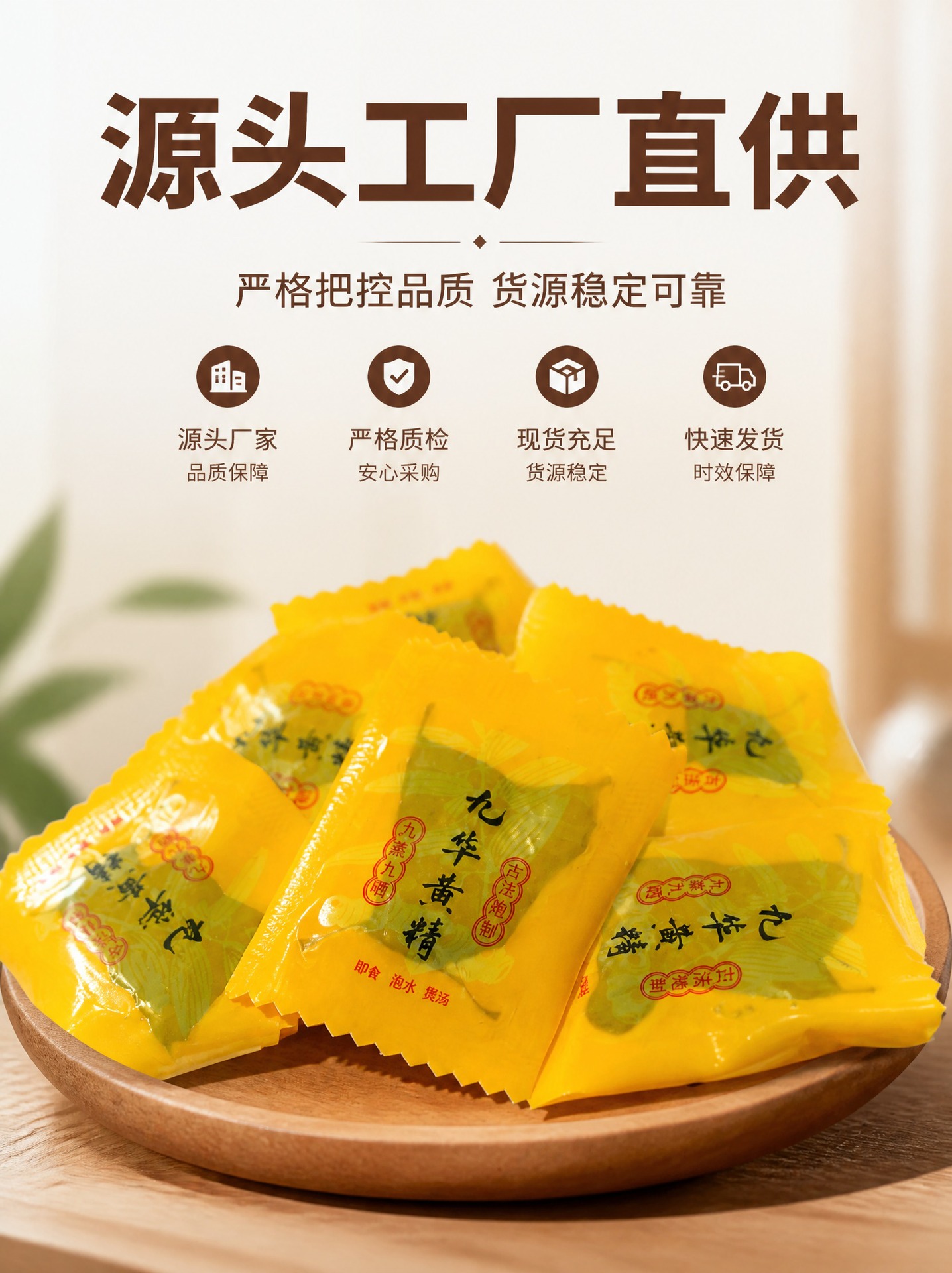
Key Selling Points
- Prepared from Huang Jing (黄精), the rhizome of Polygonatum, a valued TCM tonic herb
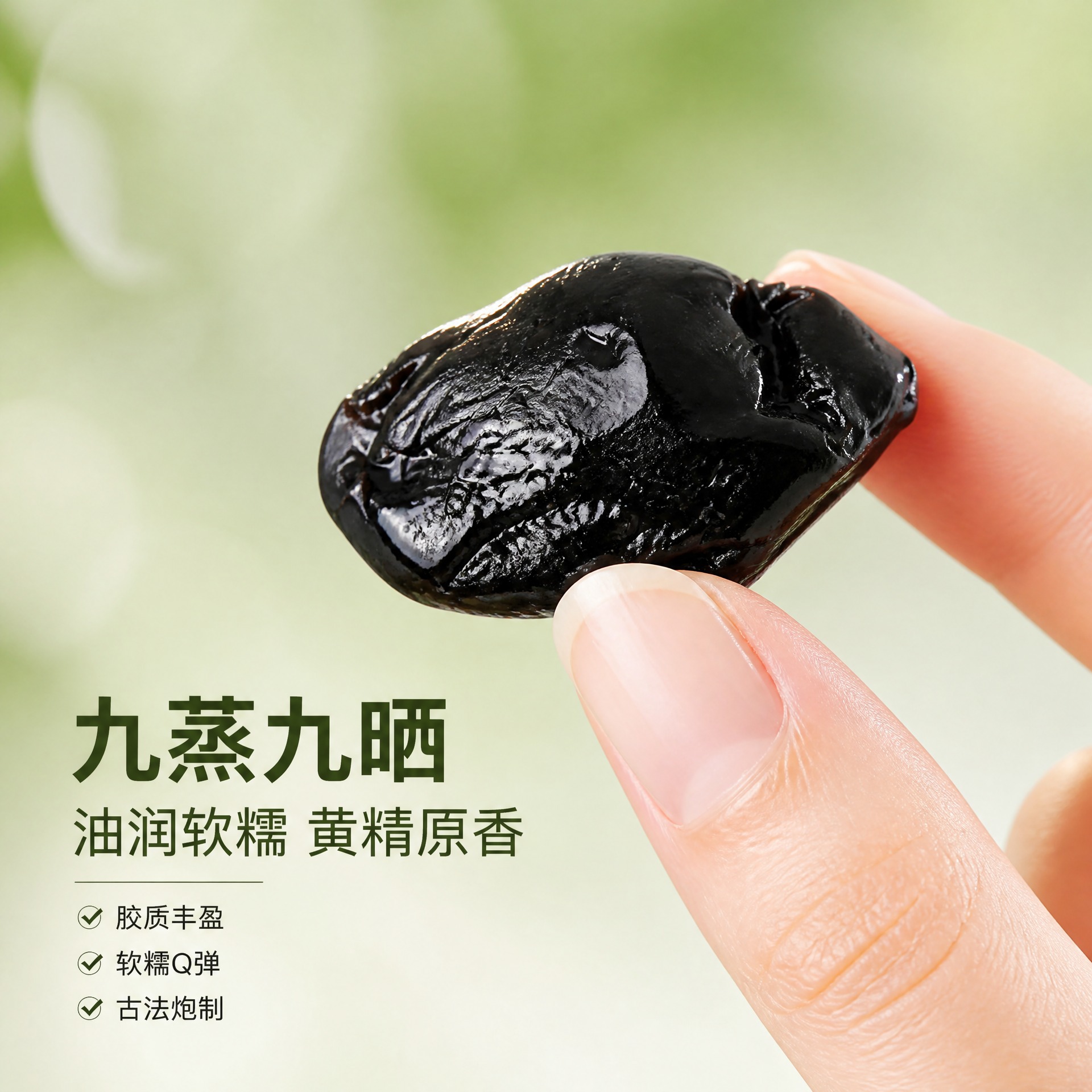
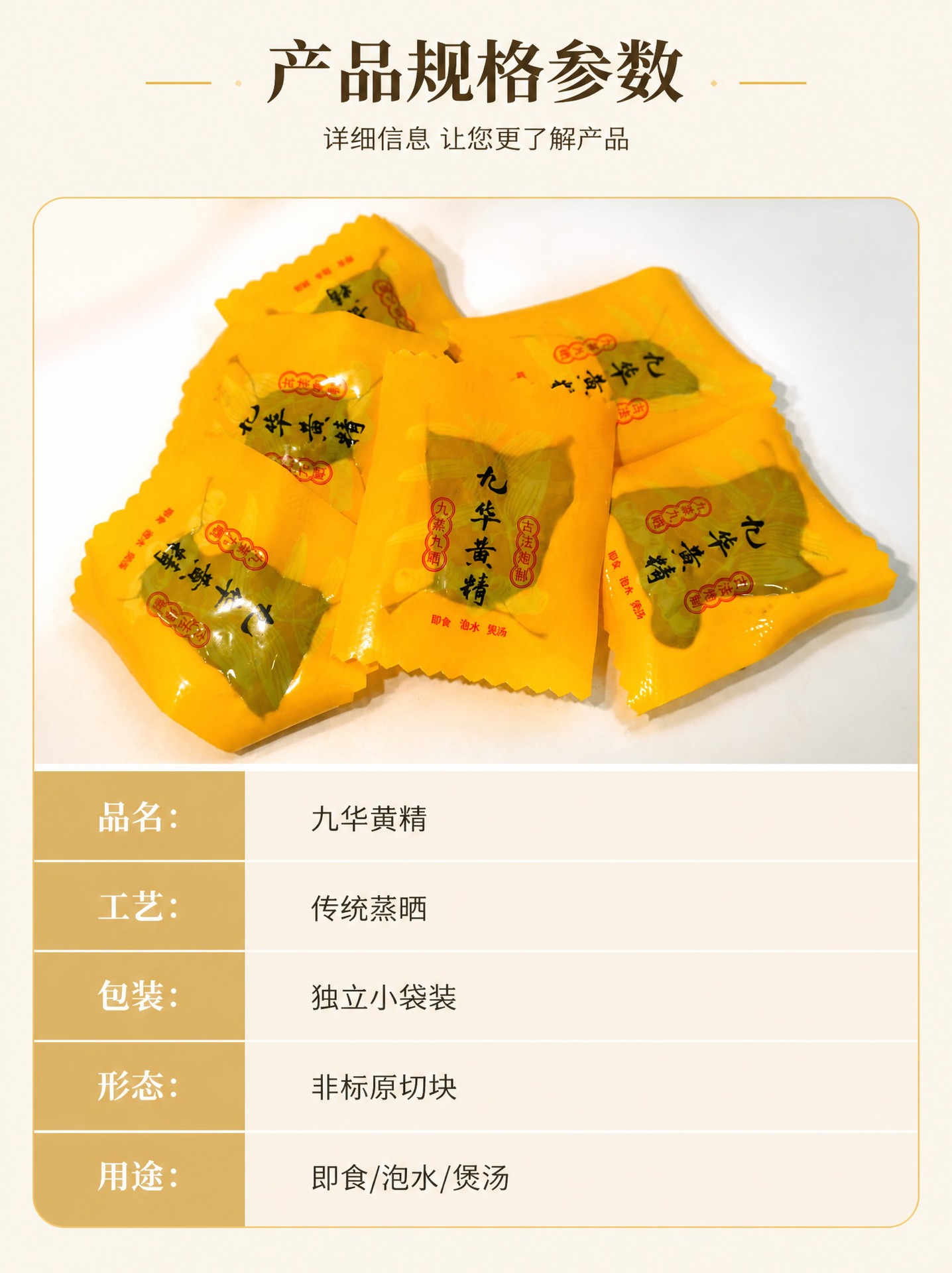
- Traditional nine times steaming and nine times sun drying (九蒸九晒) processing method
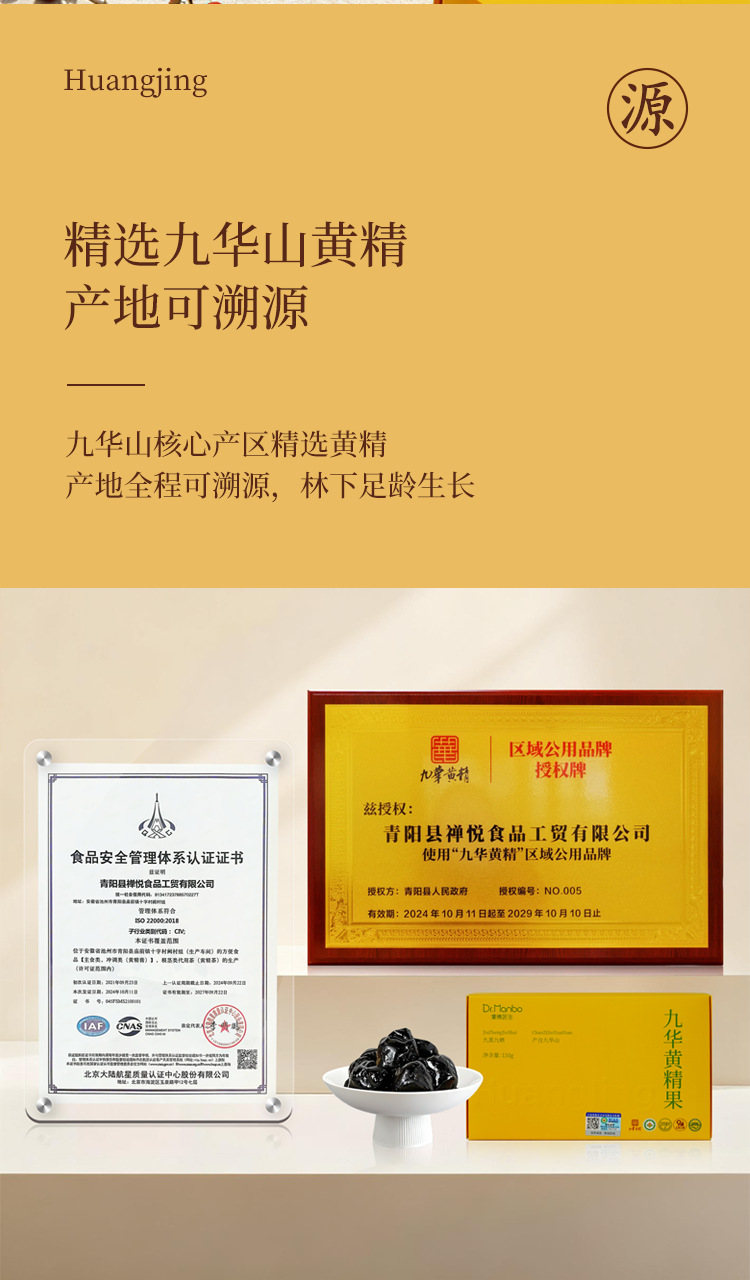
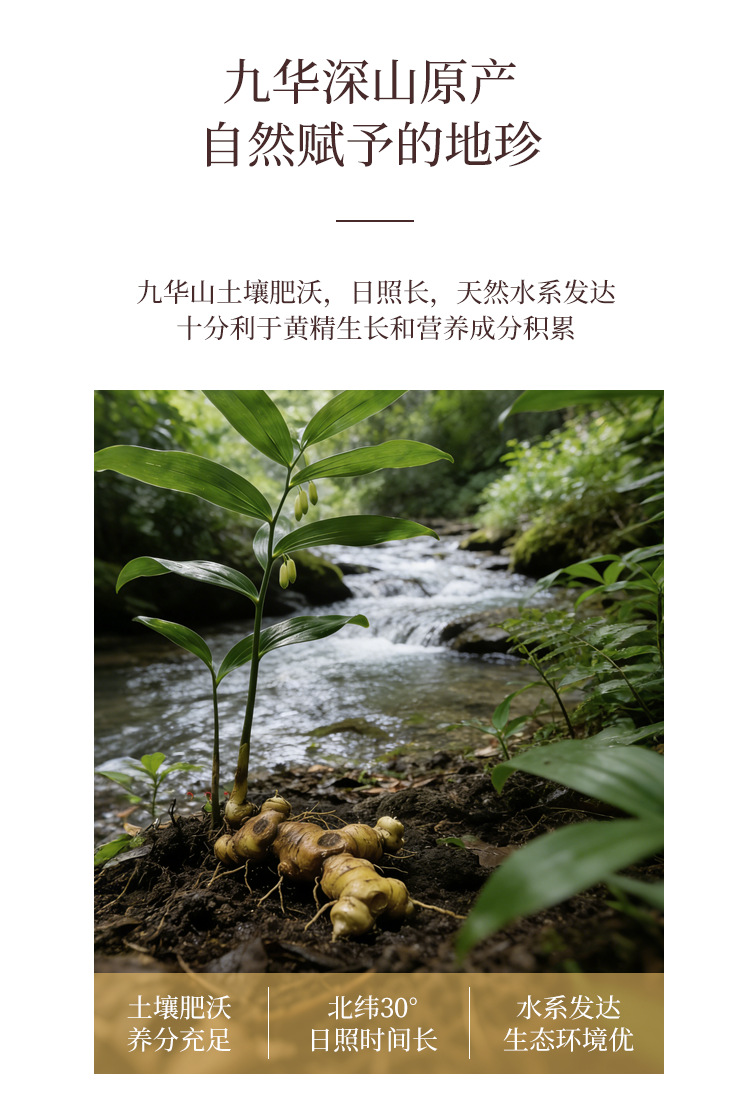
- Sourced from Anhui province, a recognized region for Polygonatum production
- Chewy fruit-like form suitable for direct consumption, tea, or cooking
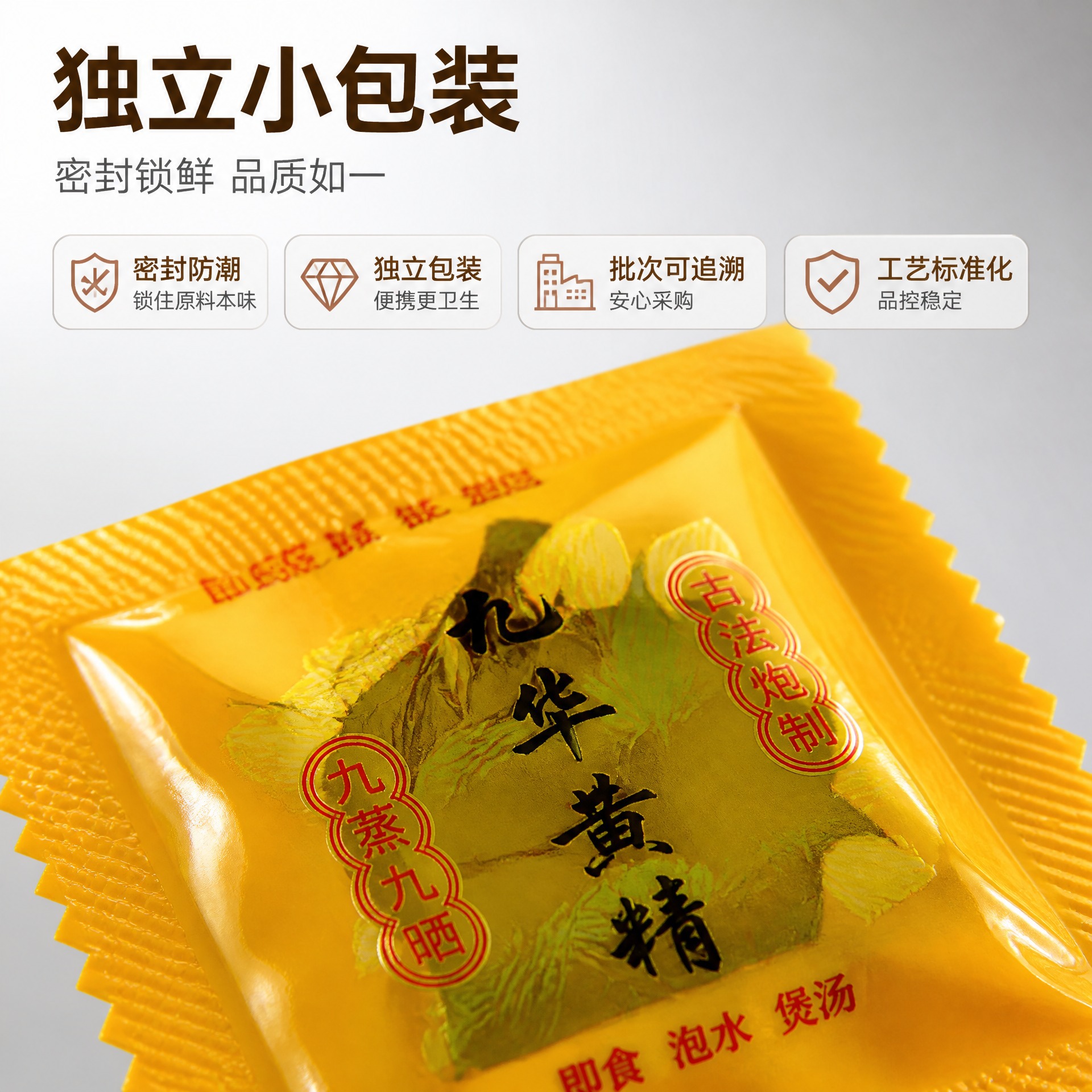
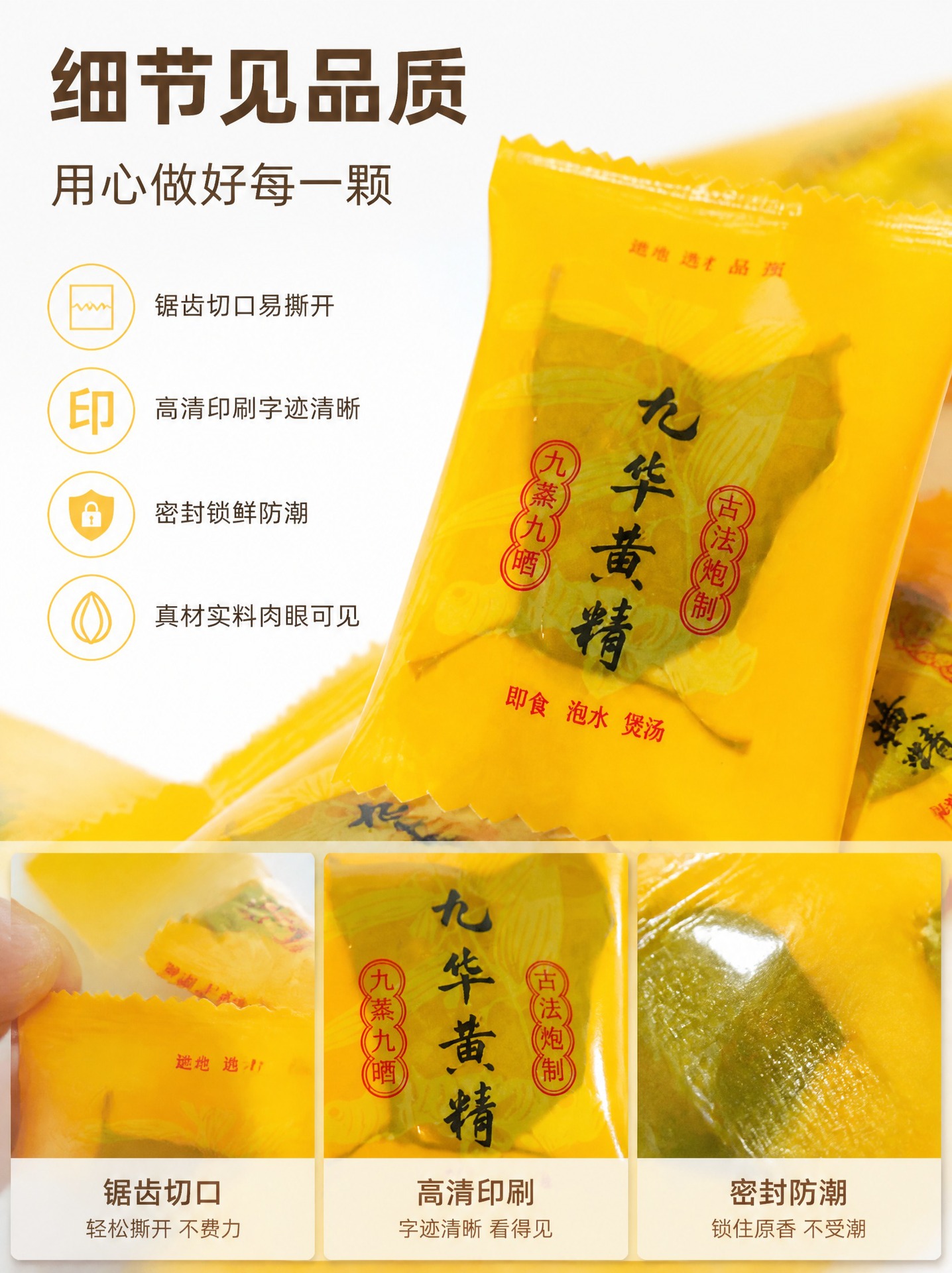
- 500g loose pack with individual inner packaging for convenient daily use
Quality & Sensory
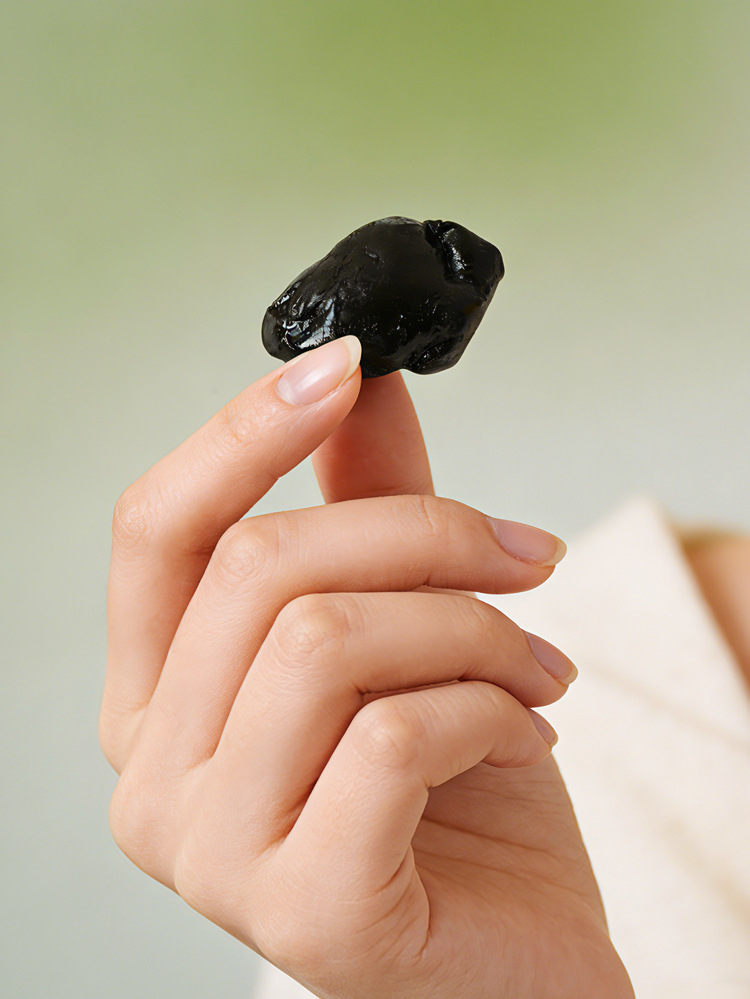
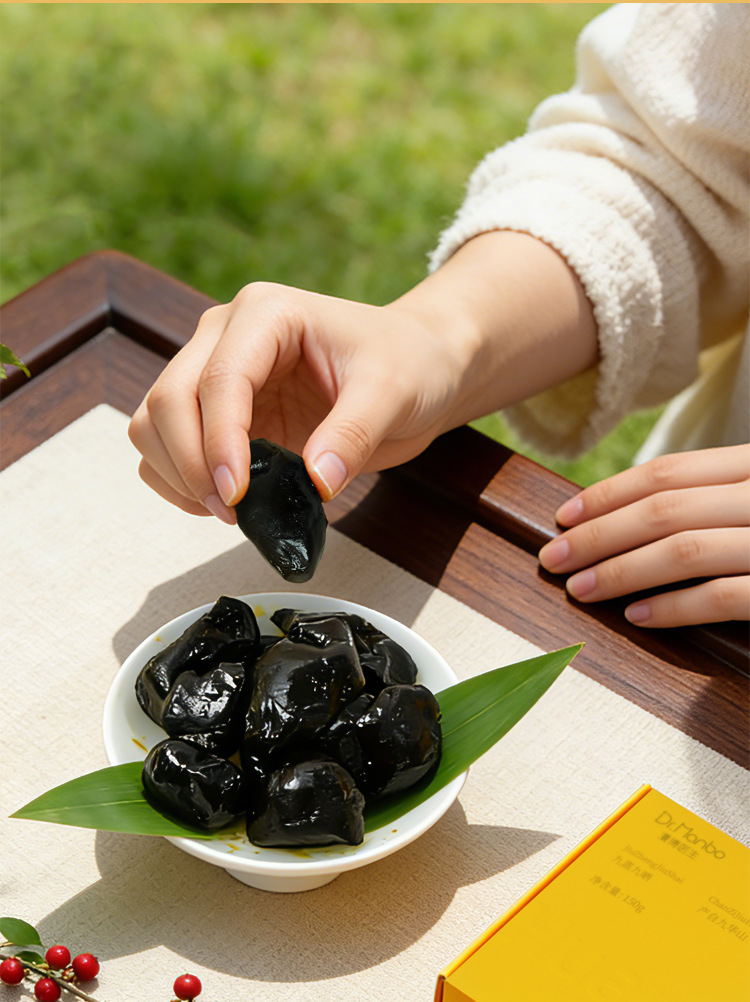
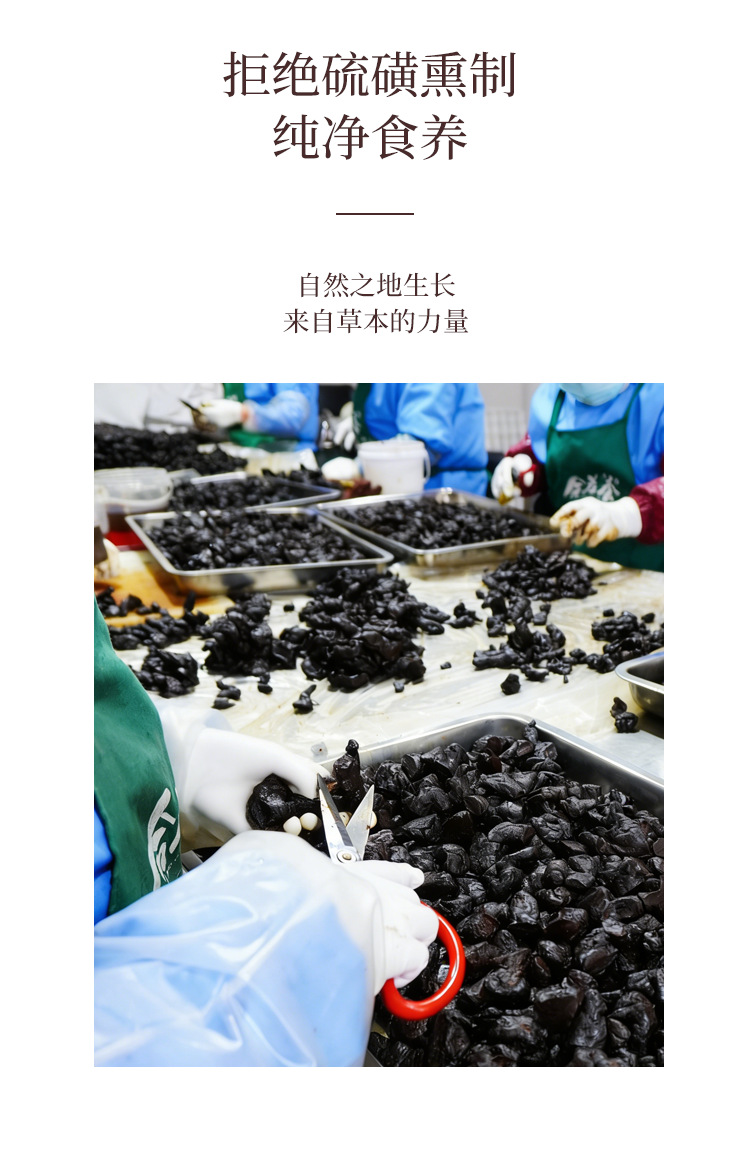
Typically dark brown to blackish after repeated steaming and drying, with a moist, chewy, slightly sticky texture. The aroma is typically sweet and caramel-like, and the taste is characteristically sweet with mild earthy undertones when chewed or steeped.
Technical Specifications
| Product Type | Processed tonic herb snack |
|---|---|
| Chinese Name | 黄精果 |
| Pinyin | Huáng Jīng Guǒ |
| Botanical Name | Polygonatum species |
| Plant Part | Rhizome |
| Processing | Nine times steamed and nine times sun dried |
Usage Scenarios
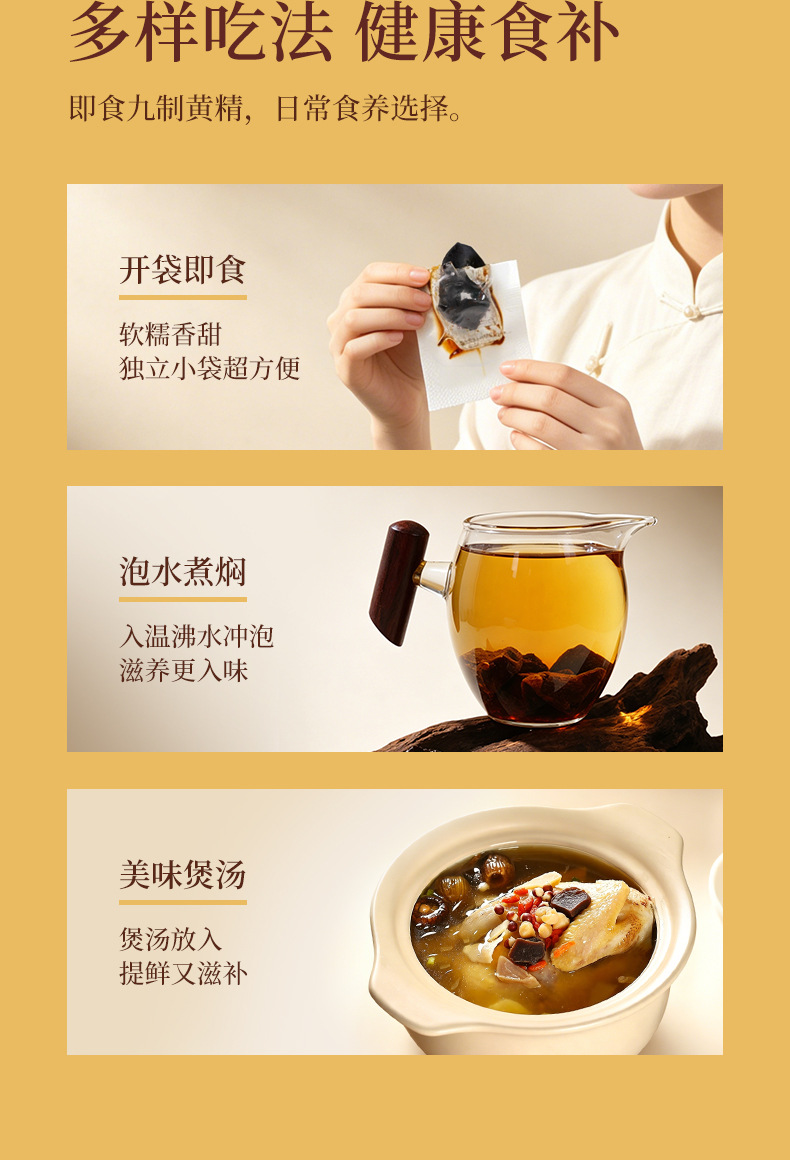
- Steep several pieces in hot water as a daily herbal tea
- Chew directly as a naturally sweet traditional snack
- Simmer in soups or congee alongside other tonic ingredients
- Enjoy during seasonal wellness routines in autumn and winter
Traditional Uses
In TCM practice, Huang Jing has long been valued as a qi and yin nourishing herb, traditionally associated with supporting vitality and moistening dryness. It is a familiar ingredient in longevity-inspired congee, tonic soups, and herbal teas, often paired with goji berries, red dates, or astragalus. The nine steaming and nine drying method is a classical preparation technique passed down through Chinese herbal tradition to refine its flavor and character.
FAQ Q&A
Q: What is Huang Jing Fruit?
A: It is a processed form of Huang Jing (Polygonatum rhizome), prepared by nine rounds of steaming and sun drying into a chewy, fruit-like piece.
Q: What is its traditional value?
A: In TCM theory, Huang Jing is sweet in flavor and traditionally associated with nourishing qi and yin, linked to the lung, spleen, and kidney channels.
Q: How is it commonly used?
A: It can be chewed directly, steeped in hot water as a tea, or simmered in soups and congee according to personal preference.
Additional information
| Weight | 0.55 kg |
|---|---|
| Dimensions | 20 × 15 × 8 cm |
Related products
-
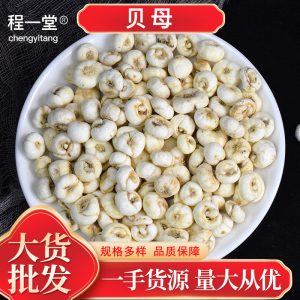
Fritillaria Bulb Chuan Bei Mu Dried Chinese Herbal Bulbs for Decoction and Traditional Use 500g
Price range: $18.06 through $94.21 -
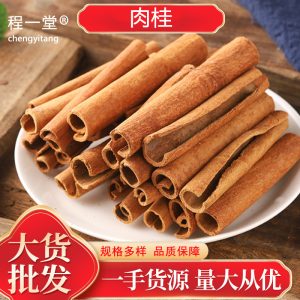
Dried Cinnamon Bark Rou Gui 500g Whole Peeling Culinary Spice and Traditional Herbal Ingredient
Price range: $5.58 through $8.33 -
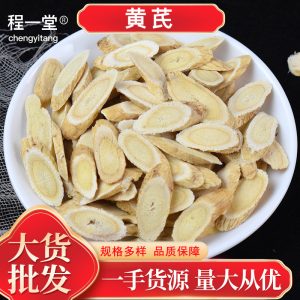
Astragalus Root Slices Huang Qi 斜片 Dried Herb for Decoction Soup and Tea 500g
Price range: $6.06 through $19.51 -
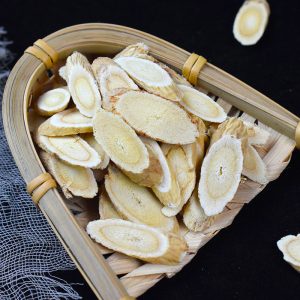
Astragalus Root Slices Huang Qi 500g Dried Herb for Soups and Teas
Price range: $7.36 through $22.11
Reviews
There are no reviews yet.