
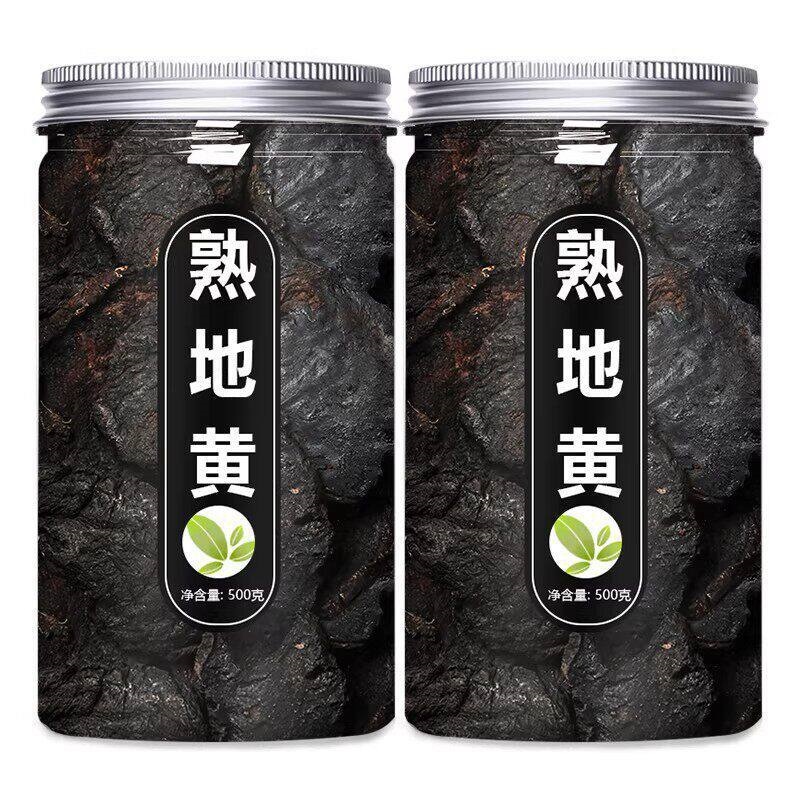
Prepared Rehmannia Root Nine Steam Nine Sun Dried Shu Di Huang Herbal Decoction Pieces
Price range: $5.65 through $8.69
Description
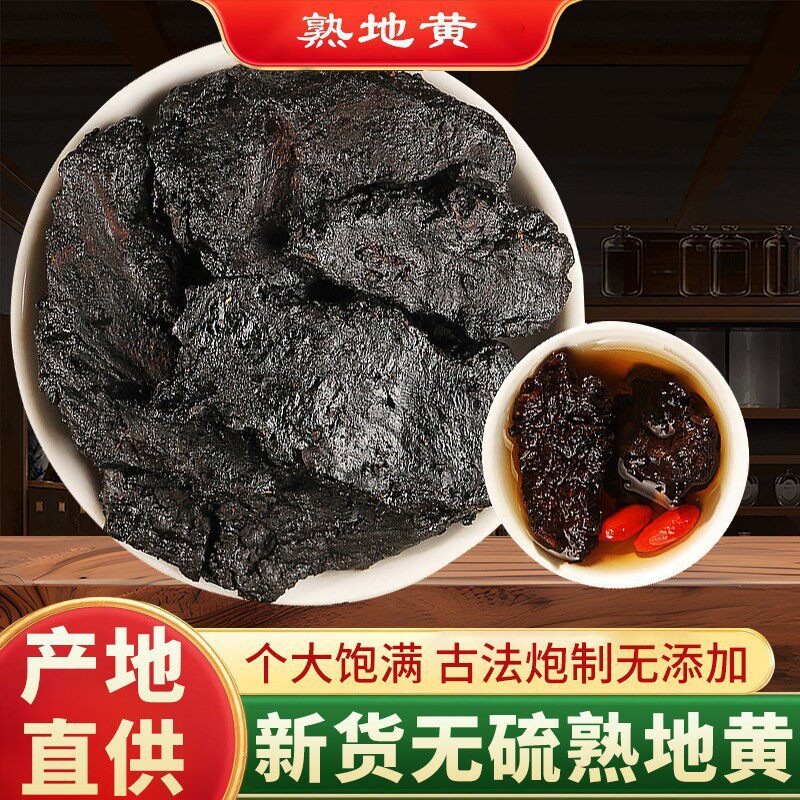
Prepared Rehmannia Root, known in TCM as Shu Di Huang (熟地黄), from Rehmannia glutinosa, is a nine-steam-nine-sun processed root decoction piece. In TCM theory it is sweet and slightly warm, entering the Heart, Liver, and Kidney channels, and is traditionally associated with nourishing Yin and enriching Blood. It is commonly used in decoctions, soups, and congee.
Key Selling Points
- Prepared Rehmannia Root decoction pieces processed by the traditional nine-steam-nine-sun method
- Known in TCM as Shu Di Huang (熟地黄), from Rehmannia glutinosa
- Sweet, slightly warm nature traditionally linked to the Heart, Liver, and Kidney channels
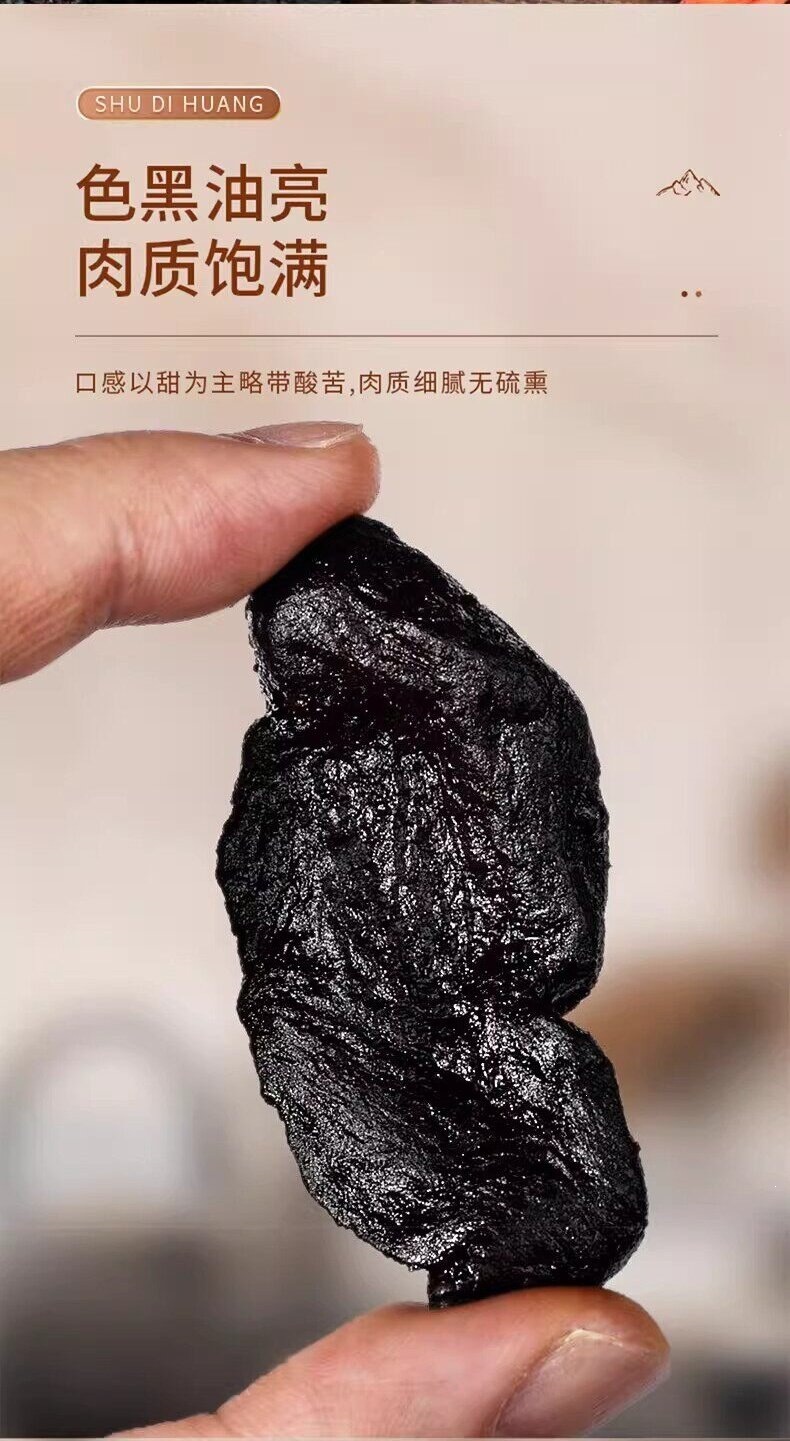
- Dark, soft, sweet-tasting root slices suited to long simmering
- Commonly added to herbal soups, congee, and daily decoctions
Quality & Sensory
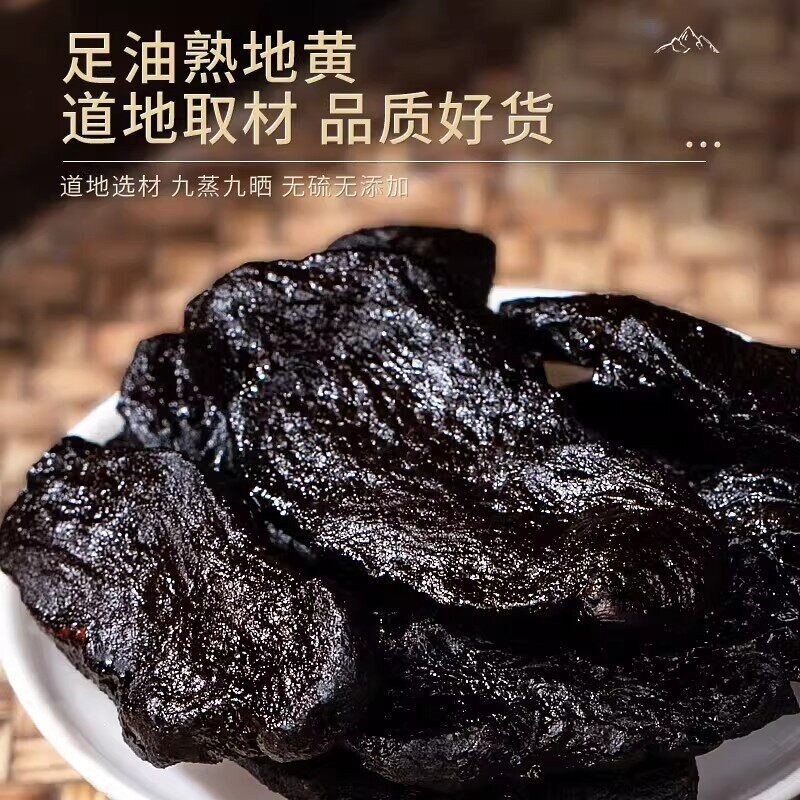
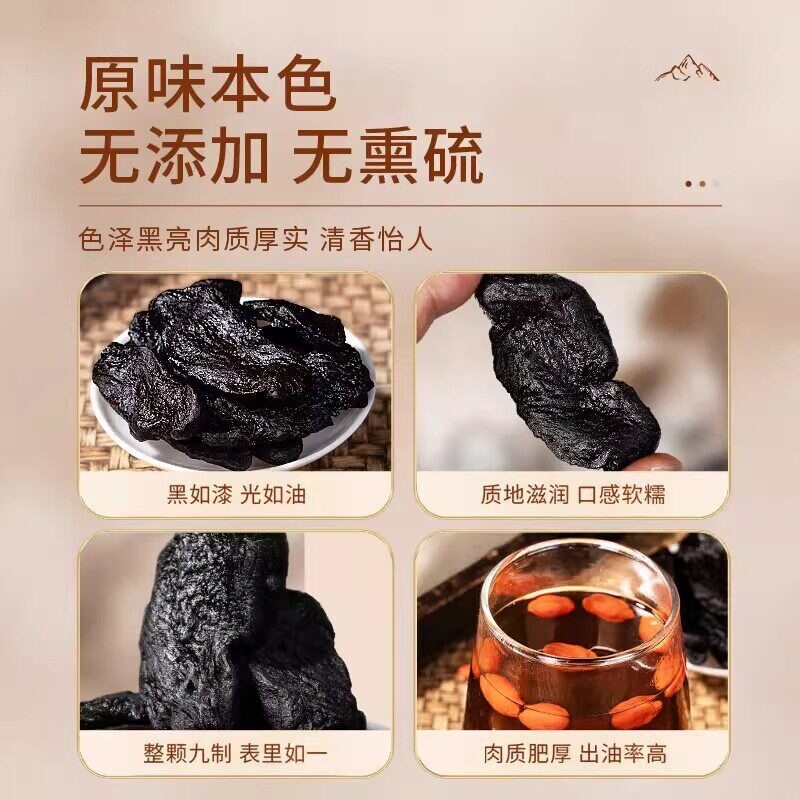
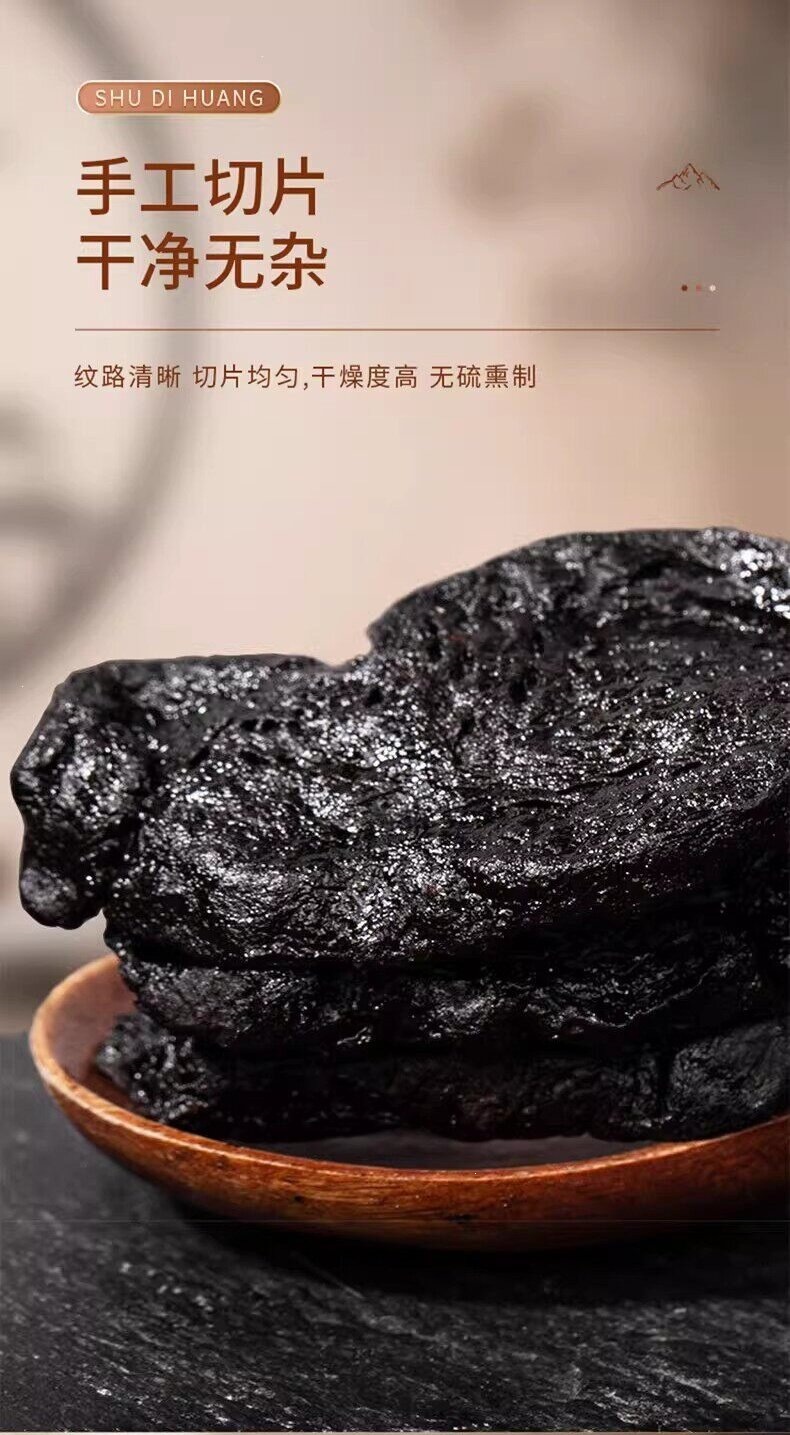
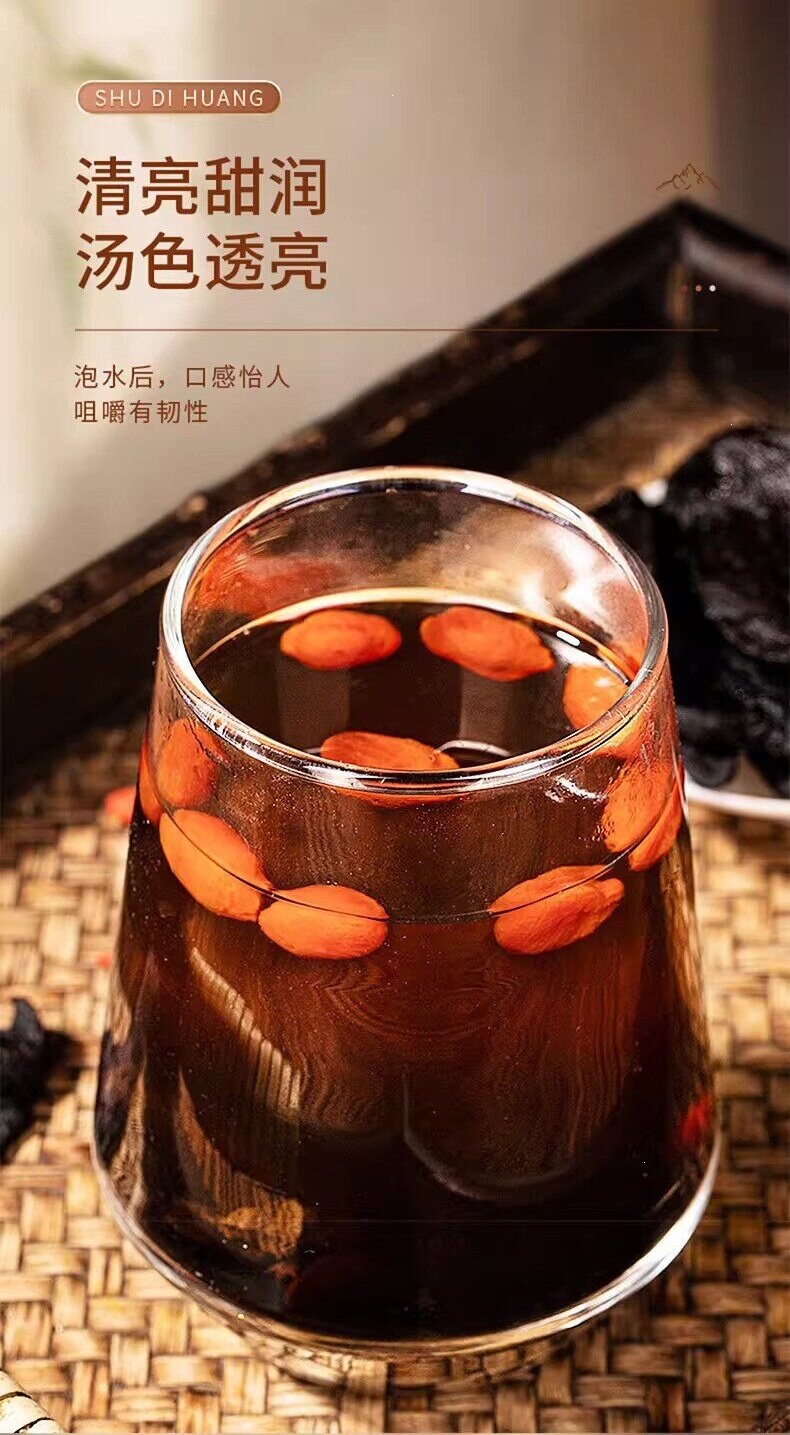
The slices are typically dark brown to black, soft and slightly sticky, with a mild sweet aroma. After decocting or simmering, the liquid is typically dark and carries a deep sweet taste. Actual batch color and texture may vary slightly with processing.
Technical Specifications
| Product Type | Dried herbal decoction pieces |
|---|---|
| Chinese Name | 熟地黄 |
| Pinyin | Shu Di Huang |
| Botanical Name | Rehmannia glutinosa |
| Plant Part | Root |
| Processing | Nine-steam-nine-sun |
Usage Scenarios
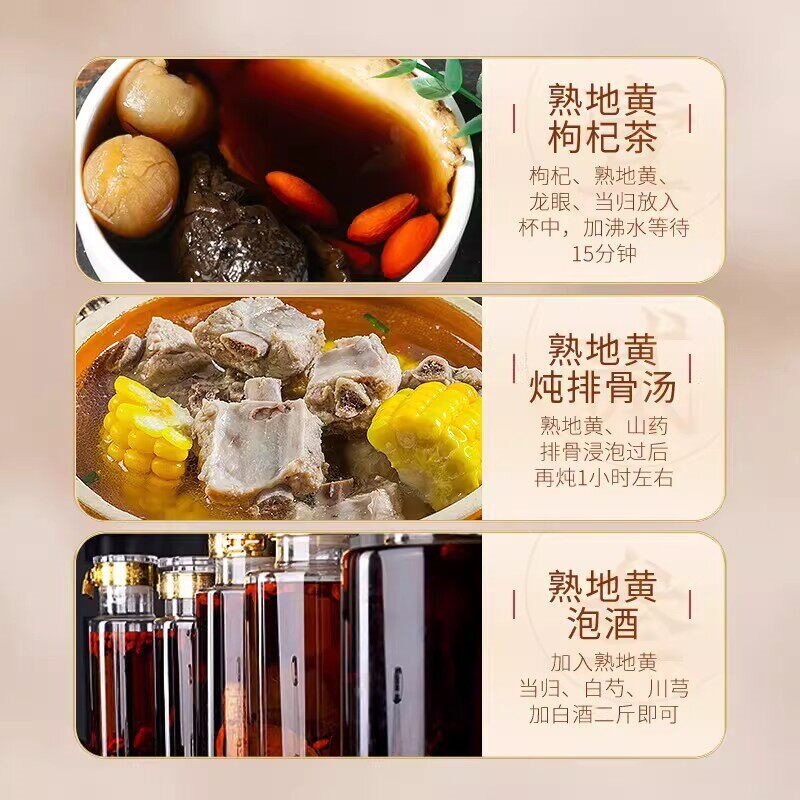
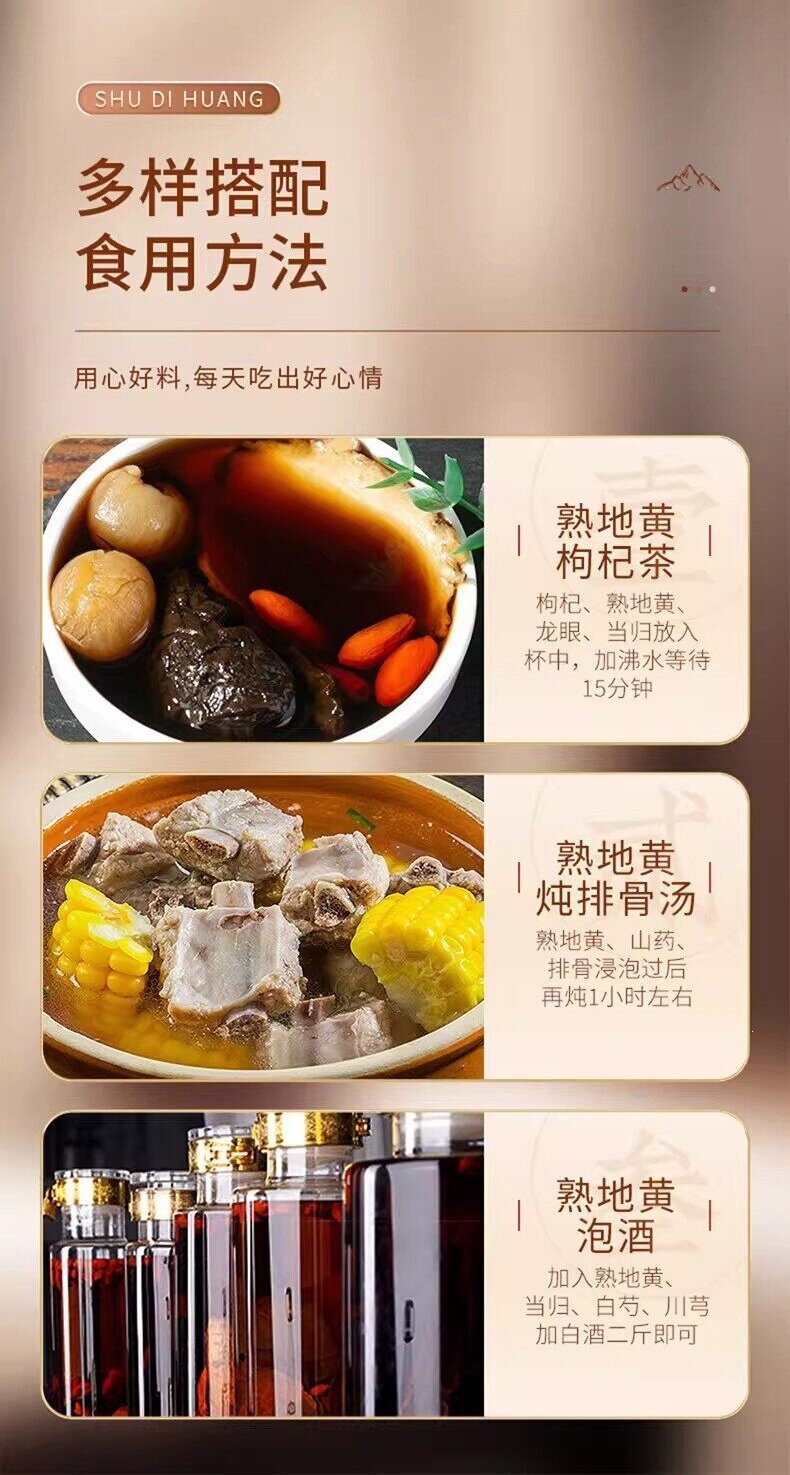
- Simmered in herbal decoctions
- Added to traditional herbal soups
- Cooked into congee
- Used in seasonal tonic food preparations
Traditional Uses
In TCM theory, Shu Di Huang is traditionally used in formulas that nourish Yin and enrich Blood. It is often decocted with herbs such as Dang Gui, Bai Shao, or Shan Zhu Yu, and is also added to soups and congee for gentle daily nourishment. Traditional preparations usually involve simmering the slices slowly to draw out their sweet, dark character.
FAQ Q&A
Q: What is this product?
A: It is Prepared Rehmannia Root, known in TCM as Shu Di Huang (熟地黄), from Rehmannia glutinosa, sold as dried root decoction pieces.
Q: What is it traditionally used for?
A: In TCM theory it is traditionally associated with nourishing Yin and enriching Blood, and it is often included in tonic decoctions and soups.
Q: How is it commonly prepared?
A: It is usually simmered in water as part of a decoction, or added to herbal soups and congee. It is not typically eaten raw.
Additional information
| Weight | N/A |
|---|---|
| Dimensions | N/A |
| Model | 尝鲜体验装 试用熟地黄30g, 人工 熟地黄100g, 人工 熟地黄250g, 人工 熟地黄500g, 组合 熟地黄250g 山茱萸250g, 组合 熟地黄250g 肉苁蓉250g |
Related products
-
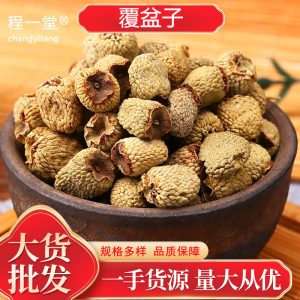
Dried Raspberry Fruit Fu Pen Zi 500g Whole Berries for Herbal Tea and Wine Infusion
Price range: $14.00 through $16.44 -
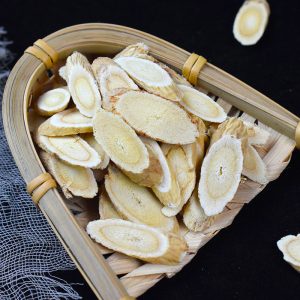
Astragalus Root Slices Huang Qi 500g Dried Herb for Soups and Teas
Price range: $7.36 through $22.11 -

Fritillaria Bulb Chuan Bei Mu Dried Chinese Herbal Bulbs for Decoction and Traditional Use 500g
Price range: $18.06 through $94.21 -

Yi Zhi Ren Dried Alpinia Oxyphylla Fruit 500g Traditional Herbal Tea and Decoction Ingredient
Price range: $11.74 through $13.36
Reviews
There are no reviews yet.