
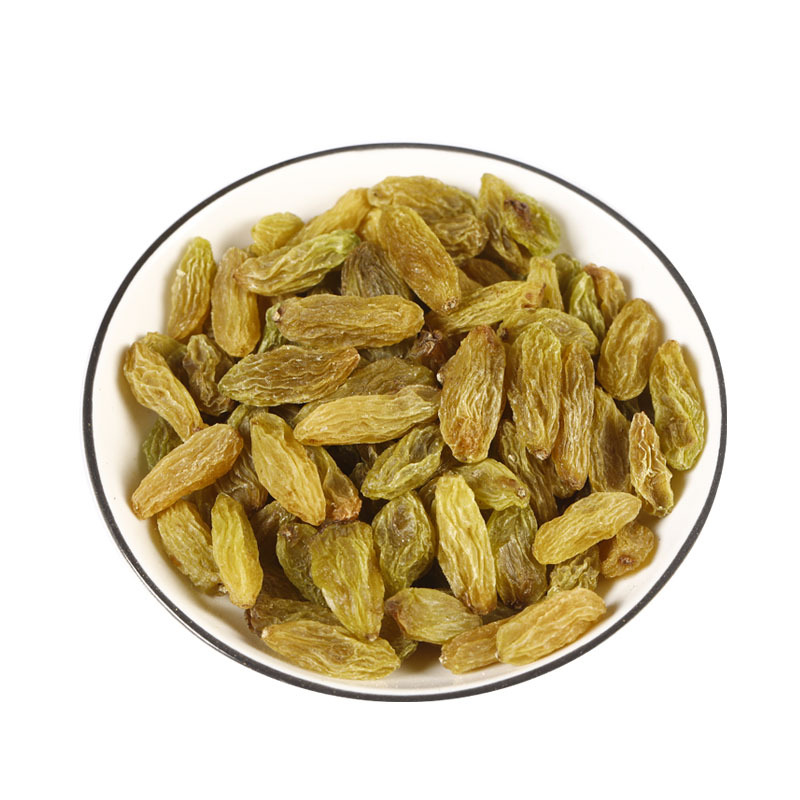
Raisins (Vitis vinifera) — Dried Seedless Grapes, Food-Herb Fruit for Teas, Congee & Tonics
$5.74
1260 in stock
Description
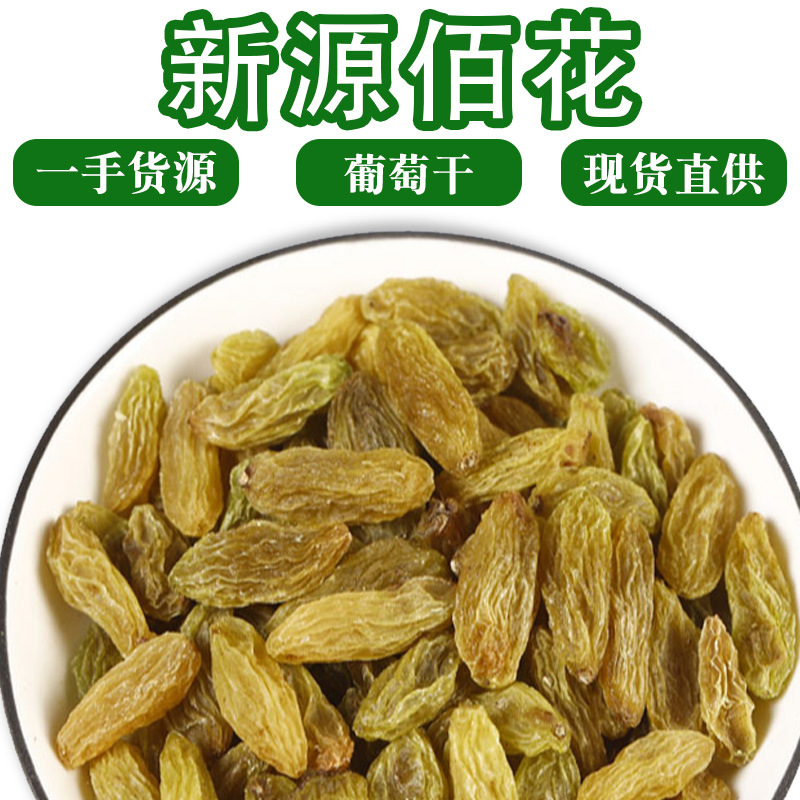
Raisins (Vitis vinifera) are the sun-dried, seedless fruits of the grape vine, known in Traditional Chinese Medicine (TCM) as Pú Táo Gān (葡萄干). Long prized as a sweet, blood-nourishing food herb, raisins have been used for centuries to build qi and blood, moisten dryness, and support the Spleen and Liver. Their nature is sweet and slightly warm, making them a gentle yet deeply nourishing fruit for daily wellness and culinary use.

Key Selling Points
- Traditional blood-nourishing food herb
- Sun-dried seedless grapes
- Vitis vinifera
- Ready-to-eat, no washing needed
- 500g bulk pack for daily use

Quality & Sensory
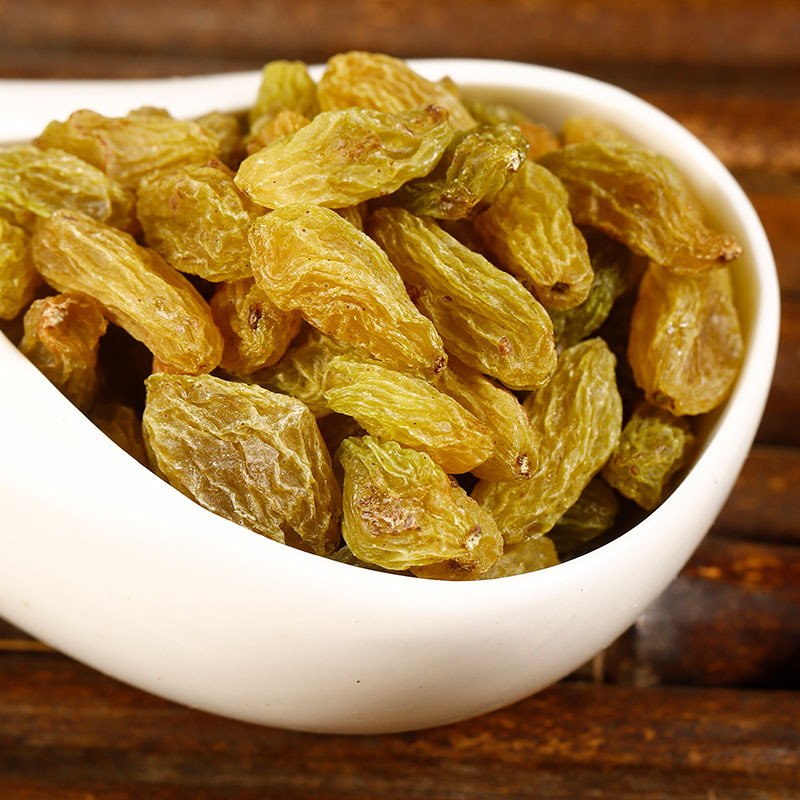
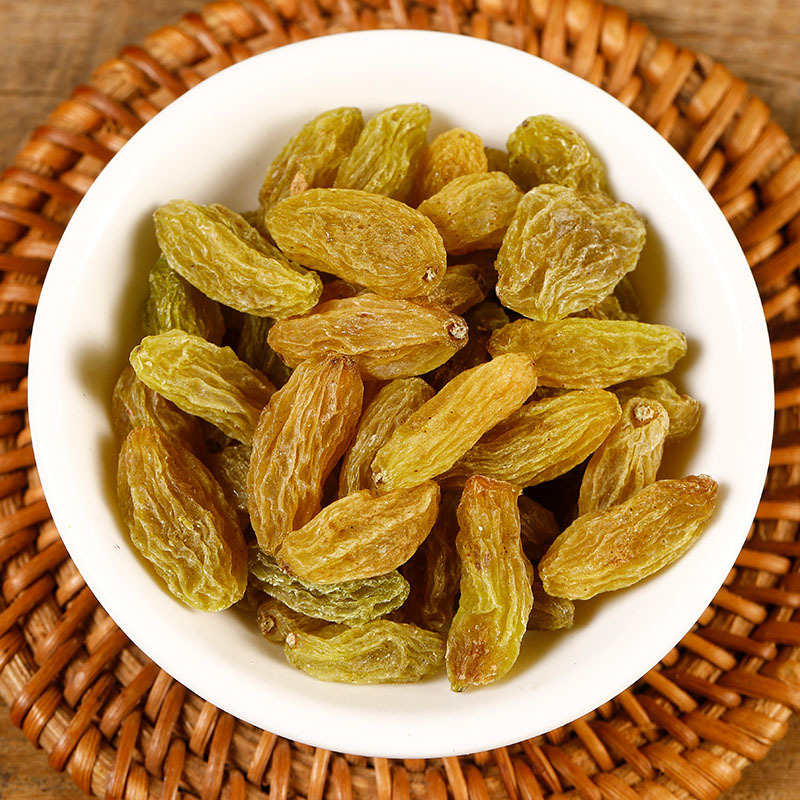
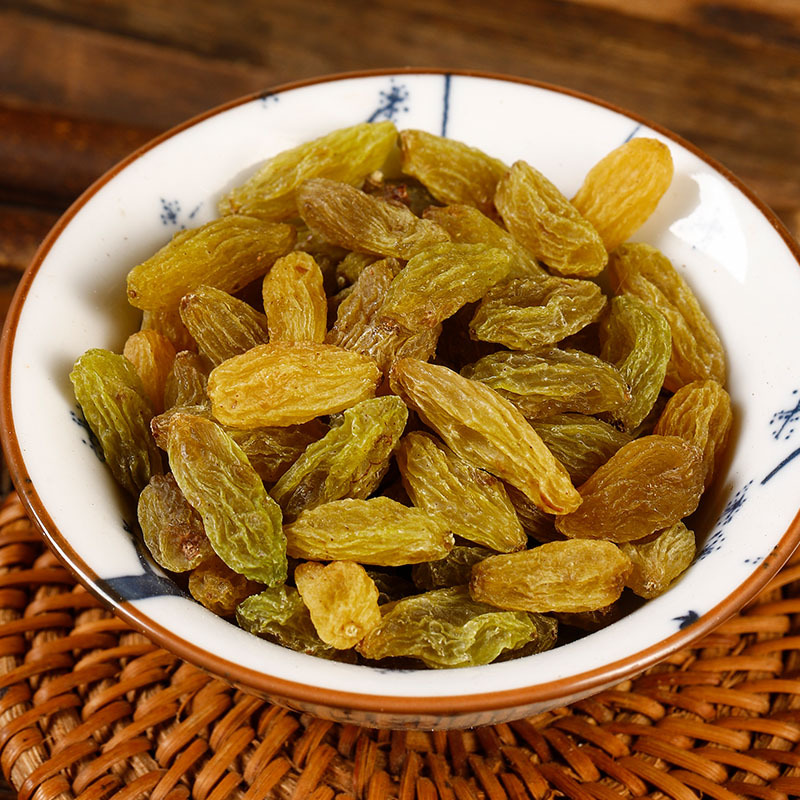
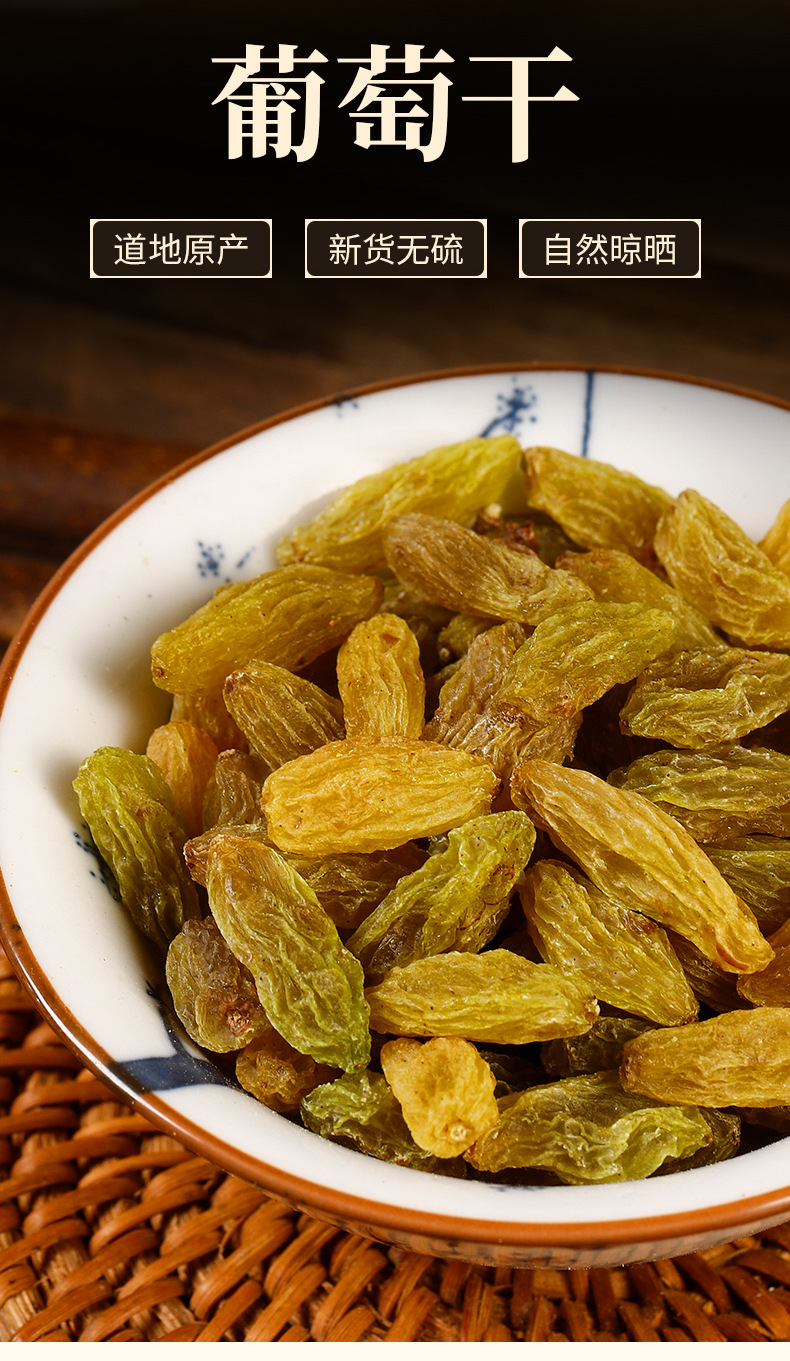
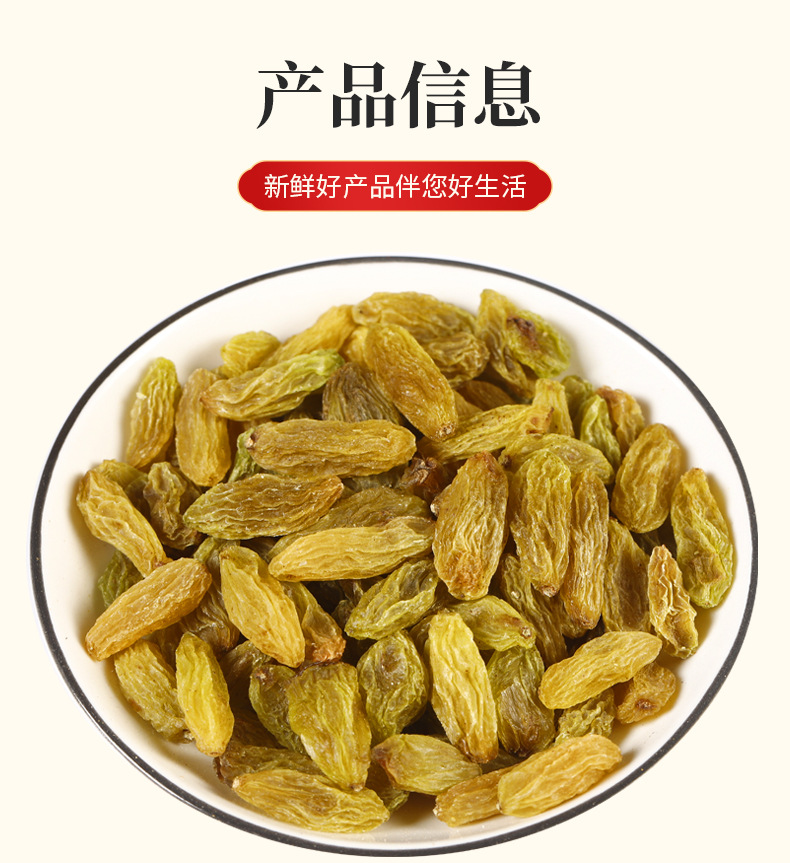
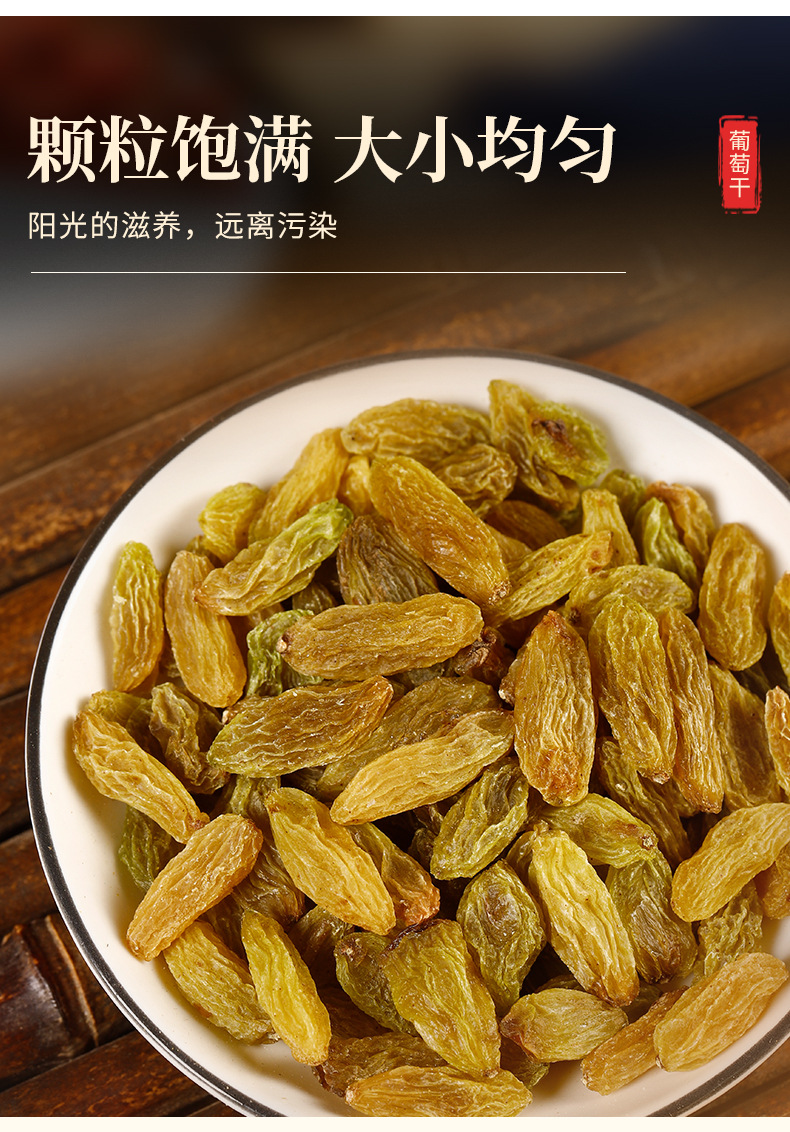
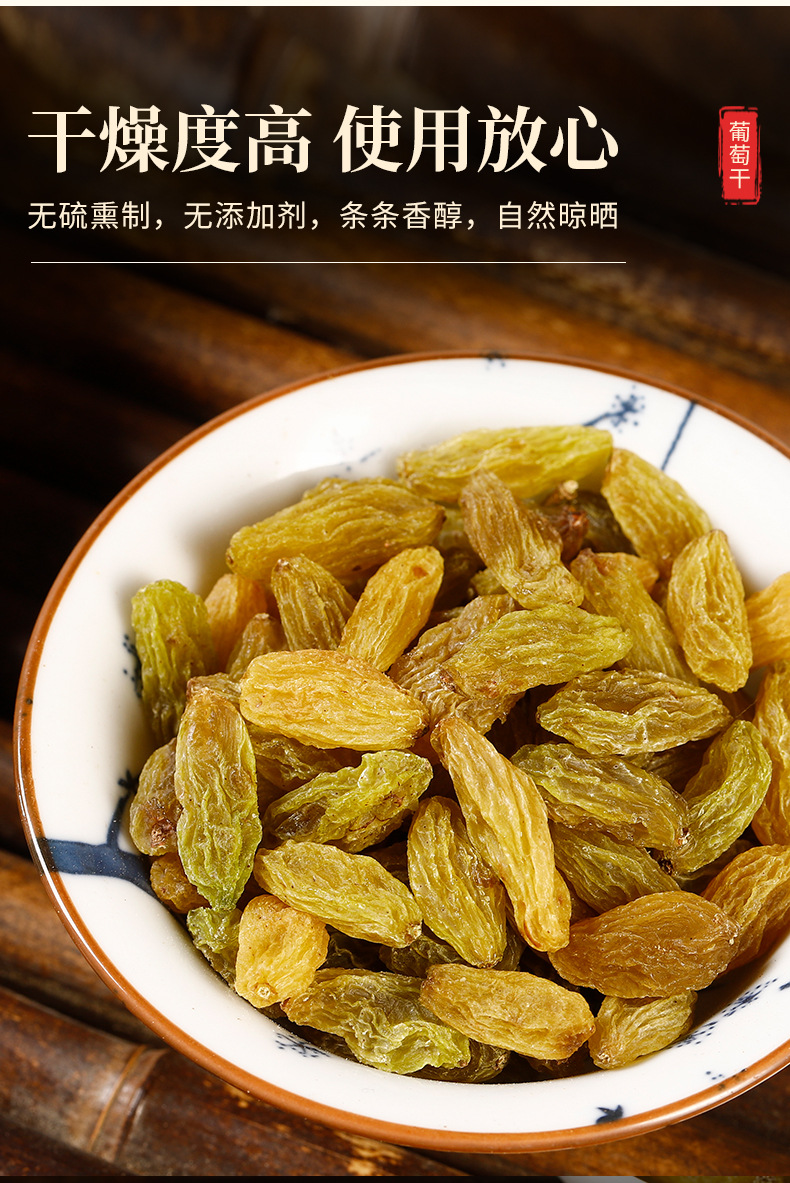
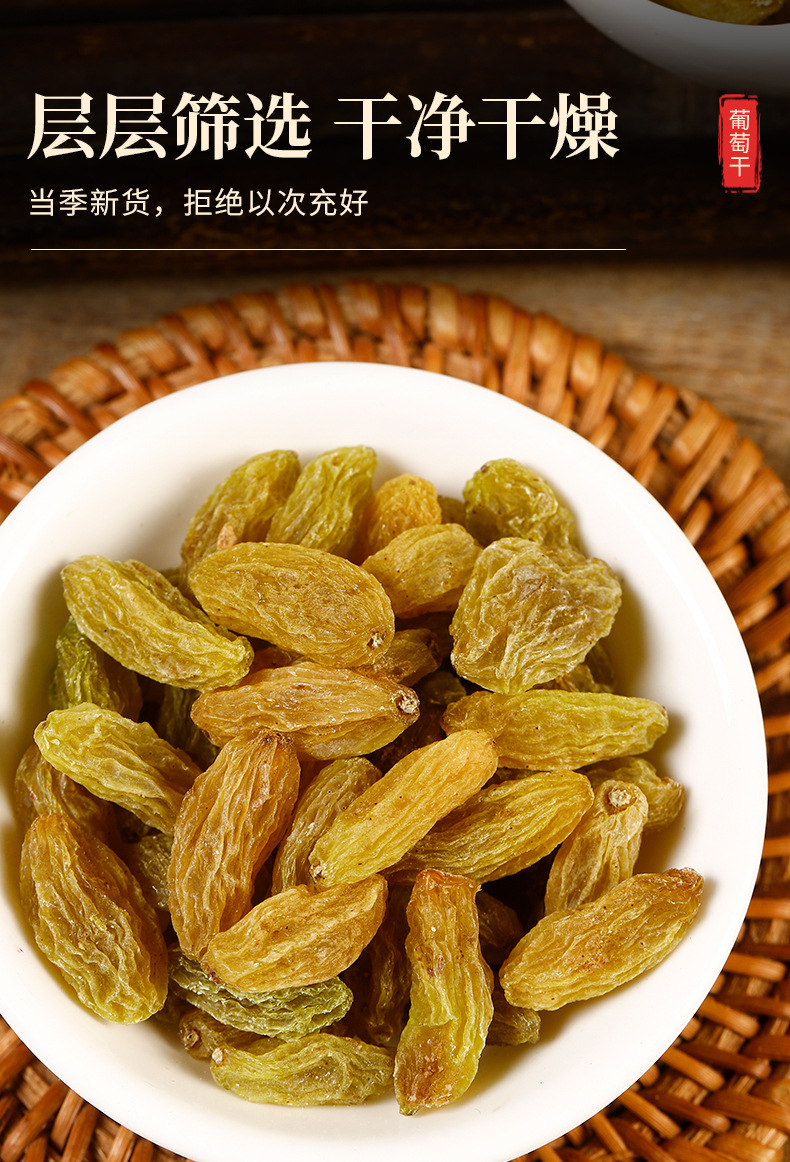
Each batch is sun-dried to preserve its deep amber-to-purple color, soft chewy texture, and naturally sweet, honeyed aroma. The raisins are plump and uniform, with a tender bite that releases a rich, mellow sweetness. When simmered in tea or congee, they soften further and lend a warm, fruity depth to the brew.
Technical Specifications
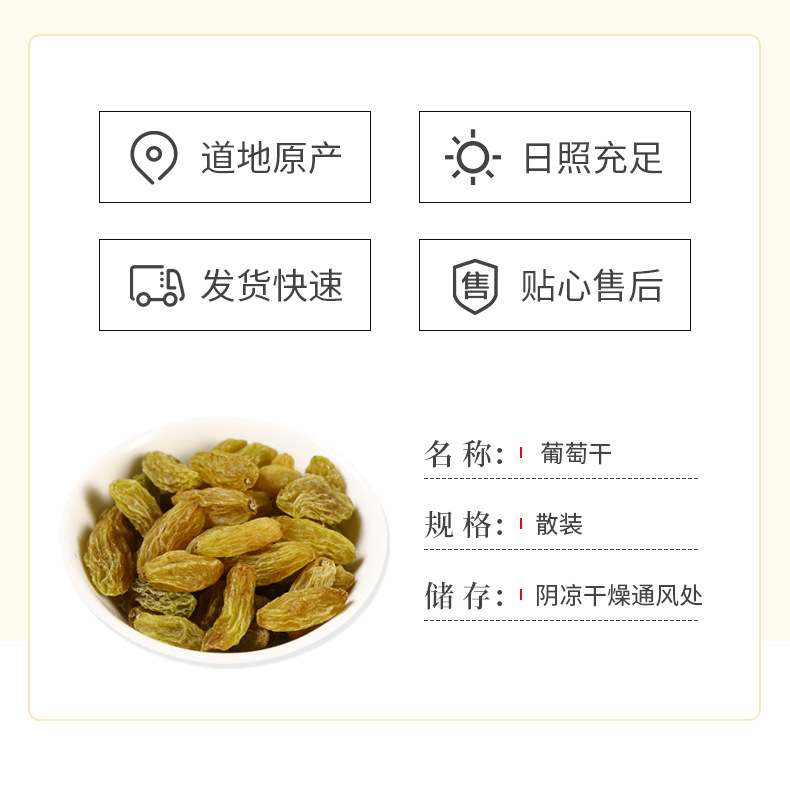
| Product Type | Dried Fruit / Food Herb |
|---|---|
| Common Name | Raisins |
| Botanical Name | Vitis vinifera |
| Form | Dried Whole Fruit |
| Net Weight | 500g |
| Processing | Sun-Dried |
Usage Scenarios
- Herbal tea blends
- Congee and grain porridge
- Soup and tonic cooking
- Baking and dessert topping
- Ready-to-eat snack
Traditional Uses
In folk herbal practice, raisins are simmered into teas, congee, and nourishing soups to support daily blood and qi. They are a common ingredient in longevity tonics, paired with jujube, goji berry, and longan. As a daily tea, they are brewed alone or blended with ginger and red date for a warm, sweet infusion. In medicinal food cooking, they add natural sweetness to stews and grain dishes.

FAQ Q&A
Q: What are raisins in TCM?
A: Raisins are the dried fruit of Vitis vinifera, known in TCM as Pu Tao Gan. They are traditionally used as a sweet, blood-nourishing food herb that supports the Spleen and Liver.
Q: What is the traditional wellness value of raisins?
A: In traditional Chinese food wellness culture, raisins are associated with nourishing blood, building qi, and moistening dryness. They are often used in teas, congee, and tonics for daily nourishment.
Q: How do I use dried raisins?
A: Raisins are ready to eat and can be added directly to tea, congee, soups, or baked goods. For a warm infusion, simmer a small handful in water with jujube or ginger.

Additional information
| Weight | 0.72 kg |
|---|---|
| Dimensions | 25 × 18 × 10 cm |
Related products
-
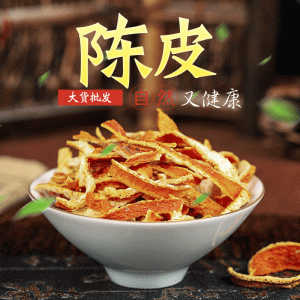
Chen Pi Shreds (Citrus reticulata) — Aged Dried Tangerine Peel, Unsulfured, 500g
$4.93 -
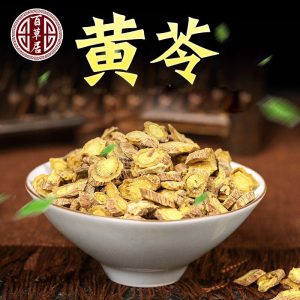
Huang Qin Slices (Scutellaria baicalensis) — Dried Chinese Skullcap Root, Unsulfured 500g
$6.23 -
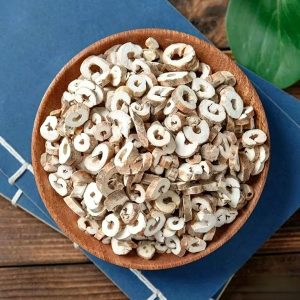
Mu Dan Pi Slices (Moutan Cortex) — Unsmoked Dan Pi Root Bark for Cooking & Tea
Price range: $4.61 through $11.57 -
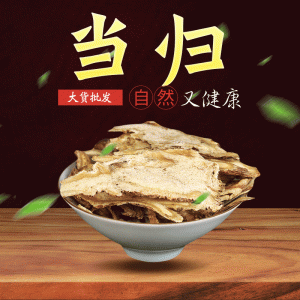
Dang Gui Slices (Angelica sinensis) — Gansu Minxian Dried Root Slices for Cooking & Tea
Price range: $4.44 through $20.49
Reviews
There are no reviews yet.