
Dried Osmanthus Flowers (Osmanthus fragrans) — Guangxi Dan Gui Edible Herb for Tea
$5.08
9990213 in stock
Description
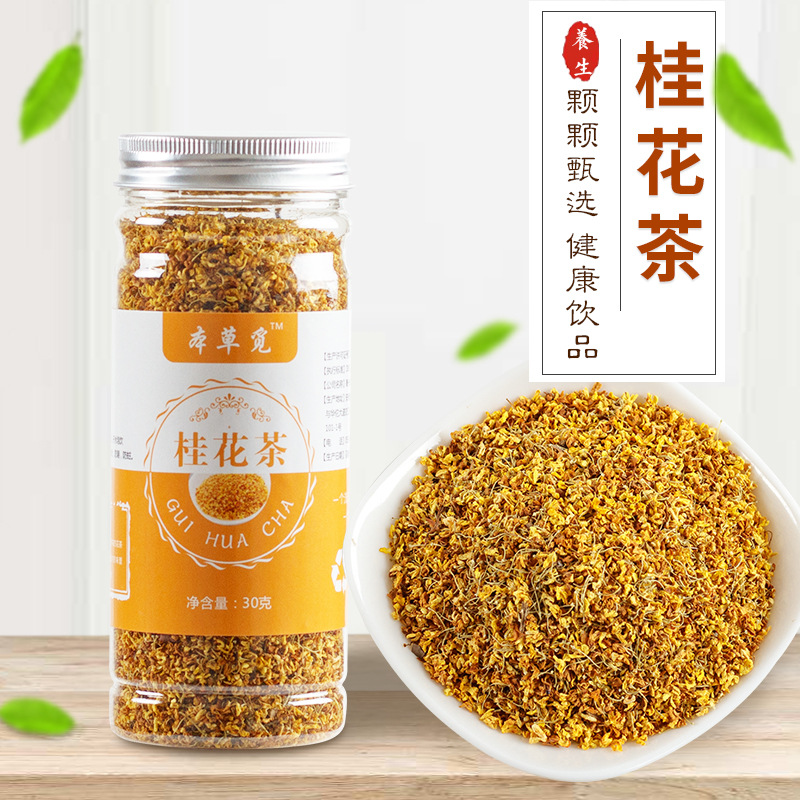
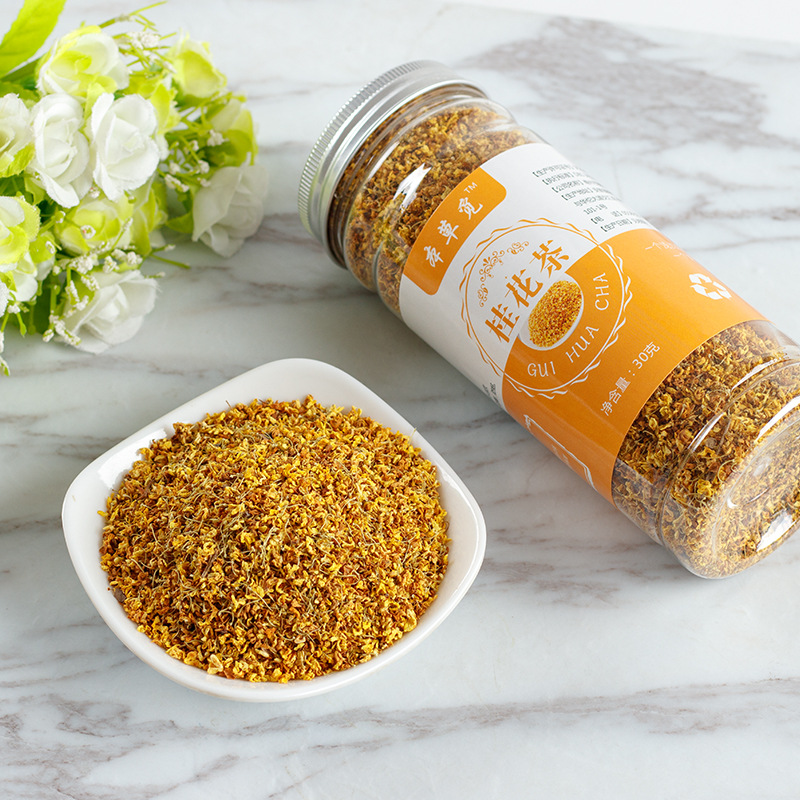
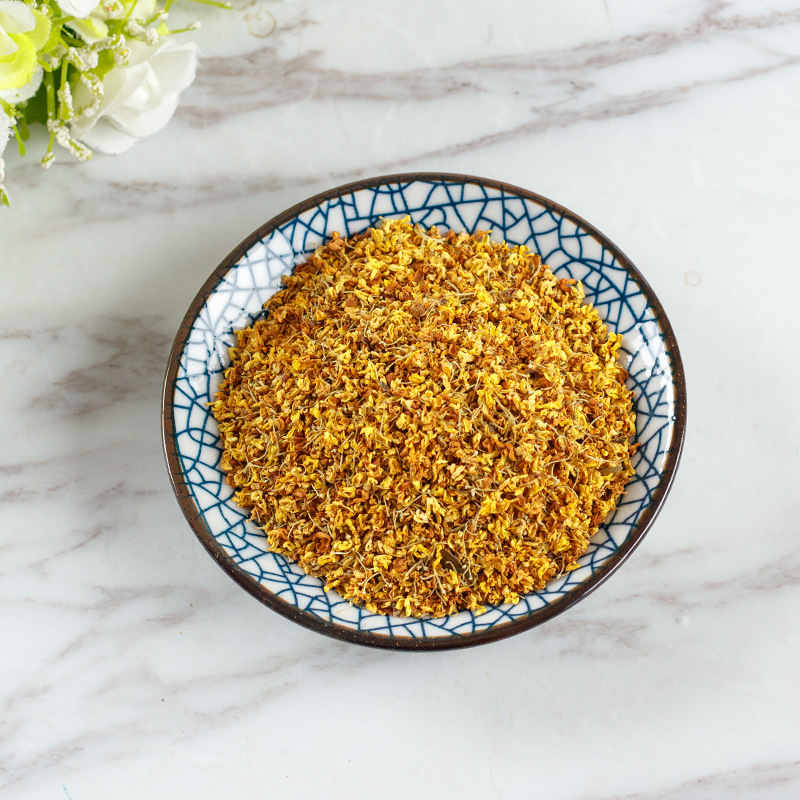
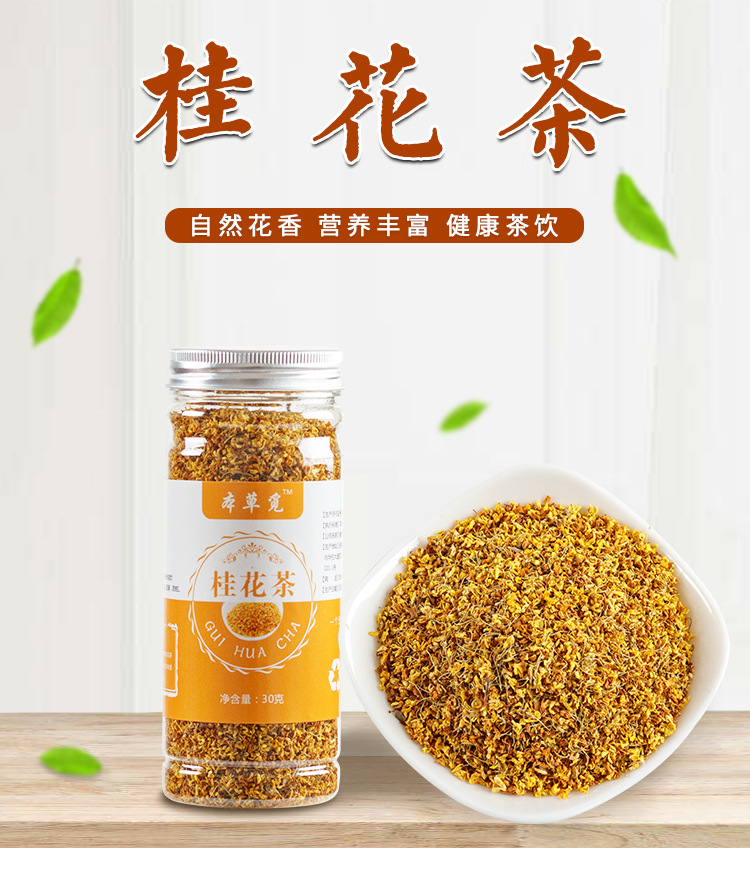
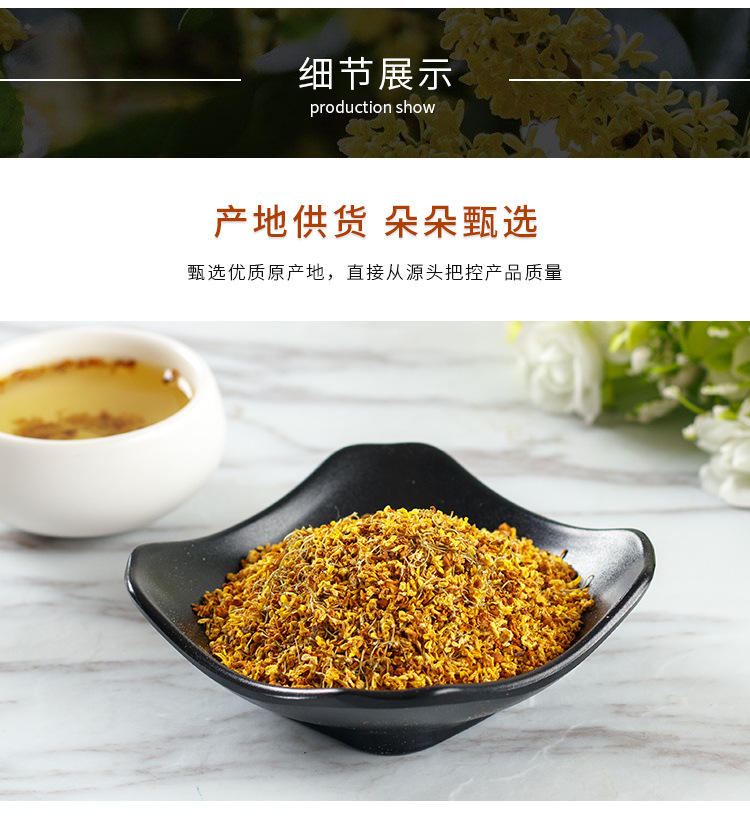
Dried Osmanthus Flowers (Osmanthus fragrans) are the sun-dried blossoms of the fragrant osmanthus tree, known in Traditional Chinese Medicine (TCM) as Guì Huā (桂花) and honored as one of China's most beloved aromatic flowers. The Dan Gui (丹桂) variety from Guangxi is prized for its deep golden-orange petals and rich, honeyed fragrance. Its nature is warm and its flavor is pungent and sweet, making it a gentle, aromatic herb traditionally used to warm the middle, harmonize the stomach, and refresh the spirit.
Key Selling Points
- Dan Gui variety from Guangxi, deep golden-orange petals
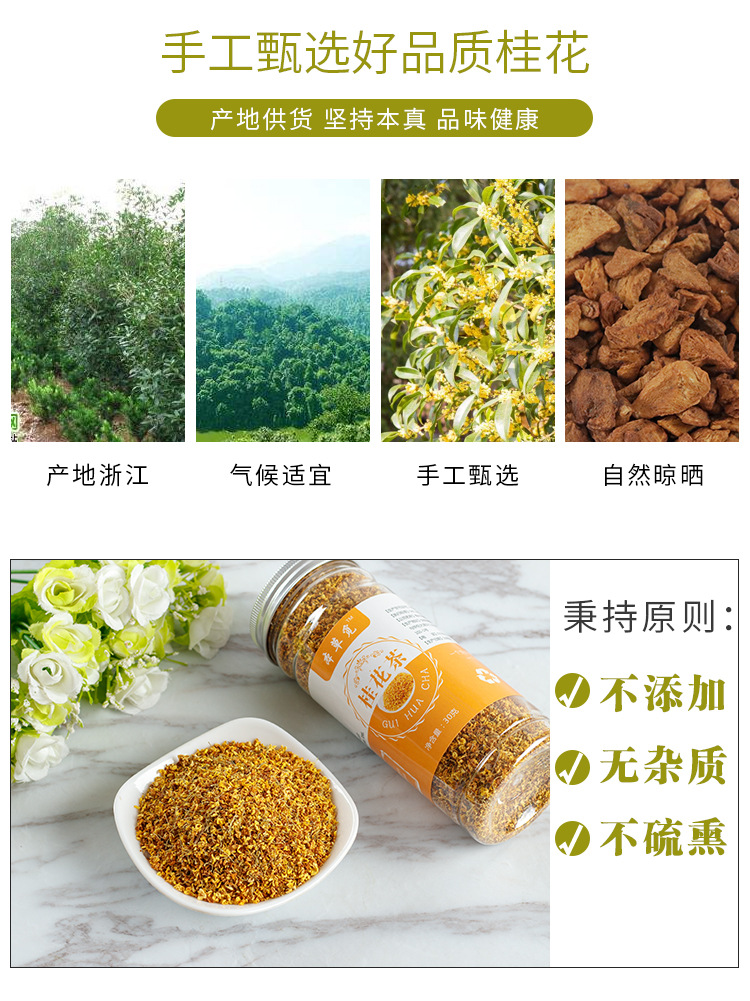
- Sulfur-free, food-grade edible flowers
- Ready to use — no washing needed
- Warm, aromatic nature for tea and culinary use
- New-crop, freshly dried and sealed in a jar
Quality & Sensory
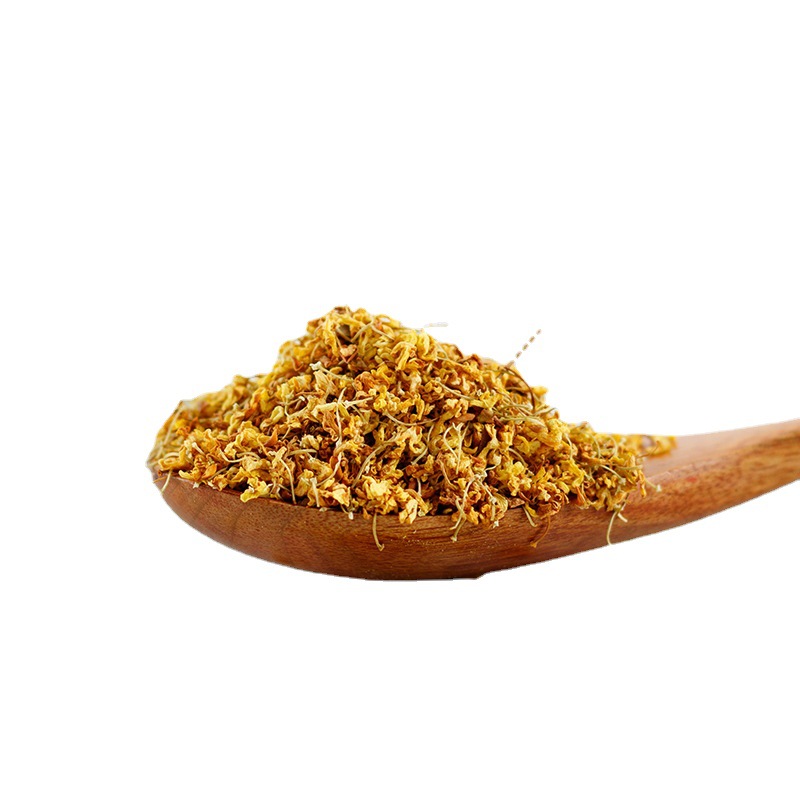
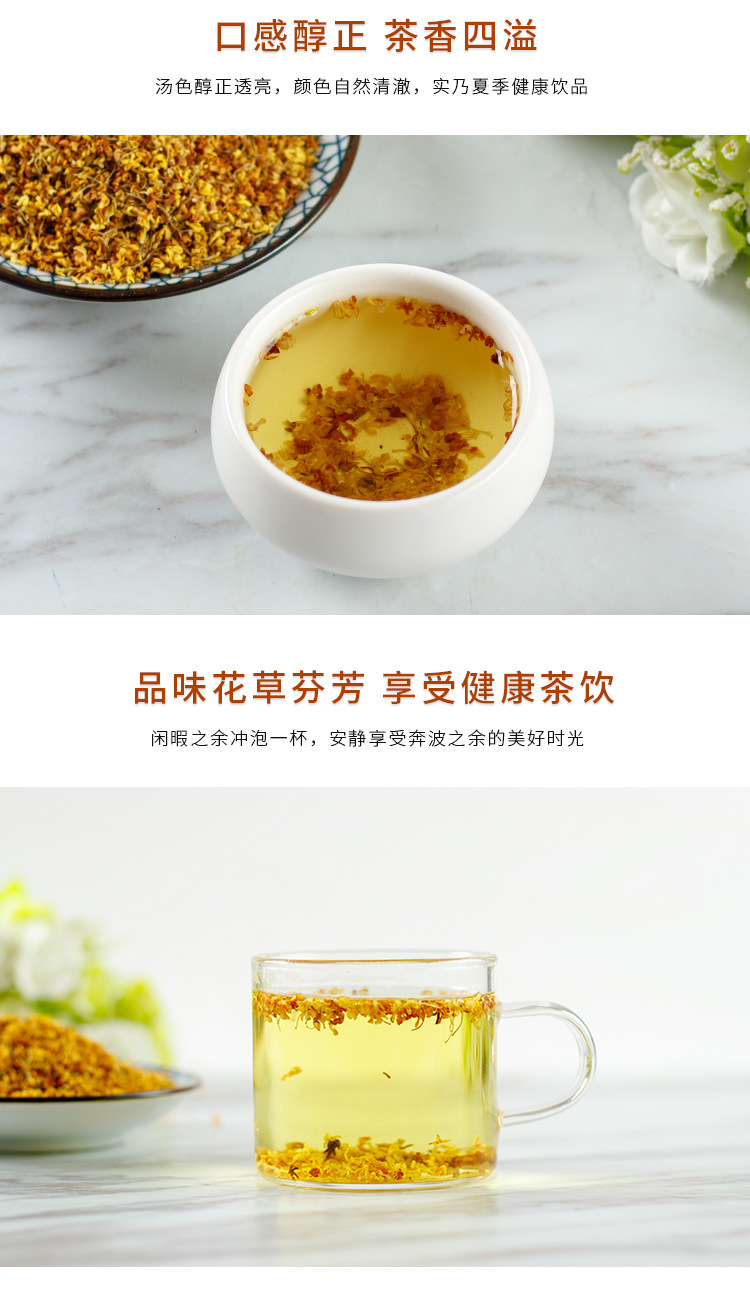
Each batch is gently dried to preserve the blossoms' rich golden-orange color, delicate petal structure, and intense honeyed aroma. The flowers feel light and crisp to the touch. When steeped in hot water, they release a warm, sweet fragrance reminiscent of apricot and honey, yielding a pale amber infusion with a soft, floral sweetness and a clean, lingering finish.

Technical Specifications
| Product Type | Dried Edible Flowers |
|---|---|
| Common Name | Gui Hua (Osmanthus) |
| Botanical Name | Osmanthus fragrans |
| Origin | Guangxi, China |
| Net Weight | 30 g |
| Processing | Dried, Sulfur-Free |

Usage Scenarios
- Osmanthus flower tea, hot or iced
- Blended with green tea, black tea, or oolong
- Flavoring for desserts, pastries, and rice wine
- Aromatic addition to congee and sweet soups
- Seasonal autumn tea blends

Traditional Uses
In folk herbal practice, Gui Hua is steeped as a fragrant daily tea to warm the stomach and lift the spirit, often blended with green tea or black tea for a soothing autumn infusion. It is scattered into sweet congee, rice wine, and osmanthus cakes, and simmered in sweet soups with lotus root or glutinous rice balls. In TCM food therapy, it is paired with ingredients like tangerine peel, rose bud, and jujube to harmonize the middle and support digestion.
FAQ Q&A
Q: What is Gui Hua?
A: Gui Hua is the common Chinese name for the dried blossoms of Osmanthus fragrans, also called sweet osmanthus. It is a traditional edible flower used in tea and cooking.
Q: What is the traditional wellness value of Gui Hua?
A: In traditional Chinese food wellness culture, Gui Hua is associated with warming the middle, harmonizing the stomach, and refreshing the spirit. It is often used in teas and sweet dishes for daily seasonal enjoyment.
Q: How do I use dried Gui Hua?
A: The flowers are ready to use without washing. Steep a small pinch in hot water for tea, or scatter them into desserts, congee, and sweet soups. Adjust the quantity to your recipe and taste preference.
Additional information
| Weight | 0.29 kg |
|---|---|
| Dimensions | 12 × 12 × 10 cm |
Related products
-
Dried Ai Ye (Artemisia argyi) — 3-Year Aged Qichun Mugwort Leaf, Unsulfured, 500g
Price range: $4.20 through $4.77 -
Liao Wu Wei Zi (Schisandra chinensis) — Dried Changbai Mountain Schisandra Berry, 500g
$6.88 -
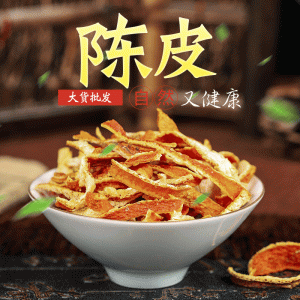
Chen Pi Shreds (Citrus reticulata) — Aged Dried Tangerine Peel, Unsulfured, 500g
$4.93 -
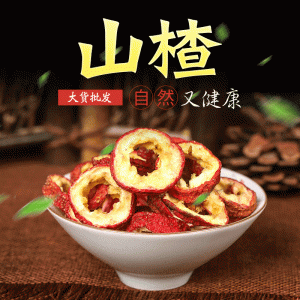
Shan Zha Slices (Crataegus pinnatifida) — Pitted Dried Hawthorn for Sour Plum Soup & Tea
Price range: $4.12 through $5.74
Reviews
There are no reviews yet.