
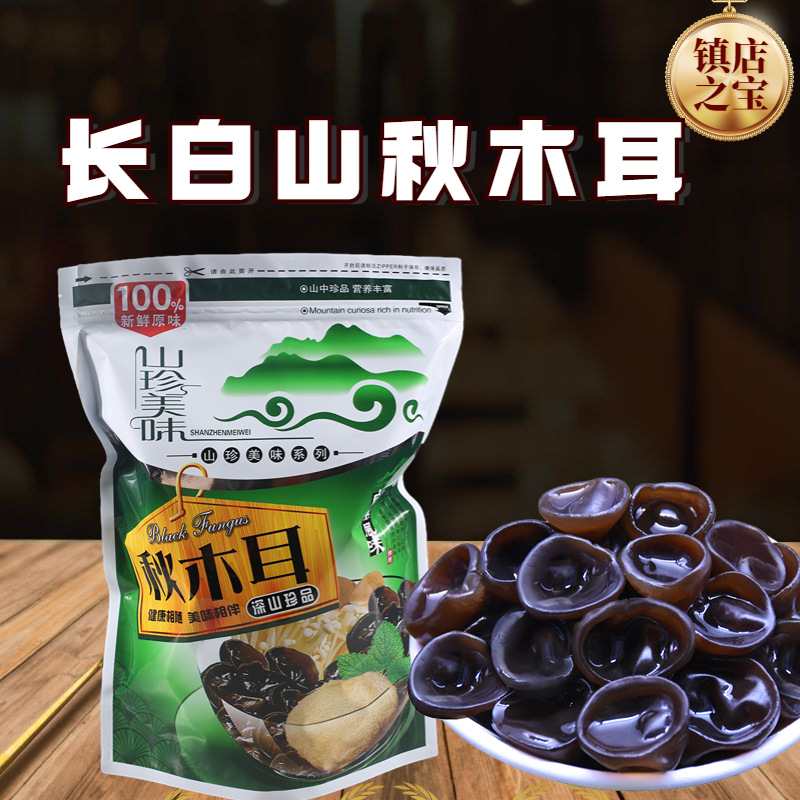
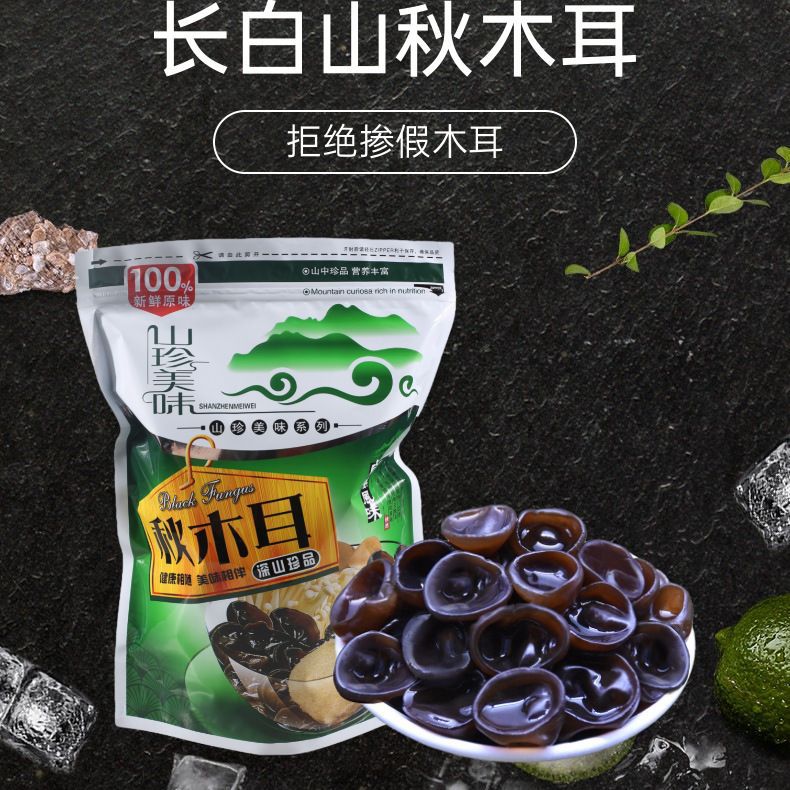
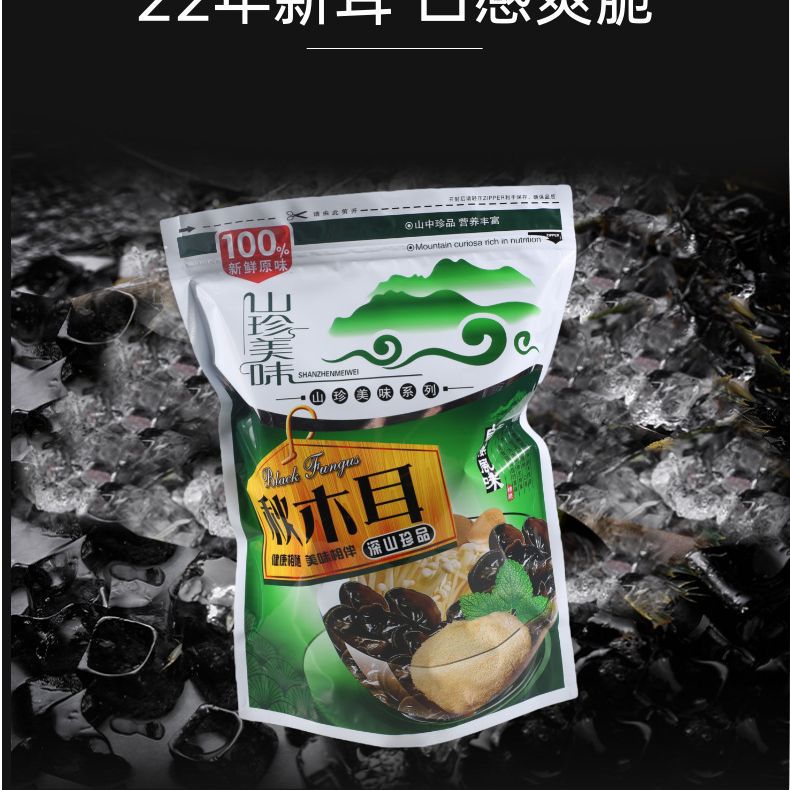
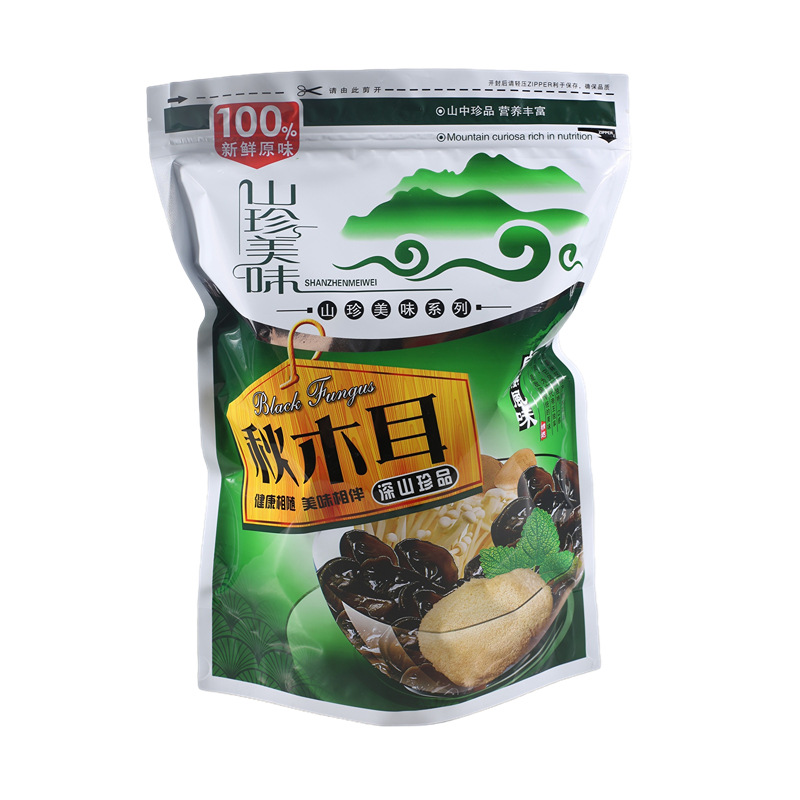
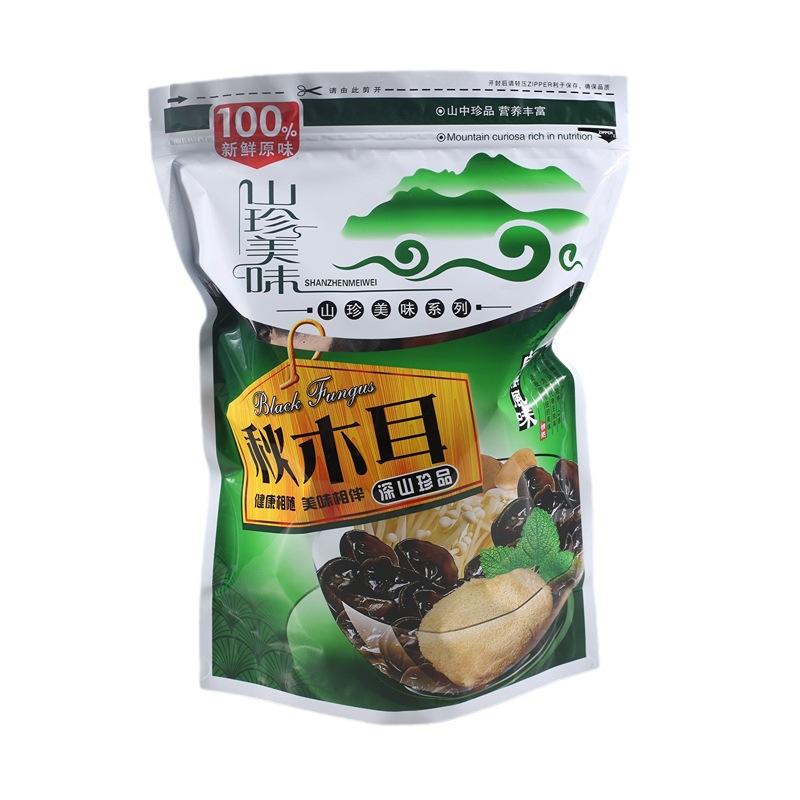
Dried Black Wood Ear Mushroom from Changbai Mountain Jilin for Soup and Stew
Price range: $21.13 through $29.46
Description
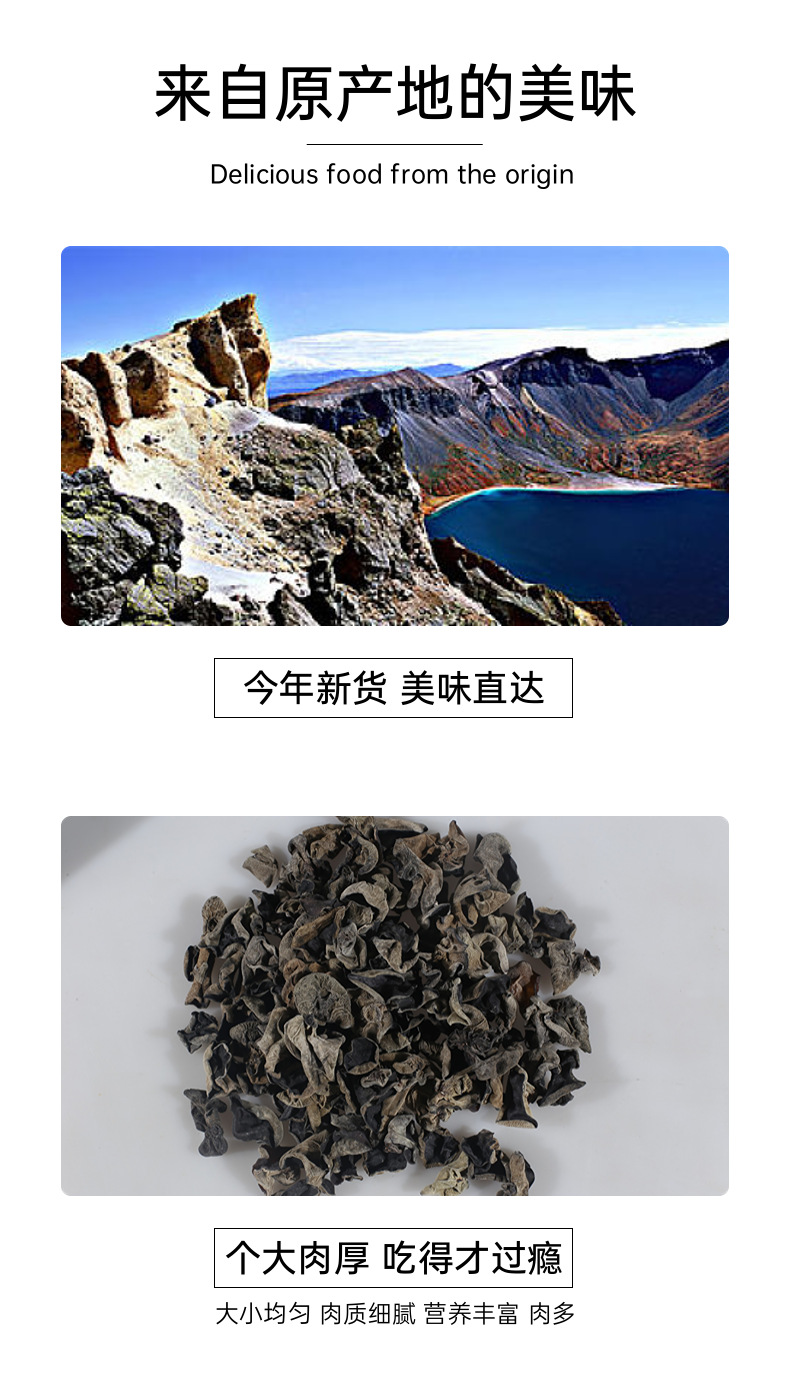
Dried Black Wood Ear Mushroom, known in TCM as Hei Mu Er (黑木耳), from Auricularia auricula-judae, is a dried edible fungus from Changbai Mountain, Jilin. In TCM theory it is considered sweet and neutral, entering the lung, stomach, and large intestine channels. Traditionally used in soups, stews, and congee, it is valued as a cooling, moistening food in everyday Chinese home cooking.
Key Selling Points
- Dried black wood ear mushroom from Changbai Mountain, Jilin
- Known in TCM as Hei Mu Er (黑木耳), Auricularia auricula-judae
- Dried fungus with a dry-to-soaked ratio of at least 1:15
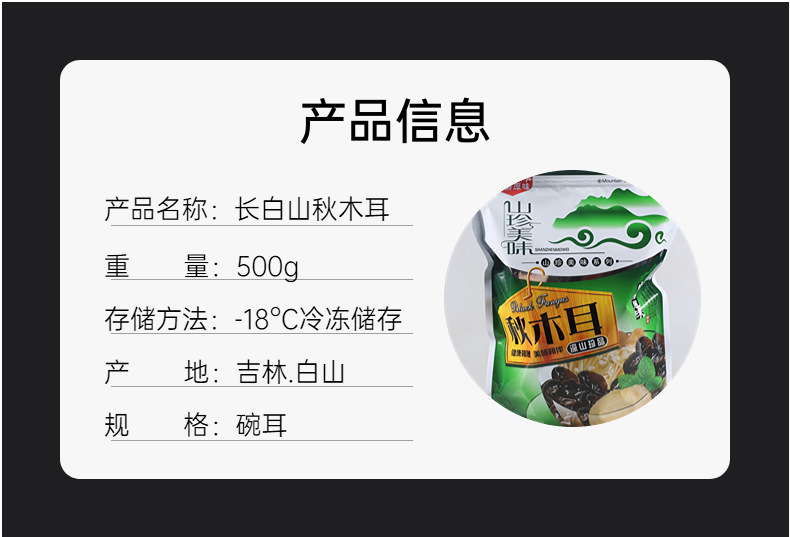
- Simple food-grade packaging suitable for home storage
- Traditionally used in soups, stews, and congee
Quality & Sensory
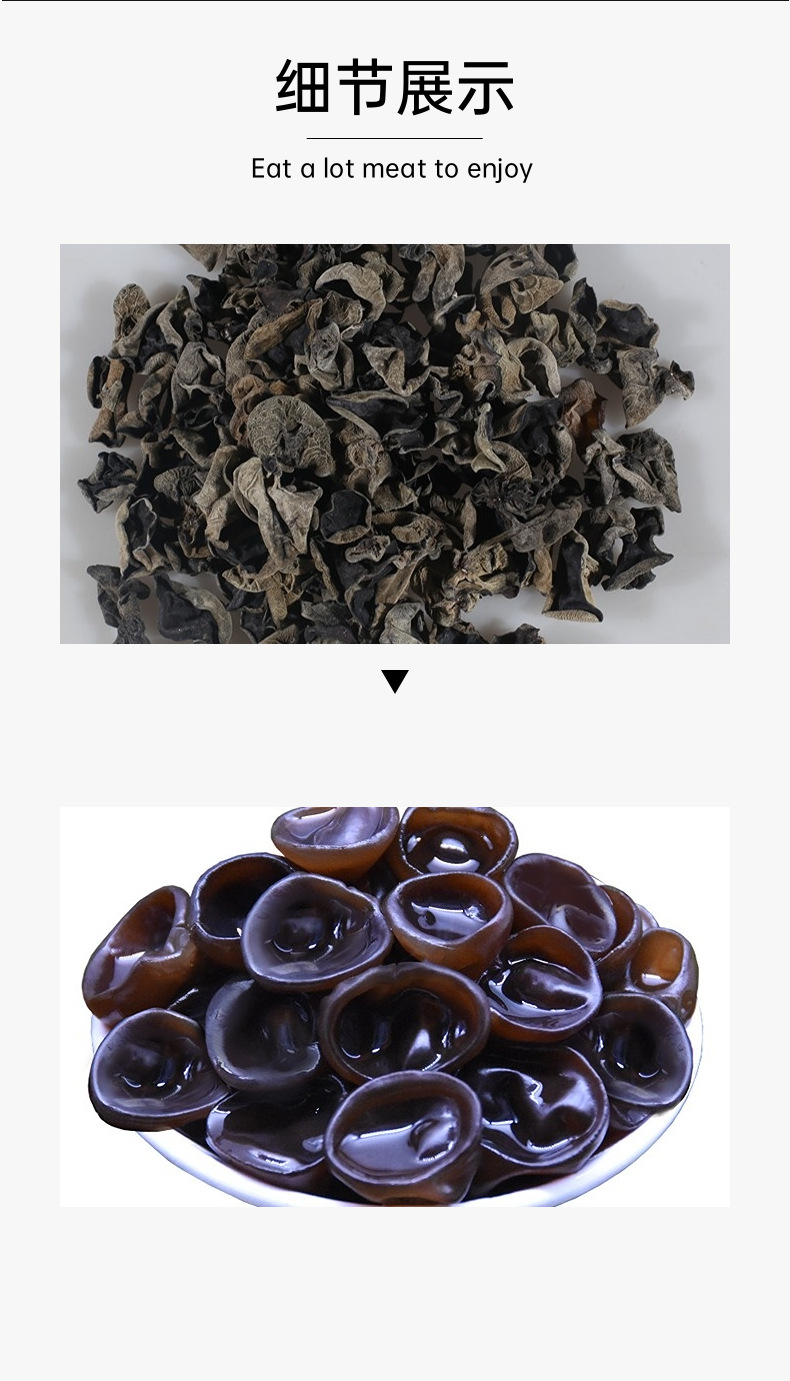
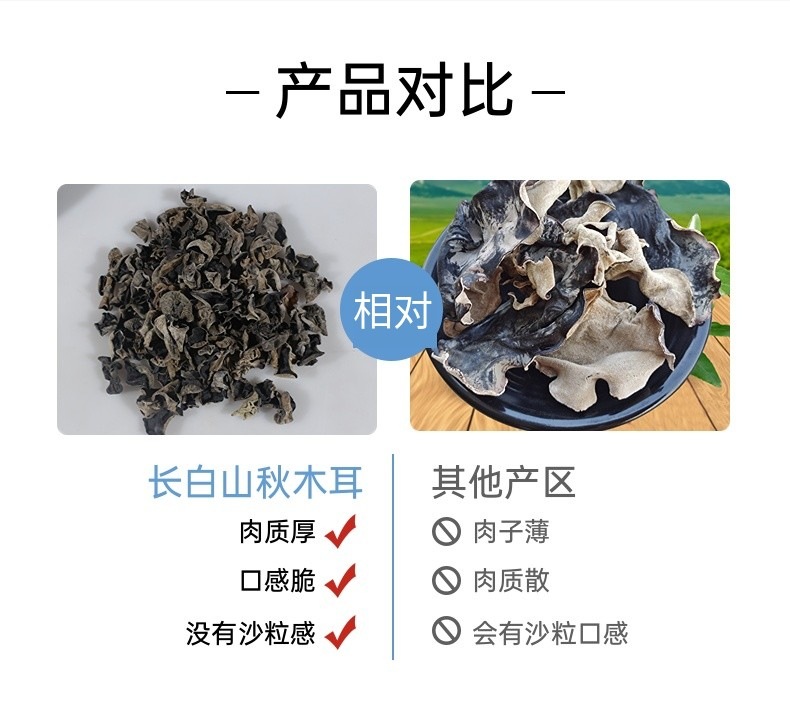
Dried black wood ear typically has a dark brown to black color, a thin brittle texture, and a mild earthy aroma. After soaking, the pieces usually expand, become tender and slightly gelatinous, and have a neutral taste that absorbs the flavors of soups and stews.
Technical Specifications
| Product Type | Dried edible fungus |
|---|---|
| Chinese Name | 黑木耳 |
| Pinyin | Hei Mu Er |
| Botanical Name | Auricularia auricula-judae |
| Plant Part | Fruiting body |
| Origin | Jilin, China |
Usage Scenarios
- Added to soups and broths
- Cooked in chicken or pork stews
- Used in congee
- Served in cold mixed salads after soaking
- Used as a culinary ingredient in everyday home cooking

Traditional Uses
In TCM and folk food practice, black wood ear is traditionally used in soups, stews, and congee, often paired with chicken, pork, or red dates. It is commonly soaked before cooking and valued as a neutral, moistening ingredient in daily meals and seasonal home cooking.
FAQ Q&A
Q: What is this product?
A: It is dried black wood ear mushroom from Changbai Mountain, Jilin, known in TCM as Hei Mu Er (黑木耳).
Q: What is its traditional value?
A: In TCM theory it is considered sweet and neutral and is traditionally used as a moistening food in soups and congee.
Q: How is it commonly prepared?
A: It is usually soaked until softened, then added to soups, stews, or congee and cooked as a culinary ingredient.
Additional information
| Weight | N/A |
|---|---|
| Dimensions | N/A |
| Packaging specifications | 1, 2, 3 |
Related products
-
Cabinda Bark Dried Herb 500g Traditional Herbal Infusion Ingredient
Price range: $12.38 through $37.50 -
Taizishen Dried Pseudostellaria Root TCM Herbal Tea and Soup Ingredient 500g Bulk Pack
Price range: $10.28 through $15.63 -
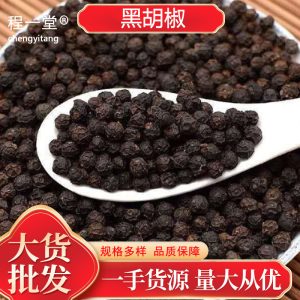
Black Pepper Whole Peppercorns Hu Jiao 500g Bulk Culinary Spice for Cooking and Seasoning
Price range: $8.33 through $9.14 -
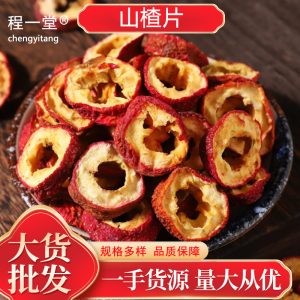
Dried Hawthorn Slices Shan Zha 500g Seedless Hollow Rings Freeze Dried Hawthorn for Tea and Culinary Use
Price range: $4.44 through $7.04
Reviews
There are no reviews yet.