
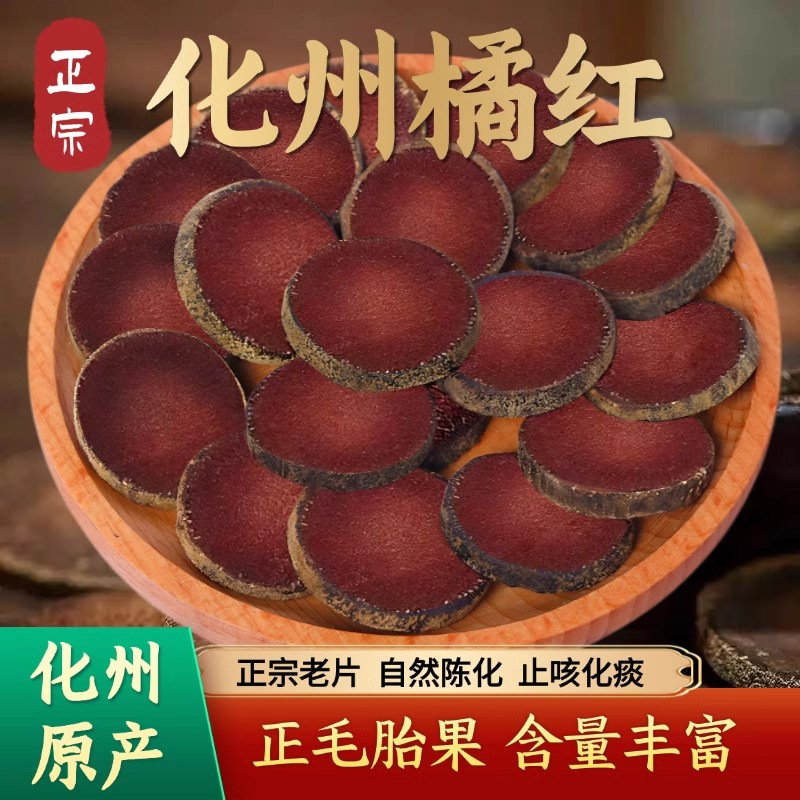
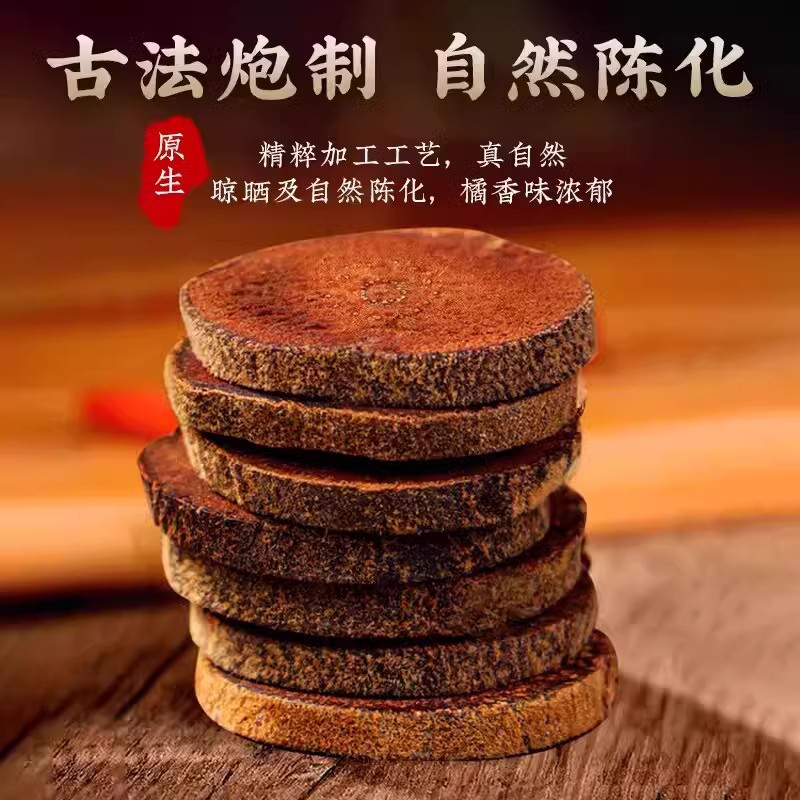
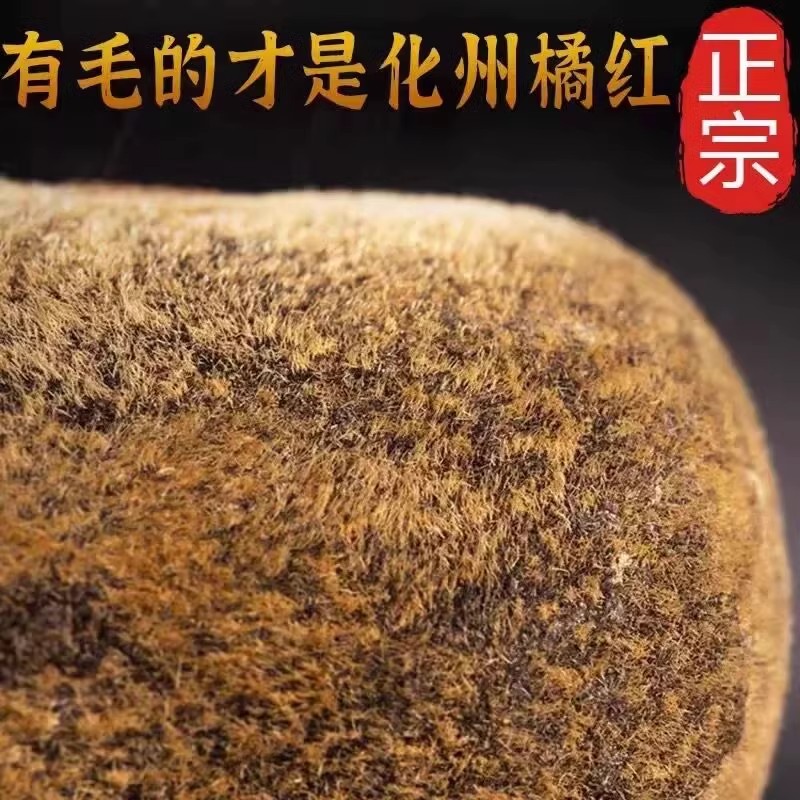
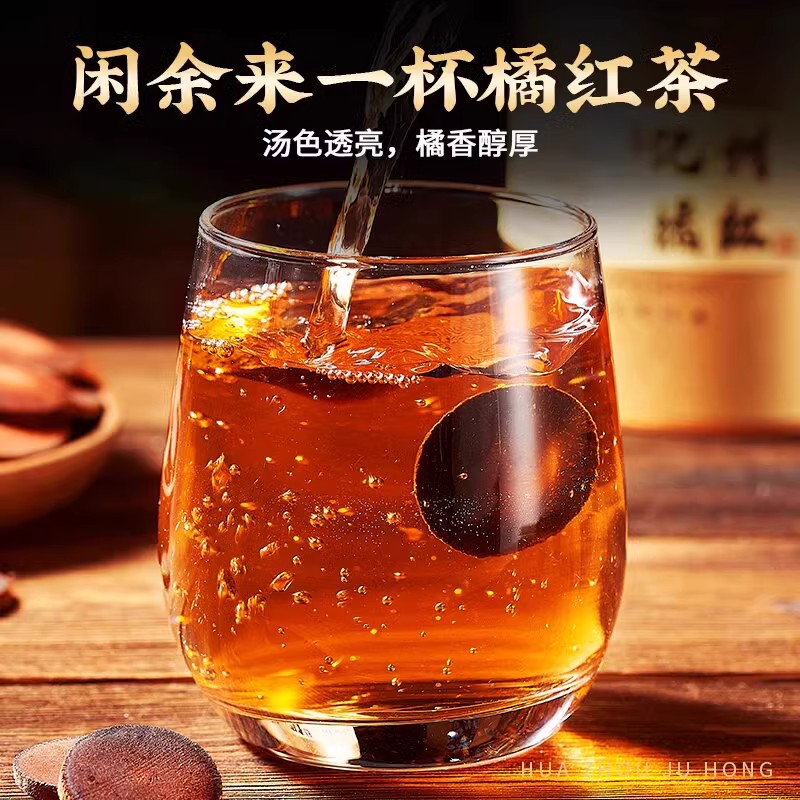
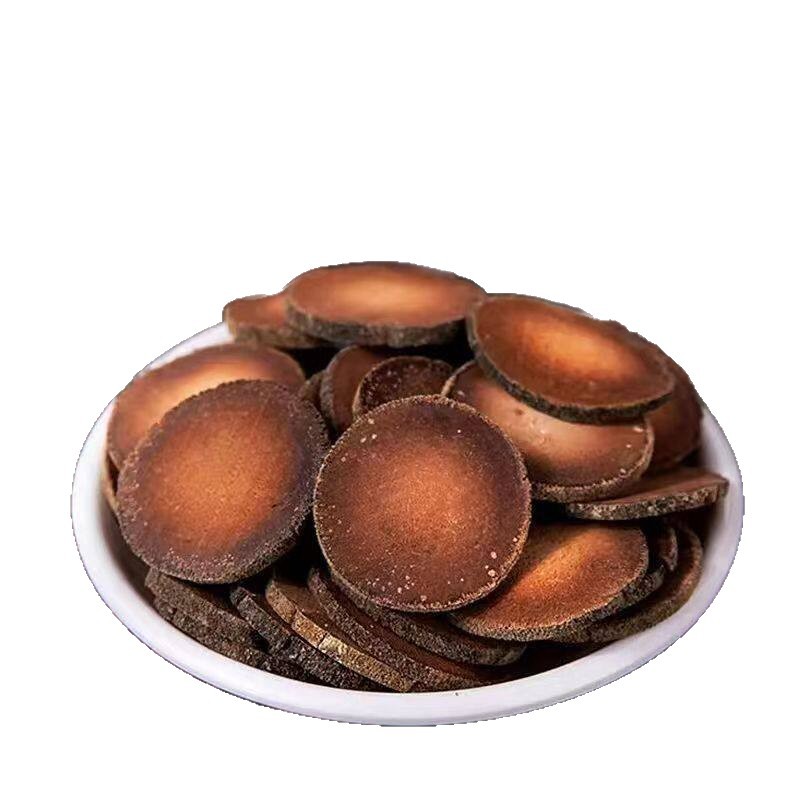
Aged Huazhou Exocarpium Citri Grandis Slices 30 Year Chenpi Herbal Tea 500g
Price range: $5.67 through $12.55
Description
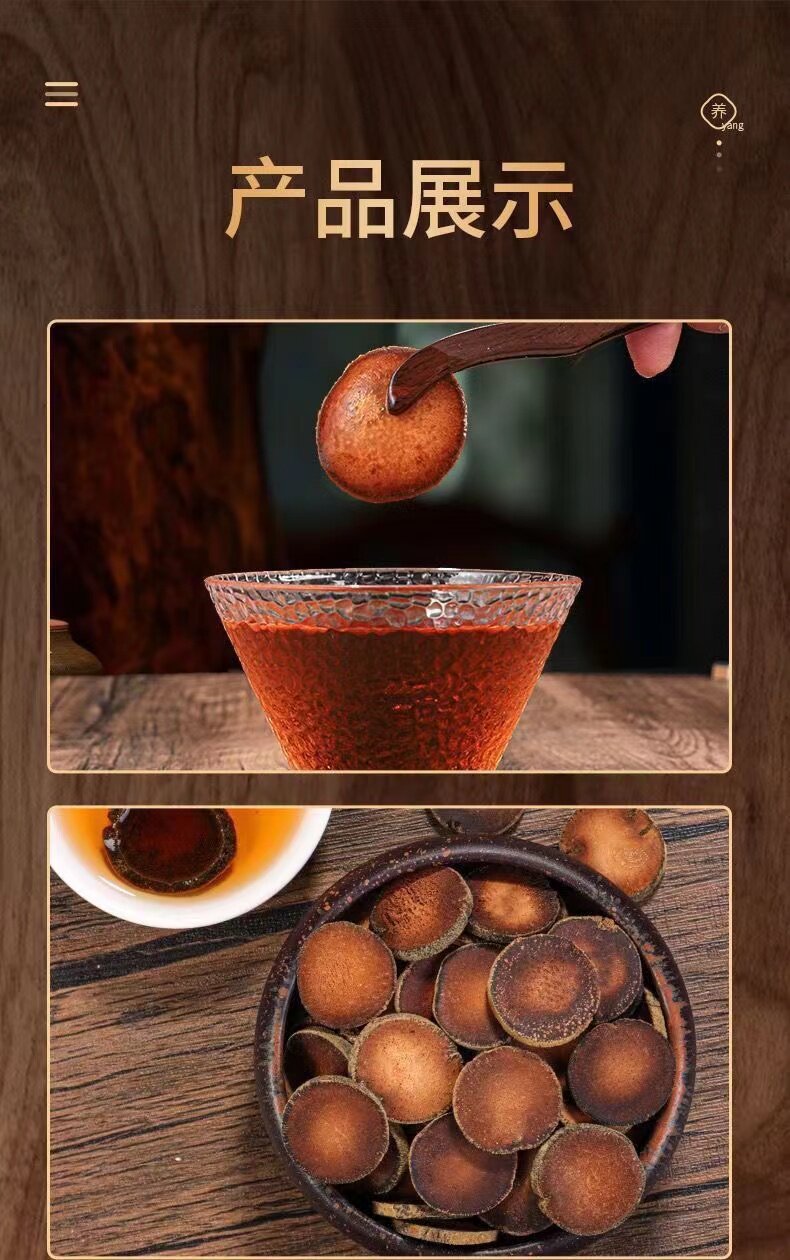
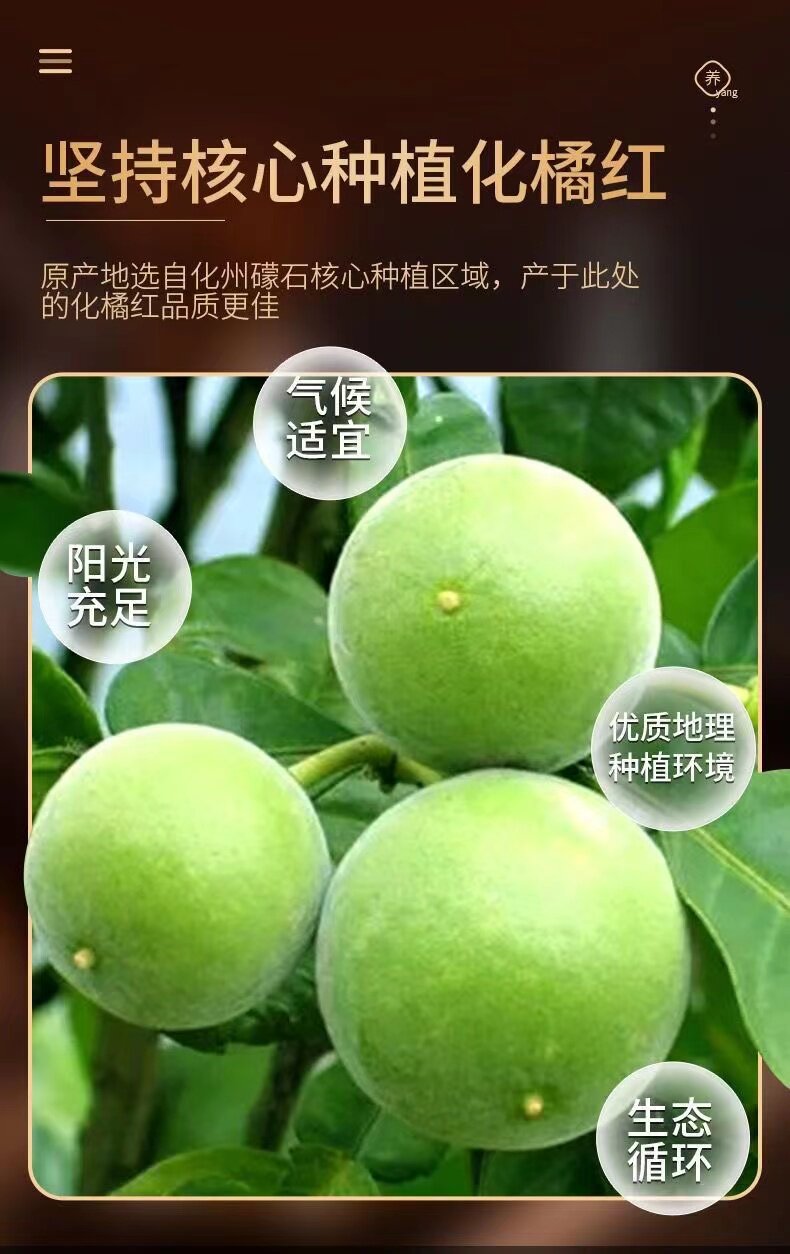
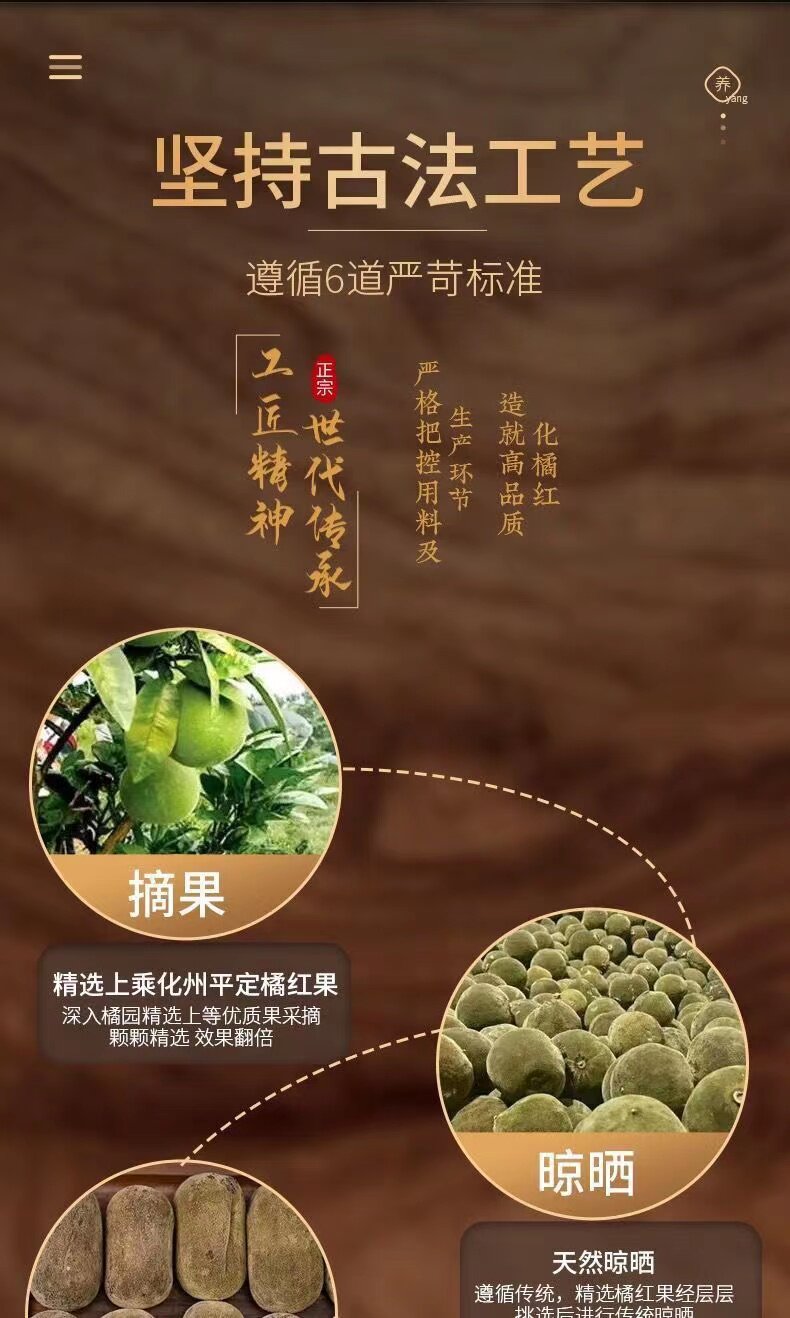
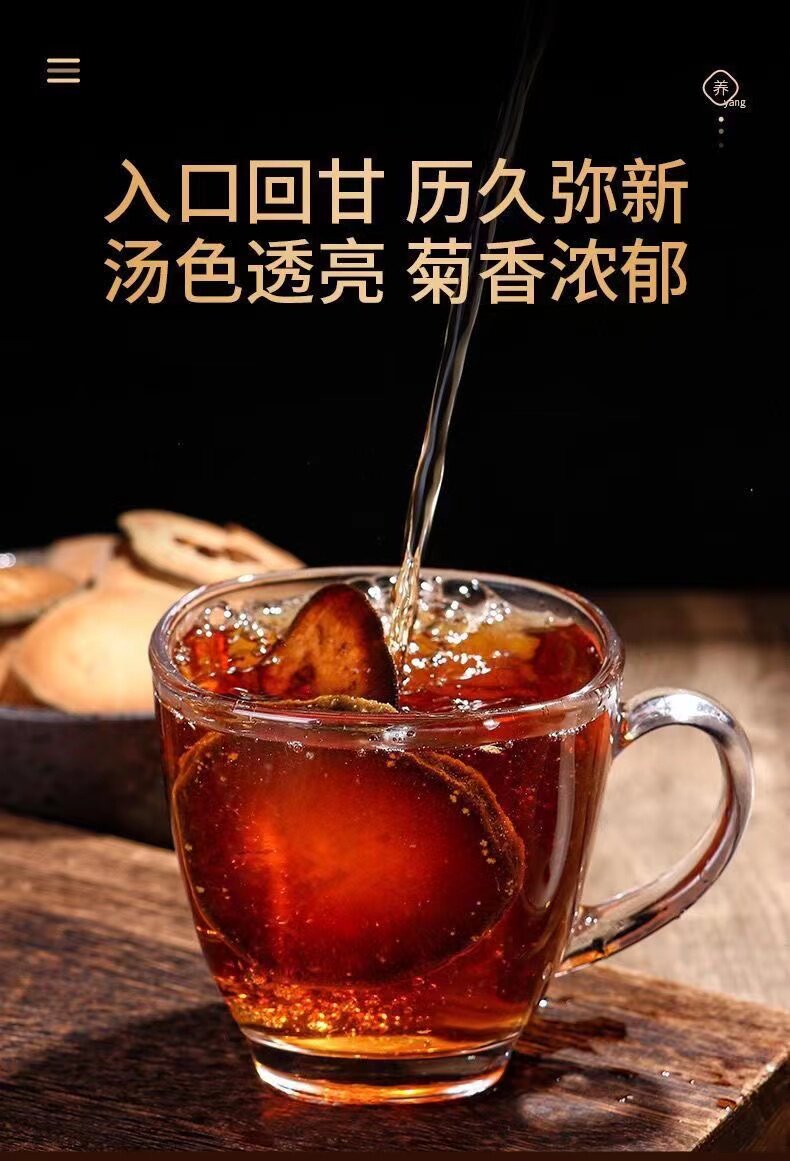
Aged Huazhou Exocarpium Citri Grandis slices, known in TCM as Hua Ju Hong (化橘红), from Citrus grandis 'Tomentosa', the dried outer peel of the pomelo fruit. Traditionally used in TCM to support the Lung and Spleen, this 30-year aged peel is valued for its warm nature and aromatic character. Commonly prepared as a tea or decoction for seasonal respiratory comfort.
Key Selling Points
- Authentic Huazhou origin peel from Citrus grandis 'Tomentosa'
- 30-year aged chenpi with deep traditional value
- Dried outer peel slices in convenient cut form
- Traditionally used in TCM for Lung and Spleen support
- Versatile for tea, decoction, or culinary use
Quality & Sensory
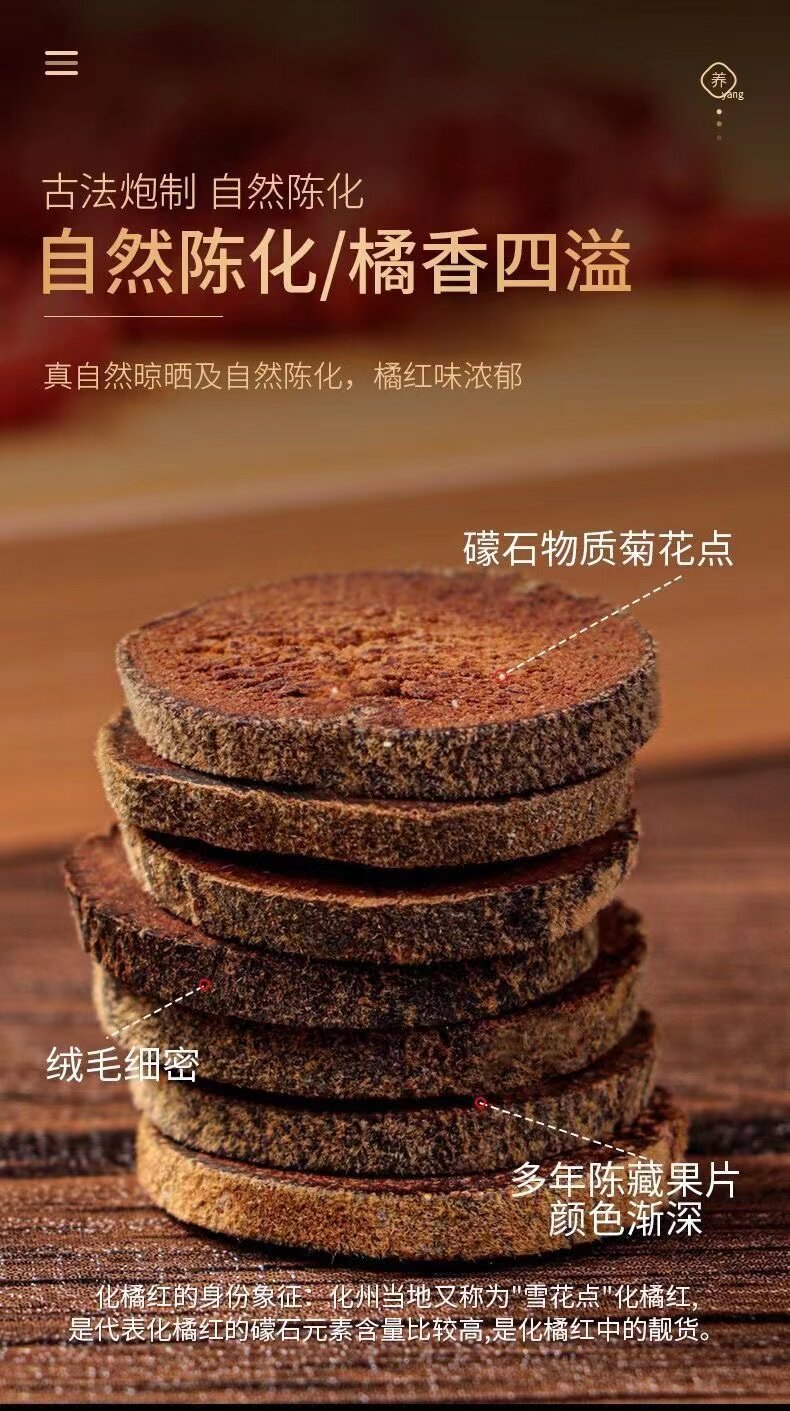
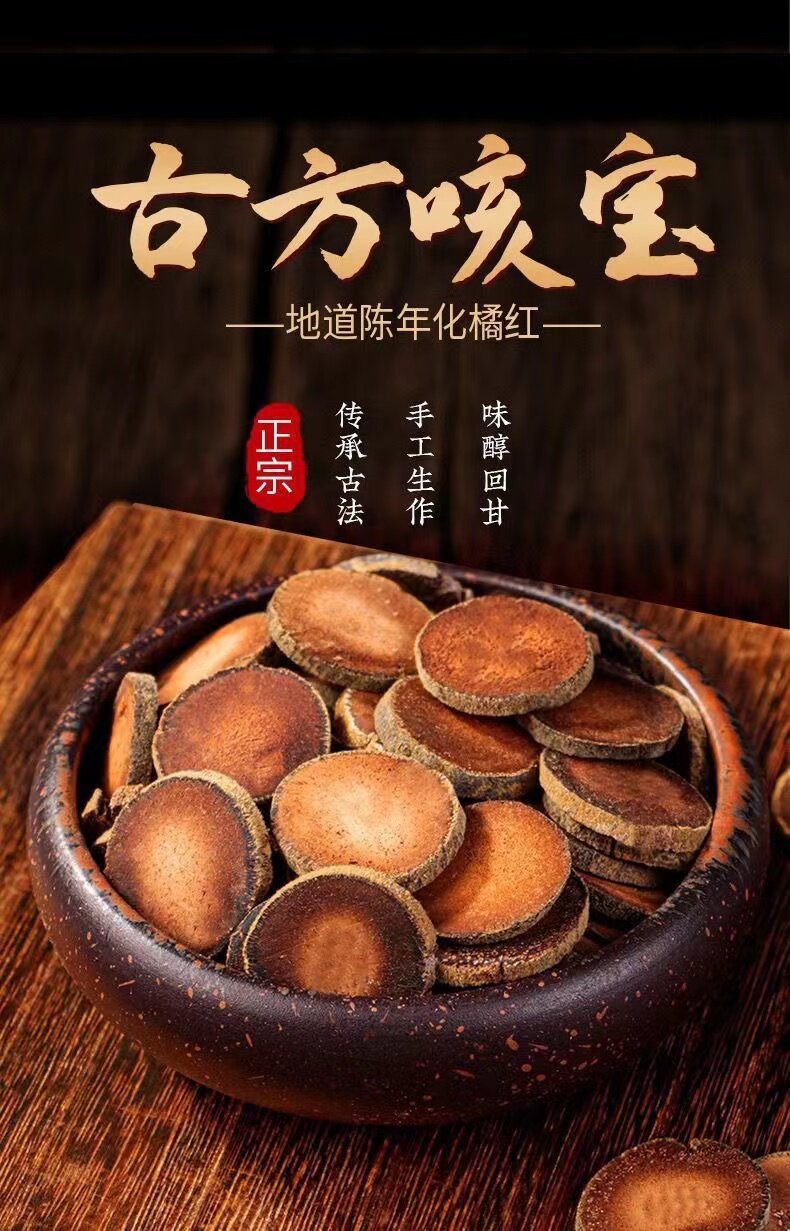
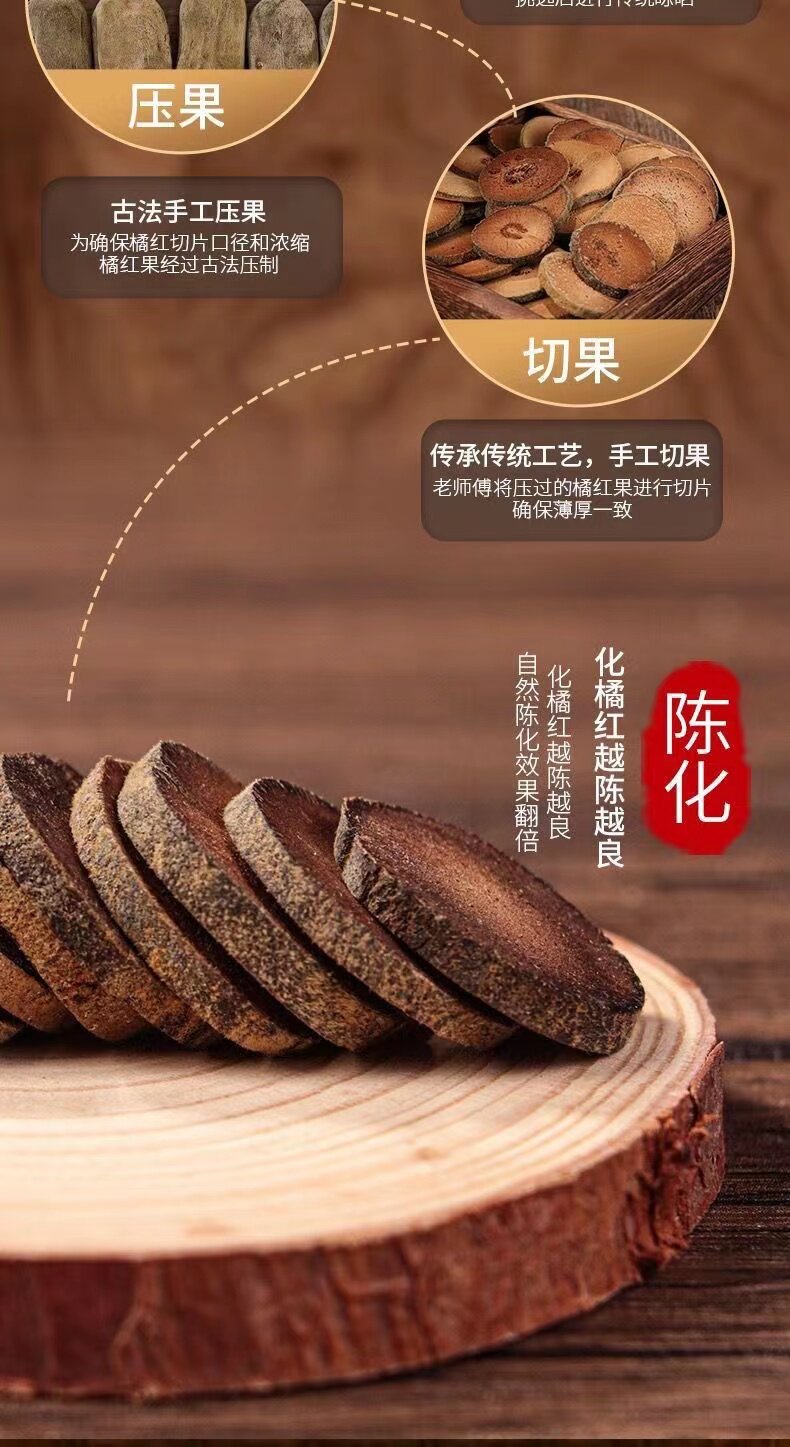
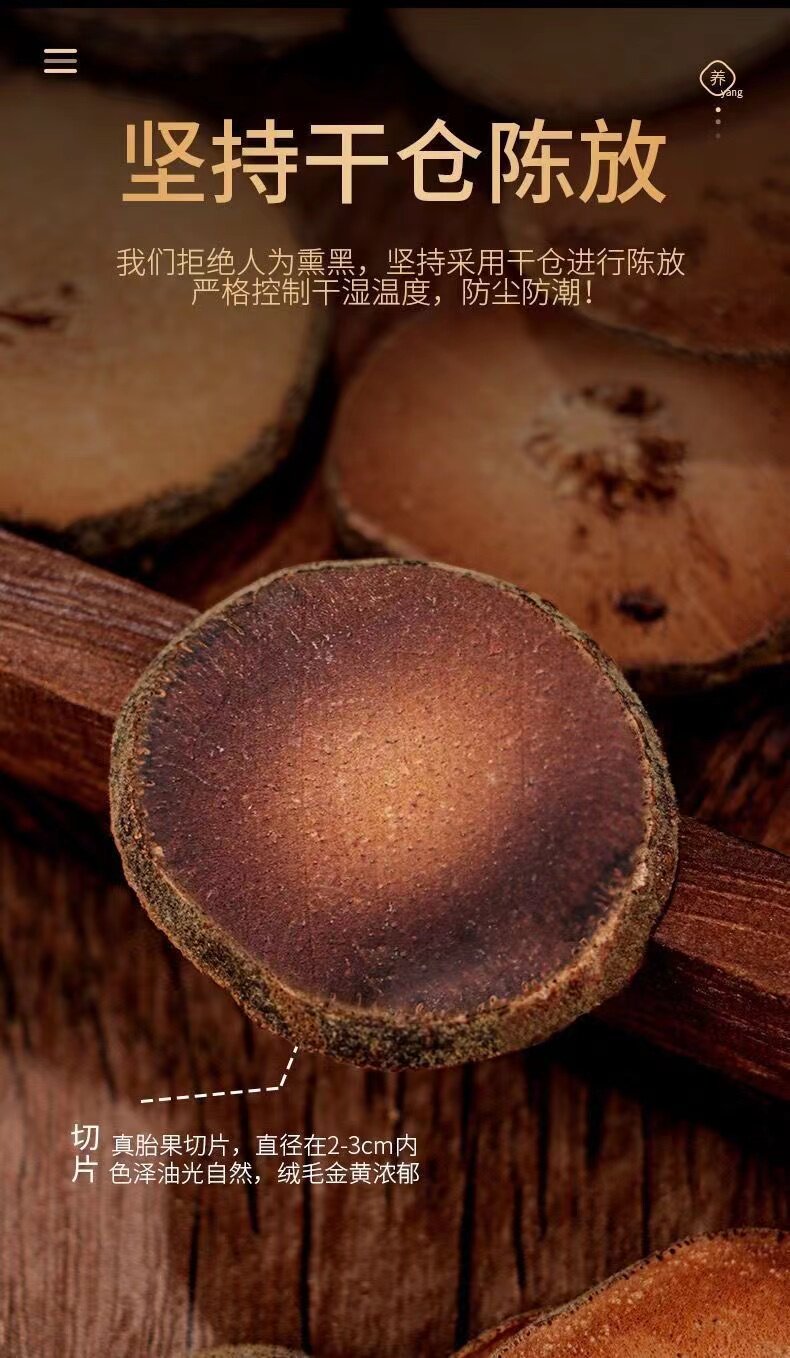
The slices typically show a dark reddish-brown color with a leathery, slightly brittle texture. The aroma is rich, citrusy, and aged, with a warm, slightly bitter and sweet taste when brewed. The aged character deepens the flavor compared to fresh peel.
Technical Specifications
| Product Type | Dried aged citrus peel slices |
|---|---|
| Chinese Name | 化橘红 |
| Pinyin | Hua Ju Hong |
| Botanical Name | Citrus grandis 'Tomentosa' |
| Plant Part | Outer peel |
| Net Weight | 500g |

Usage Scenarios
- Brewed as a daily herbal tea
- Simmered in decoctions with other herbs
- Added to soups for flavor and traditional value
- Used in congee for a warming breakfast
- Enjoyed as a seasonal food tea
Traditional Uses
In TCM theory, Hua Ju Hong is traditionally used to support the Lung and Spleen, and is often prepared as a tea or decoction for seasonal respiratory comfort. It is commonly paired with ginger, licorice, or other herbs in traditional formulas. The aged peel is also used in culinary soups and congee for its aromatic, warming properties.
FAQ Q&A
Q: What is this product?
A: It is 30-year aged dried outer peel slices from Citrus grandis 'Tomentosa', known in TCM as Hua Ju Hong (化橘红), sourced from Huazhou.
Q: What is its traditional value?
A: In TCM theory, it is traditionally associated with supporting the Lung and Spleen, and is valued for its warm, aromatic character.
Q: How is it commonly prepared?
A: It is typically brewed as a tea, simmered in decoctions, or added to soups and congee. It can also be combined with other herbs like ginger or licorice.
Additional information
| Weight | N/A |
|---|---|
| Dimensions | N/A |
| Model | 正宗 化州原产橘红片10g体验装, 正宗 化州原产25年橘红片100g礼罐装, 正宗 化州原产25年橘红片200g礼罐装, 正宗 化州原产25年橘红片500g散装, 正宗 化州原产30年橘红片100g礼罐装, 正宗 化州原产30年橘红片200g礼罐装, 正宗 化州原产30年橘红片500g散装 |
Related products
-
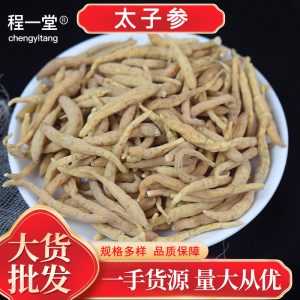
Taizishen Dried Pseudostellaria Root TCM Herbal Tea and Soup Ingredient 500g Bulk Pack
Price range: $10.28 through $15.63 -
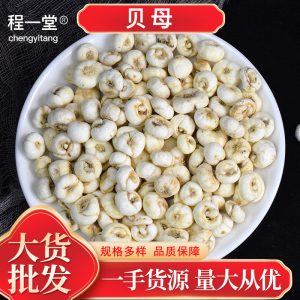
Fritillaria Bulb Chuan Bei Mu Dried Chinese Herbal Bulbs for Decoction and Traditional Use 500g
Price range: $18.06 through $94.21 -
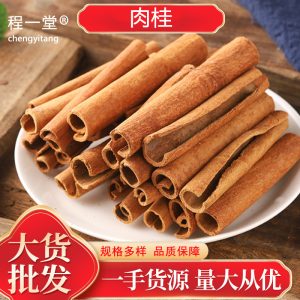
Dried Cinnamon Bark Rou Gui 500g Whole Peeling Culinary Spice and Traditional Herbal Ingredient
Price range: $5.58 through $8.33 -
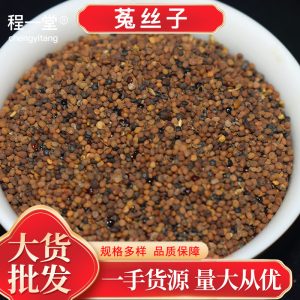
Dried Dodder Seed Tu Si Zi Whole Herb 500g Bulk Chinese Herbal Ingredient
Price range: $7.04 through $7.52
Reviews
There are no reviews yet.