
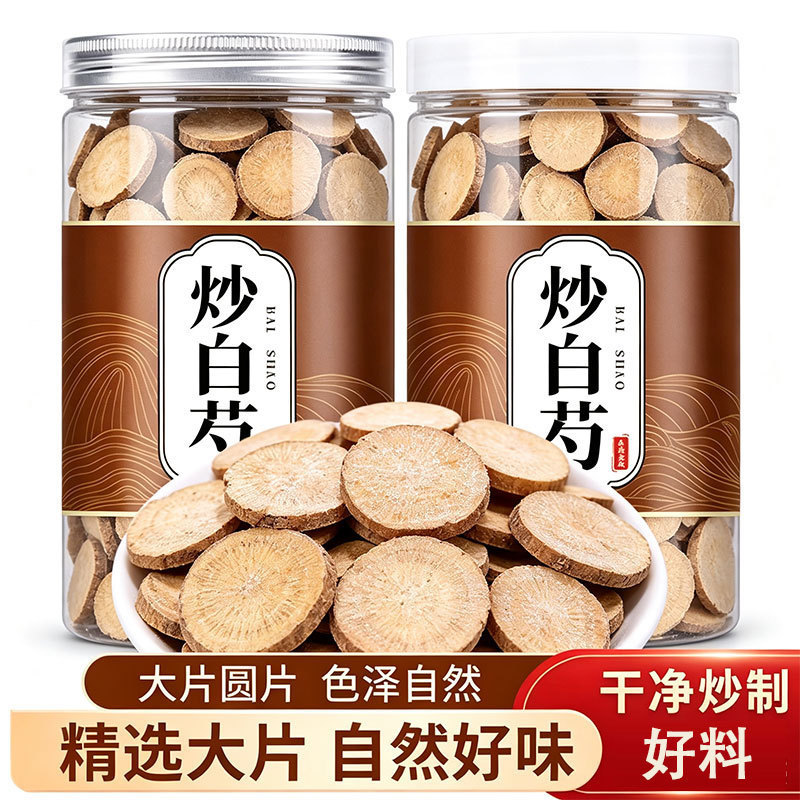
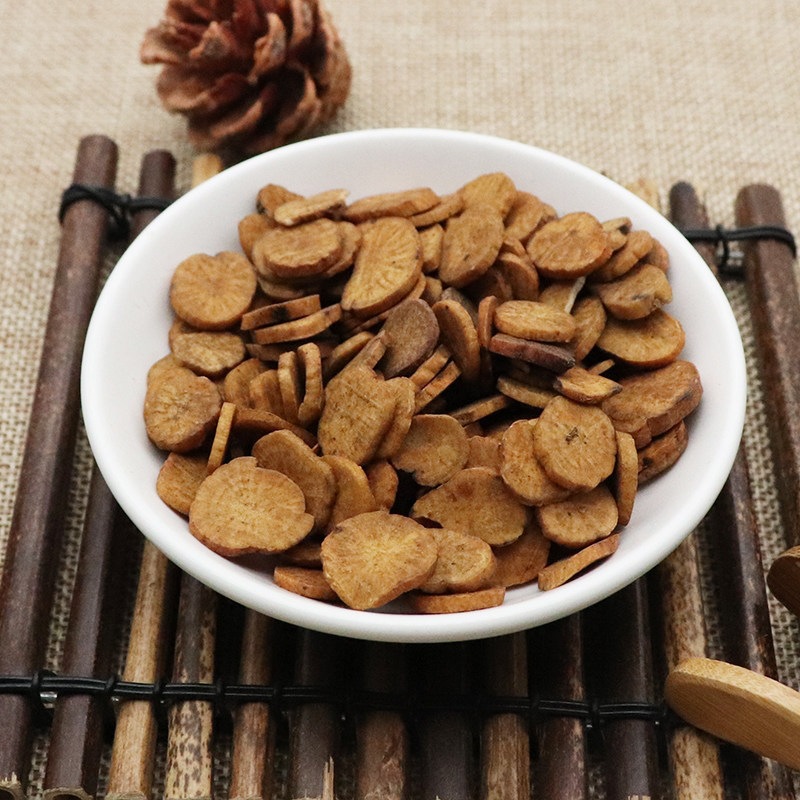
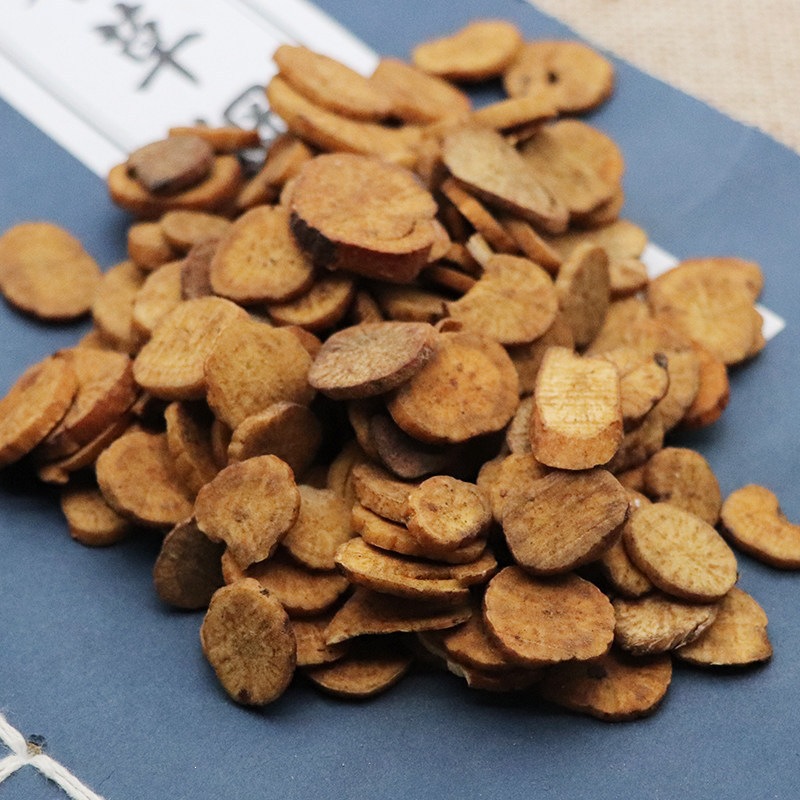
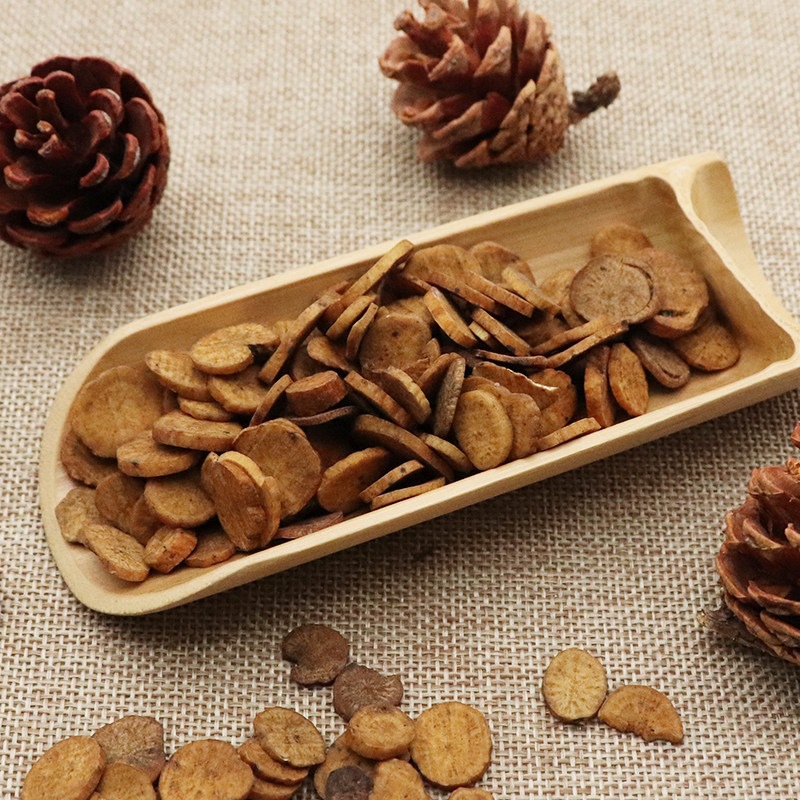
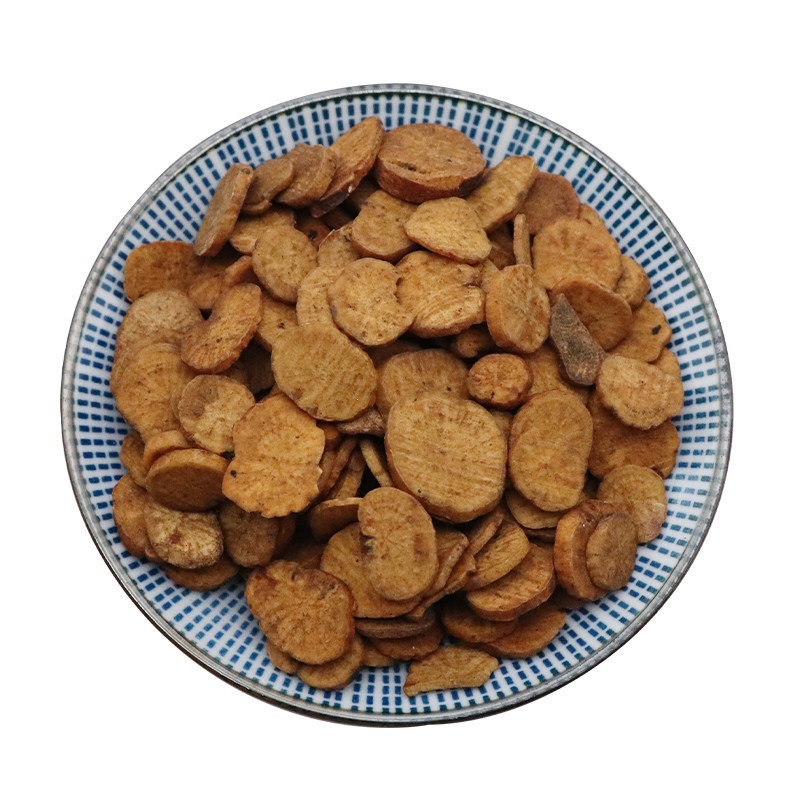
Stir-Fried White Peony Root Slices Bai Shao Yao Traditional Chinese Herbal Decoction Pieces 250g
Description
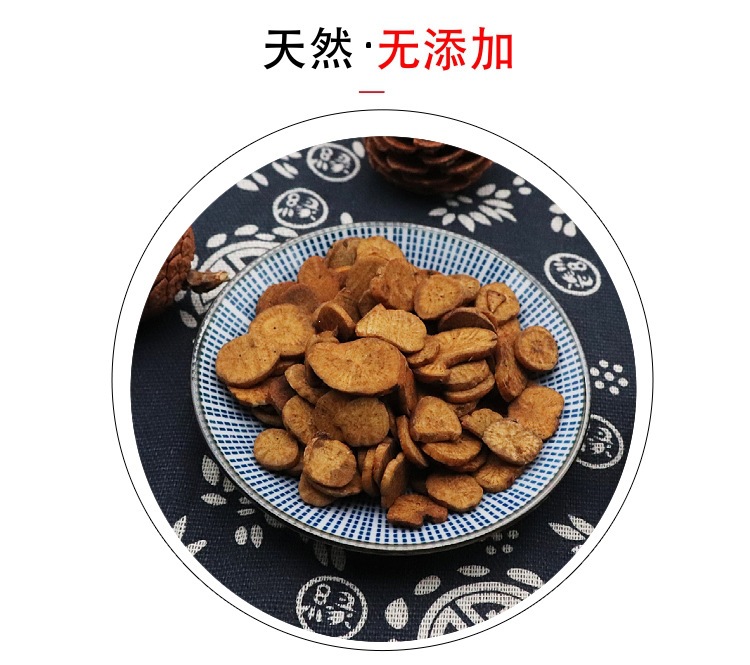
Stir-Fried White Peony Root Slices, known in TCM as Bai Shao Yao (白芍), from Paeonia lactiflora. This wheat-bran stir-fried form is a traditional Chinese herbal decoction piece valued in TCM theory for its sweet, slightly bitter nature and its association with the Liver and Spleen channels. Traditionally used in herbal soups, teas, and blended decoctions. Store in a cool, dry place and use as part of a balanced herbal routine.
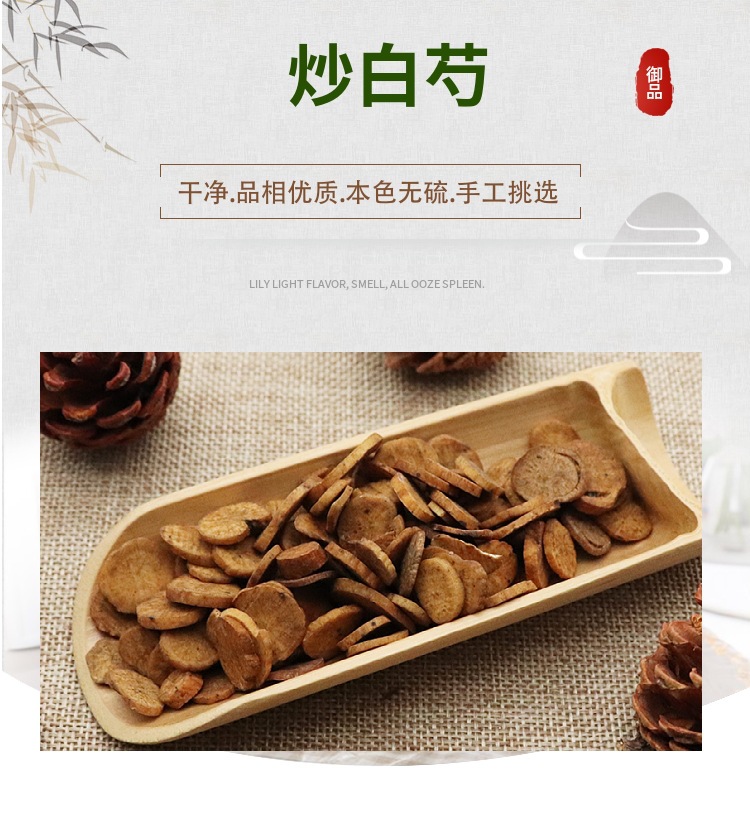
Key Selling Points
- Identified as Bai Shao Yao (白芍), the root of Paeonia lactiflora
- Wheat-bran stir-fried processing for traditional decoction use
- Sliced dried root form suitable for teas, soups, and decoctions
- Sulfur-free new-crop product stored in a cool, dry place
- Packed as two 250g jars for convenient home herbal preparation
Quality & Sensory
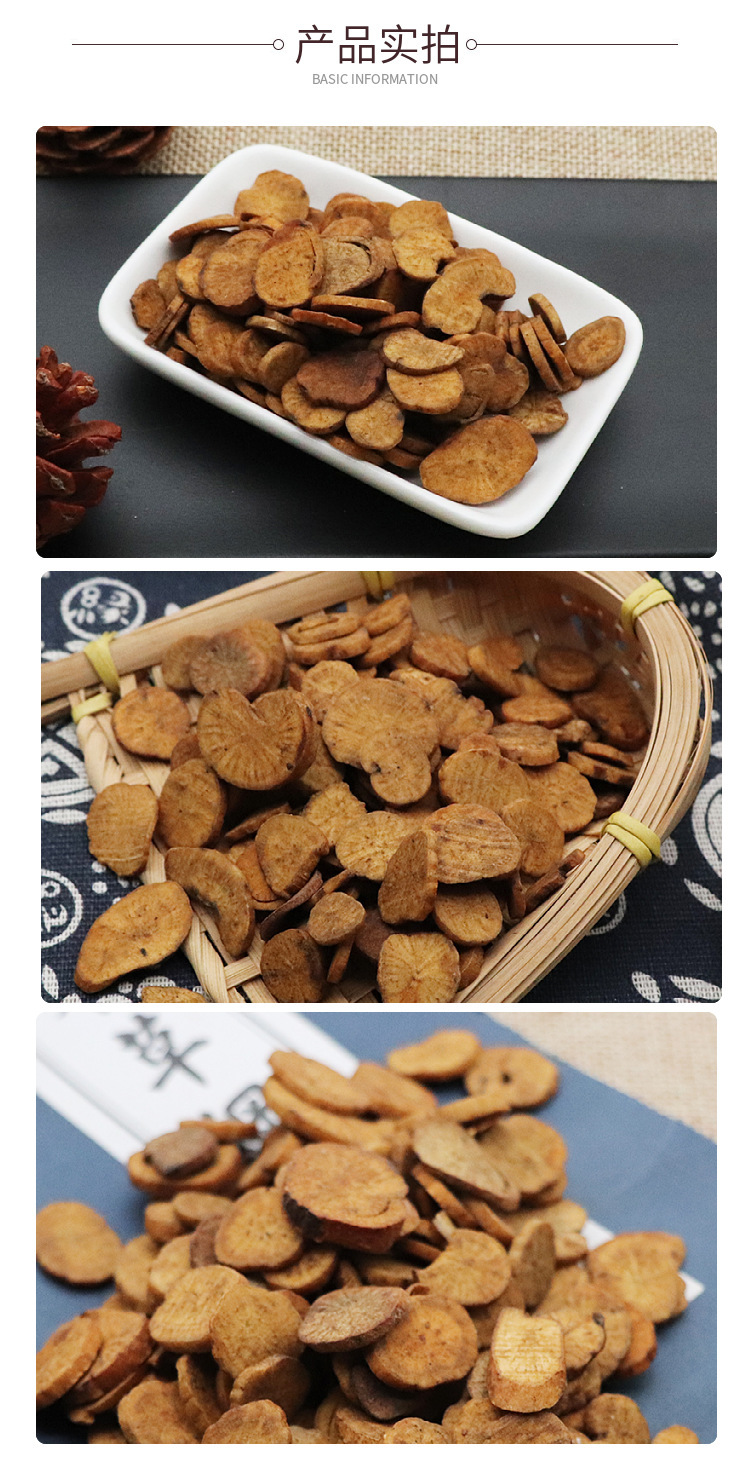
The slices are typically off-white to pale yellowish-brown with a firm, slightly fibrous texture. They have a mild, earthy aroma and a subtly sweet, slightly bitter taste when brewed or decocted. Color and texture may vary slightly between batches.
Technical Specifications
| Product Type | Dried herbal decoction pieces |
|---|---|
| Chinese Name | 白芍 |
| Pinyin | Bai Shao Yao |
| Botanical Name | Paeonia lactiflora |
| Plant Part | Root |
| Form | Stir-fried slices |
Usage Scenarios
- Herbal tea or infusion
- Traditional decoction
- Herbal soup
- Congee
- Blended with other decoction pieces
Traditional Uses
In TCM theory, Bai Shao Yao is traditionally associated with the Liver and Spleen channels and is often used in balanced formulas. It is commonly decocted with other herbs, added to soups, or prepared as a simple tea. Traditional pairings include Gan Cao (licorice) and other tonic herbs. It is also used in seasonal congee and home herbal cooking.
FAQ Q&A
Q: What is this product?
A: It is stir-fried White Peony Root slices, known in TCM as Bai Shao Yao (白芍), from Paeonia lactiflora.
Q: What is its traditional value?
A: In TCM theory it is associated with the Liver and Spleen channels and is traditionally used in balanced herbal formulas.
Q: How is it commonly prepared?
A: It is typically decocted, brewed as a tea, or added to soups and congee with other herbs.
Additional information
| Model | 炒白芍100g 1罐, 炒白芍250g 1罐, 炒白芍250g 2罐 |
|---|
Related products
-
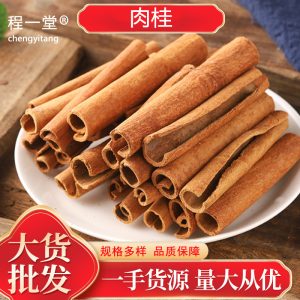
Dried Cinnamon Bark Rou Gui 500g Whole Peeling Culinary Spice and Traditional Herbal Ingredient
Price range: $5.58 through $8.33 -

Cabinda Bark Dried Herb 500g Traditional Herbal Infusion Ingredient
Price range: $12.38 through $37.50 -
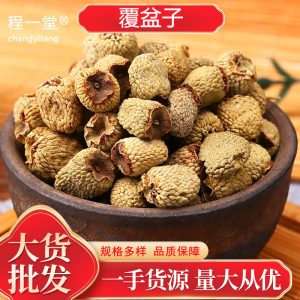
Dried Raspberry Fruit Fu Pen Zi 500g Whole Berries for Herbal Tea and Wine Infusion
Price range: $14.00 through $16.44 -

Yi Zhi Ren Dried Alpinia Oxyphylla Fruit 500g Traditional Herbal Tea and Decoction Ingredient
Price range: $11.74 through $13.36
Reviews
There are no reviews yet.