
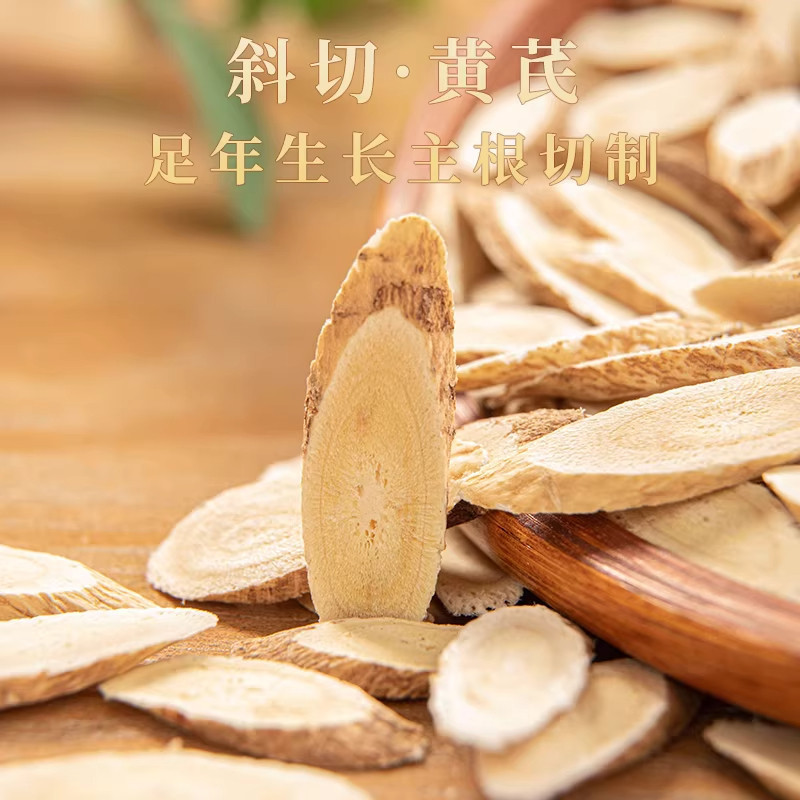
Astragalus Root Slices Huang Qi 250g Dried Bei Qi for Tea and Soup Decoction
Price range: $7.82 through $9.94
Description
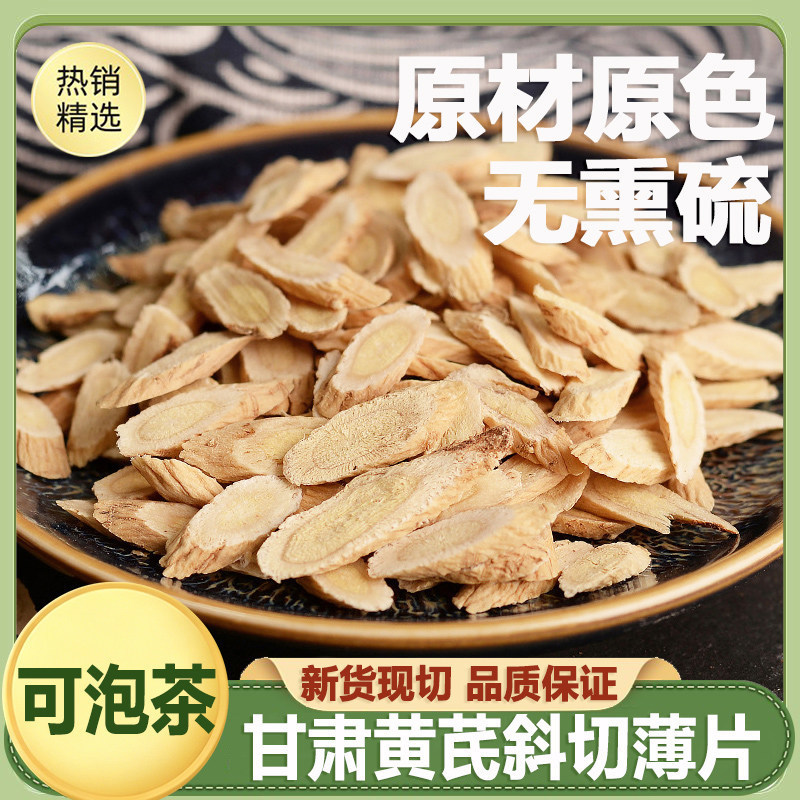
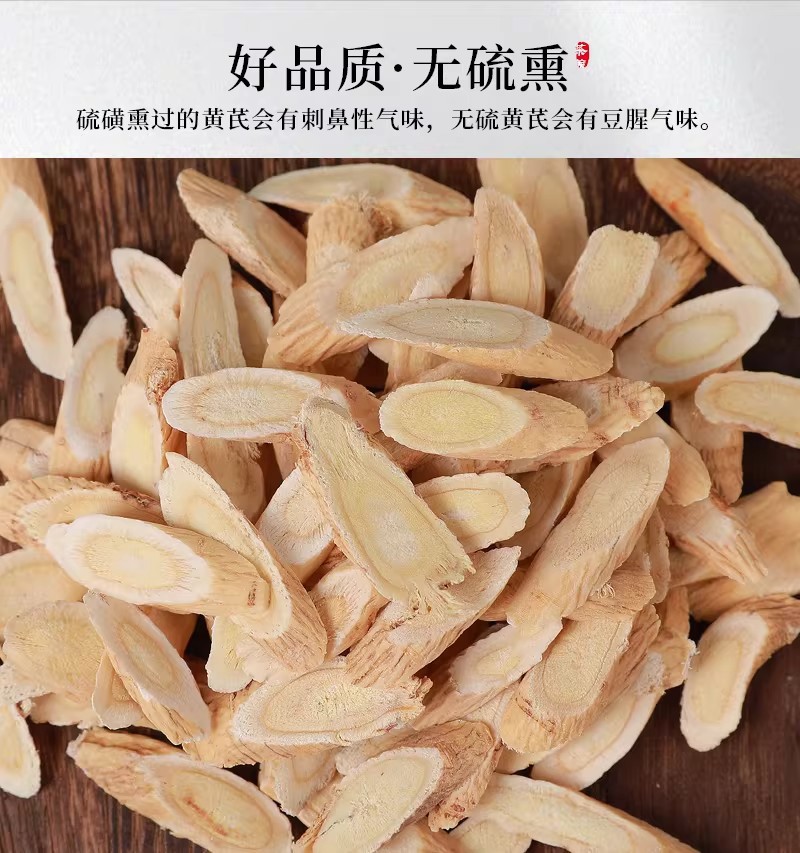
Astragalus Root Slices, known in TCM as Huang Qi (黄芪) or Bei Qi (北芪), from Astragalus membranaceus. These dried diagonal-cut root slices are a classic Chinese herbal material traditionally valued for daily tonifying use. In TCM theory, Huang Qi is sweet in flavor and slightly warm in nature, traditionally associated with the spleen and lung channels. Commonly simmered in decoctions, soups, or steeped as a tea. This product is a traditional herbal ingredient and is not intended to replace medical treatment.

Key Selling Points
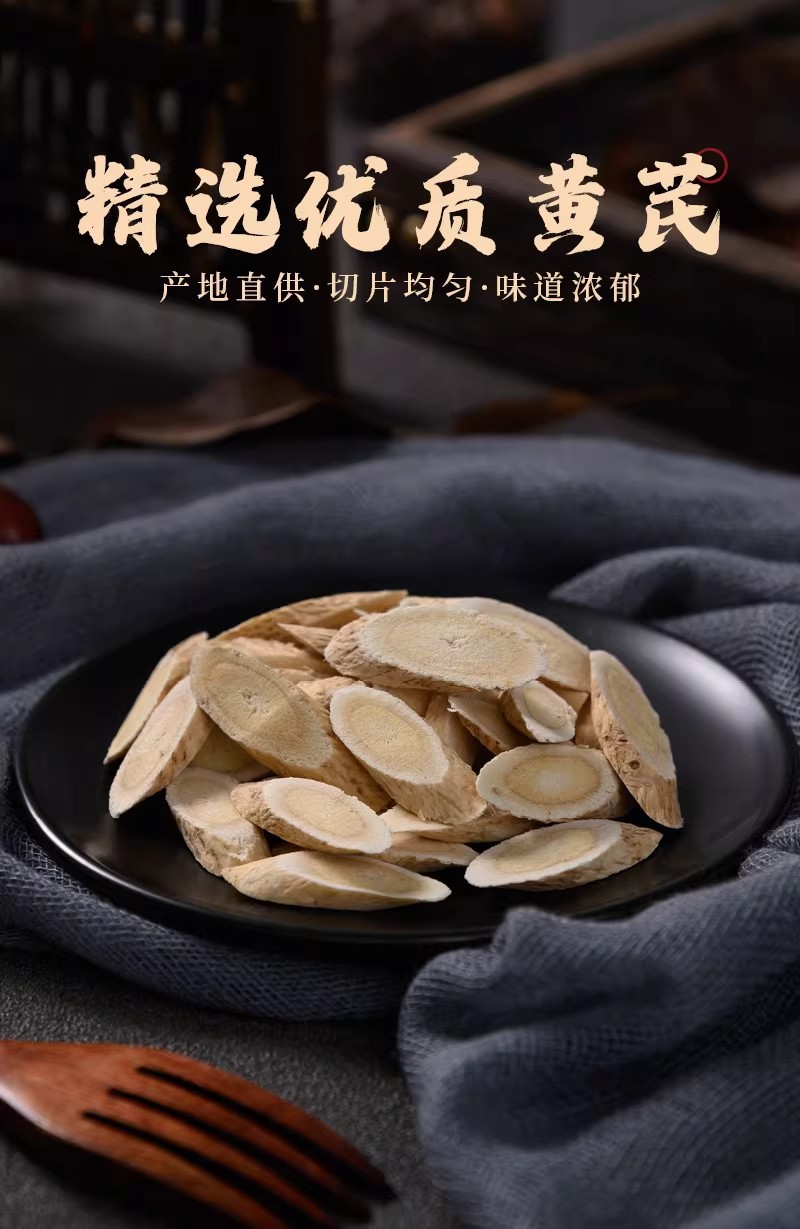
- Authentic Astragalus membranaceus root cut into clean diagonal slices
- Known in TCM as Huang Qi (黄芪), a foundational qi-tonifying herb
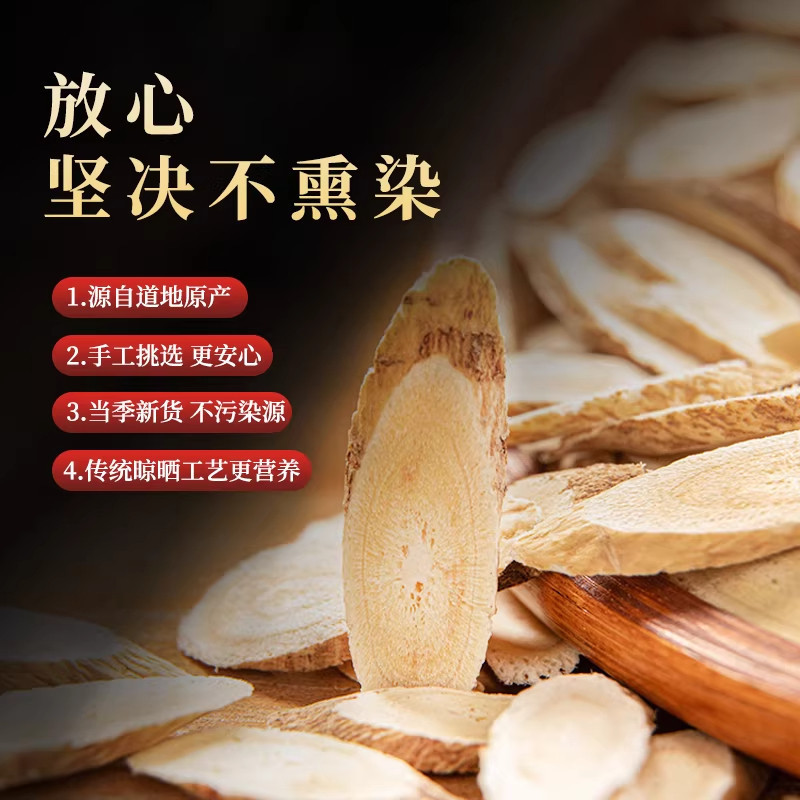
- Sourced from Minxian in Gansu, a recognized traditional growing region
- Loose bulk slices suitable for tea, soup, and decoction preparation
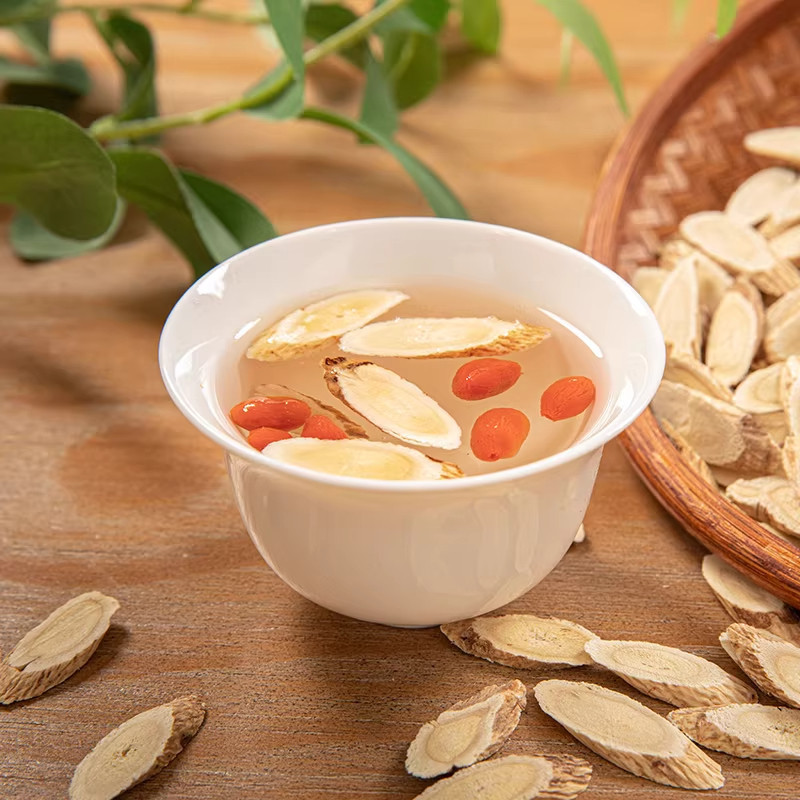
- Traditionally paired with dang gui, goji berry, or red dates in home herbal cooking

Quality & Sensory
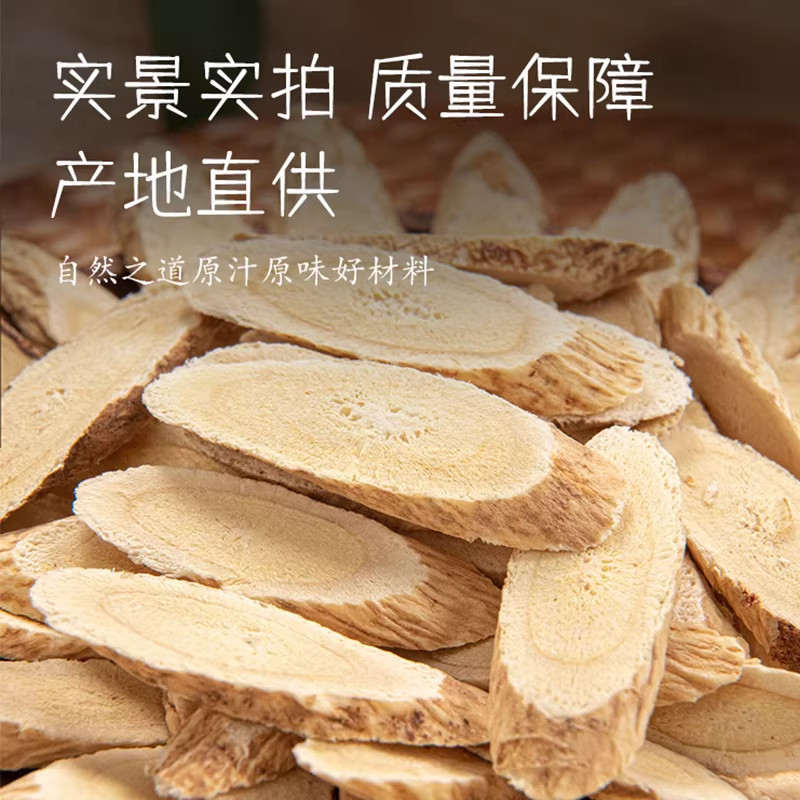
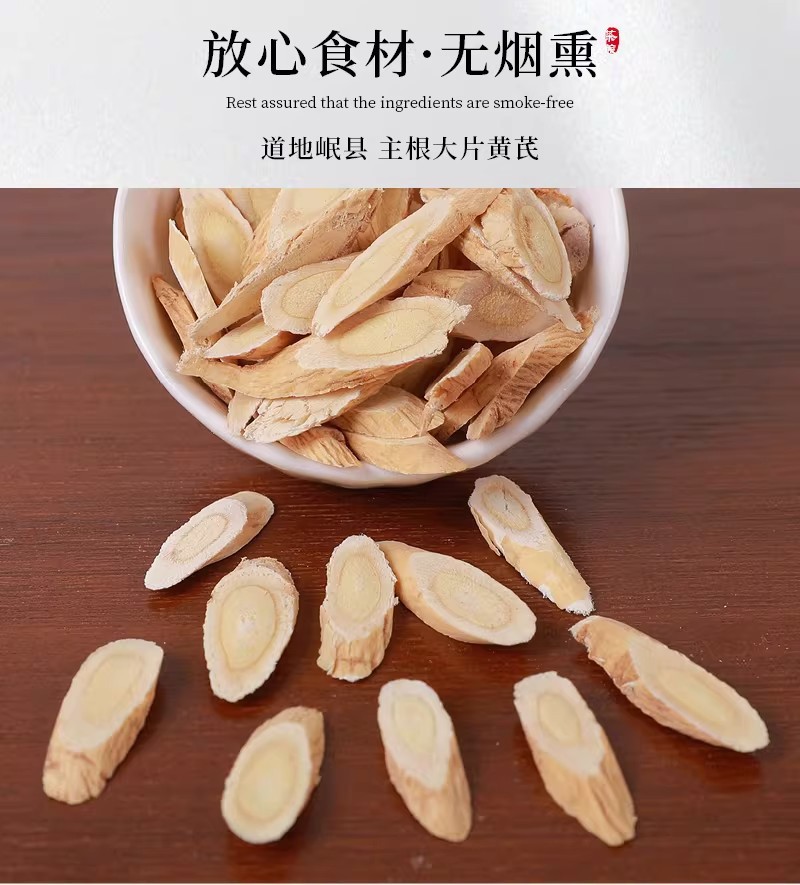
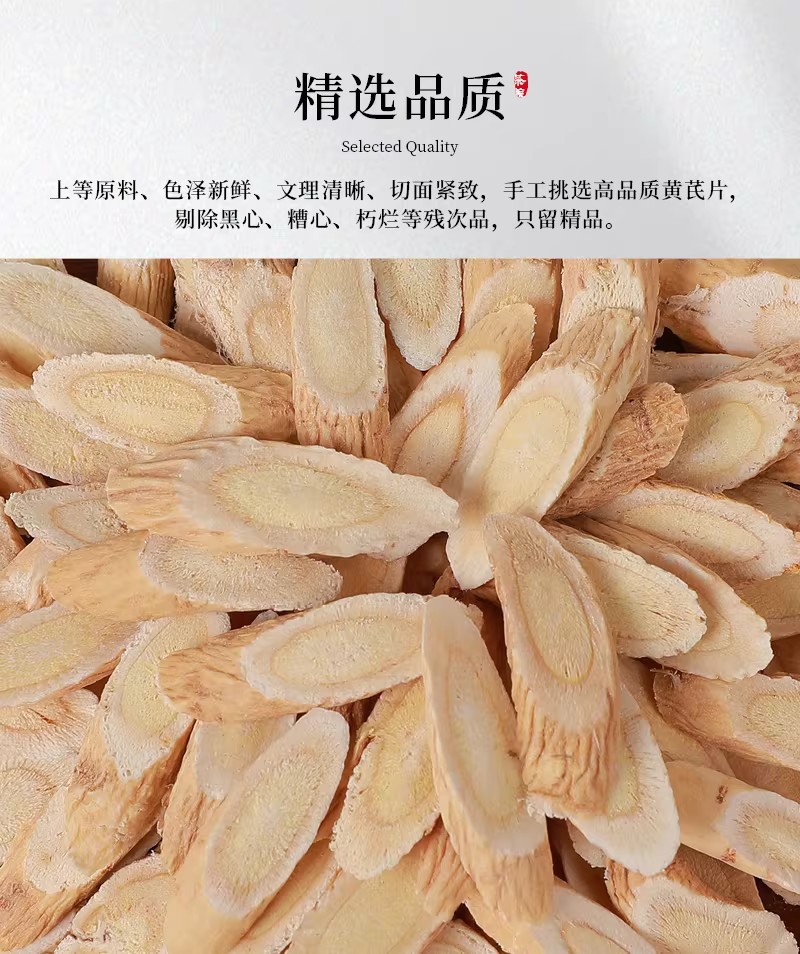
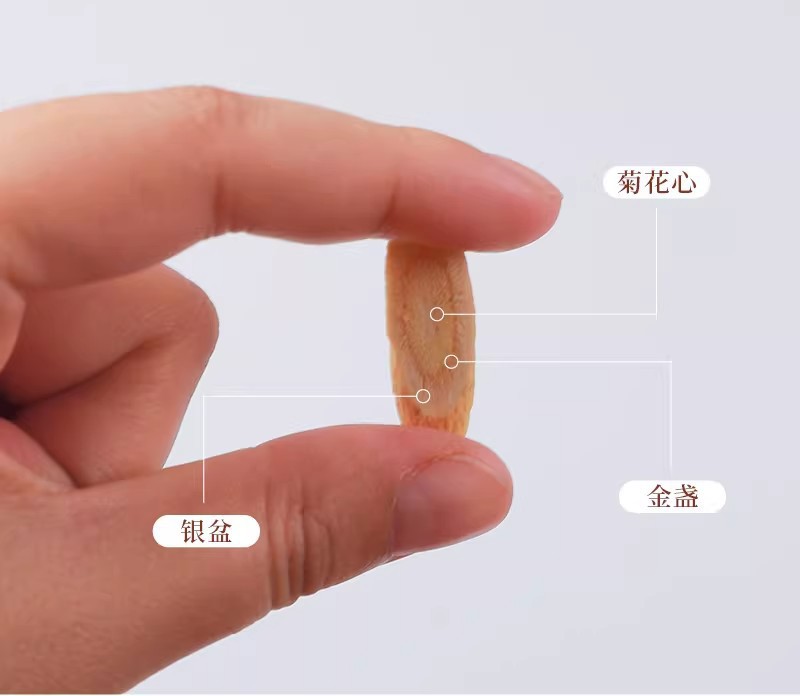
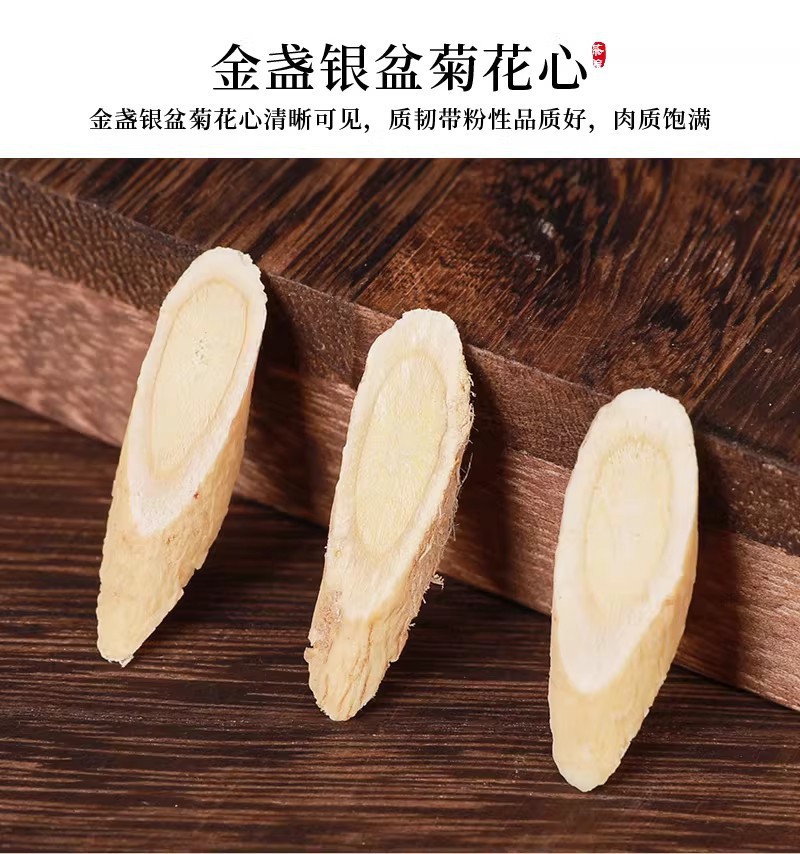
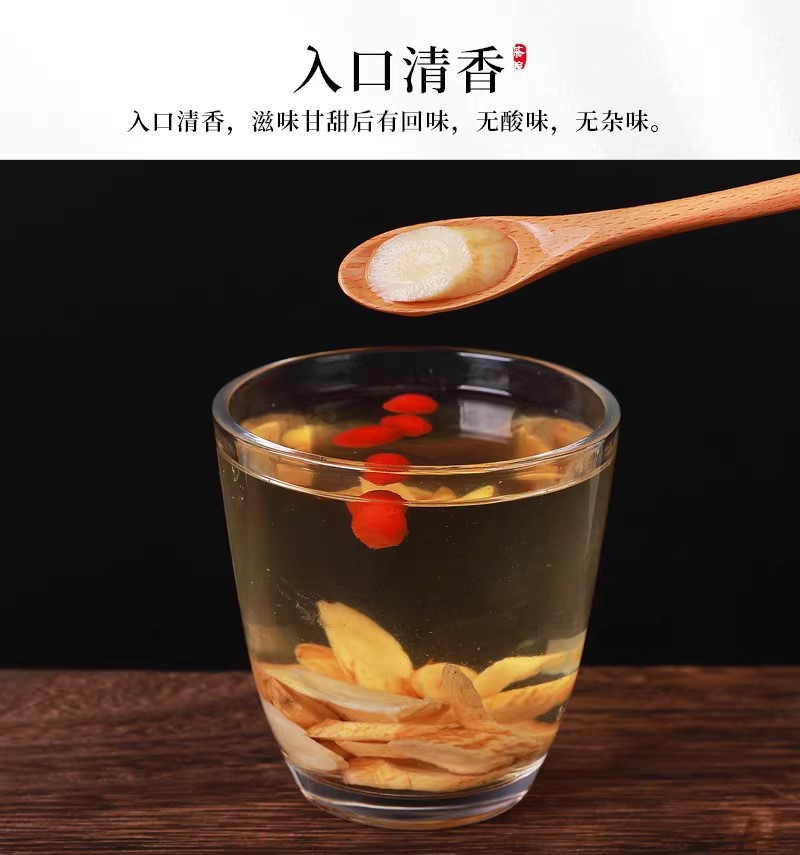
Slices typically show a pale yellow to light tan color with a fibrous, slightly starchy texture and a subtle herbal aroma. When simmered or steeped, the liquor is typically light golden with a mild, earthy, faintly sweet taste.
Technical Specifications
| Product Type | Dried herbal decoction slices |
|---|---|
| Chinese Name | 黄芪 北芪 |
| Pinyin | Huang Qi / Bei Qi |
| Botanical Name | Astragalus membranaceus |
| Plant Part | Root |
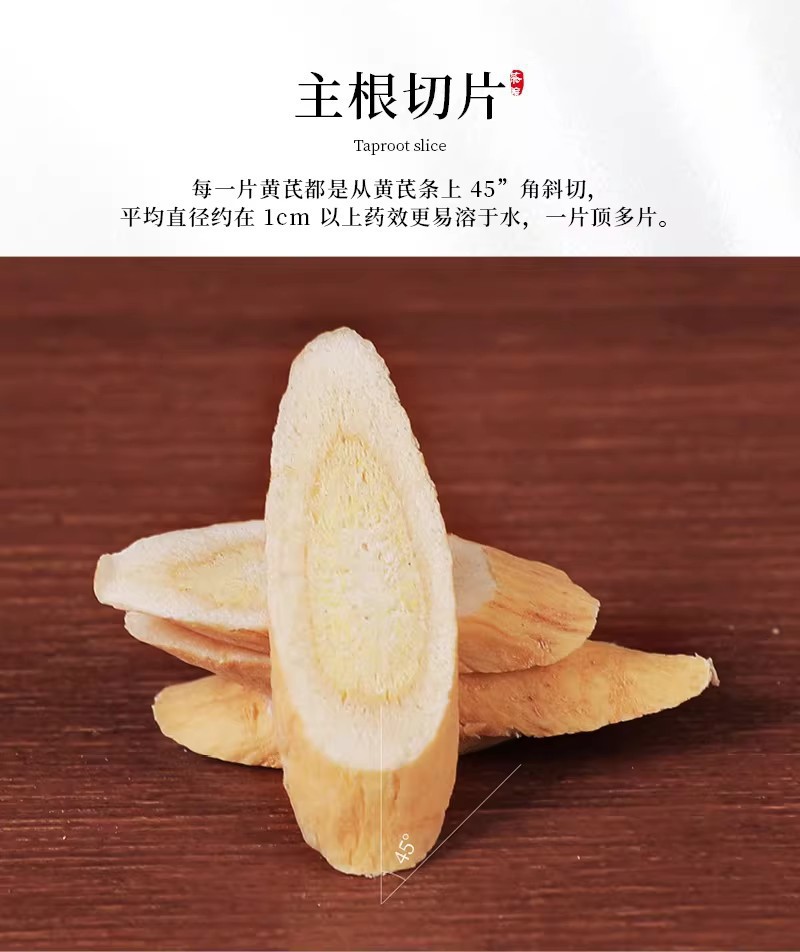
| Form | Diagonal slices 1.5-1.8 cm, loose bulk 250 g |
Usage Scenarios
- Simmered into daily herbal decoctions
- Added to soups and stews with meat or vegetables
- Steeped as a mild herbal tea
- Cooked into congee or grain porridge
- Used in seasonal tonic recipes with dates and goji berries
Traditional Uses
In TCM practice, Huang Qi is traditionally used to support normal qi and to strengthen the spleen and lung systems, and it appears in classic formulas such as Bu Zhong Yi Qi Tang. At home, slices are commonly added to chicken or pork bone soups, simmered in decoctions with dang gui or red dates, or steeped alone as a light daily tea, especially in autumn and winter.
FAQ Q&A
Q: What is this product?
A: It is dried Astragalus membranaceus root, known in TCM as Huang Qi (黄芪), cut into diagonal slices and sold loose by weight.
Q: What is it traditionally used for?
A: In TCM theory, Huang Qi is sweet and slightly warm and is traditionally associated with tonifying qi and supporting the spleen and lung channels. It is a staple of everyday Chinese herbal cooking.
Q: How is it commonly prepared?
A: Slices are typically simmered in soups or decoctions for 30 minutes or more, or steeped in hot water as a tea. It is not a substitute for medicine.
Additional information
| Weight | N/A |
|---|---|
| Dimensions | N/A |
| Packaging specifications | Large Sliced Yellow Astragalus Astragalus Sliced Diagonally 0 8 1 0cm 250 grams, Main Root Slices Astragalus Diagonal Slices 1 0 1 2cm 250 grams, Clear Texture Astragalus Sliced Pieces 1 2 1 5cm 250 grams, Clean and free of impurities Astragalus slices 1 5 1 8cm 250 grams |
Related products
-
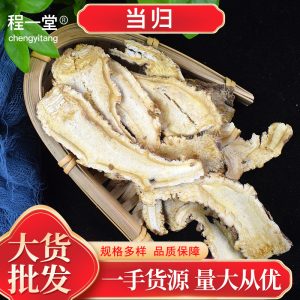
Dried Angelica Sinensis Slices Dang Gui 当归 500g Gansu Raw Herb for Decoction Soup and Tea
Price range: $16.44 through $35.88 -
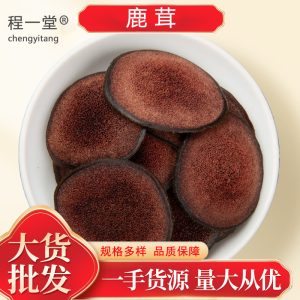
Deer Antler Slices Lu Rong 鹿茸片 Dried Slices for Wine Infusion and Soup 100g Wax Slices Pack
Price range: $68.29 through $92.59 -
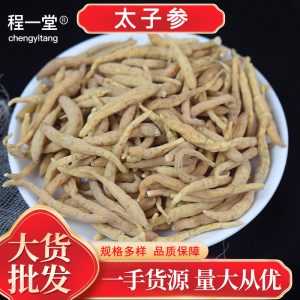
Taizishen Dried Pseudostellaria Root TCM Herbal Tea and Soup Ingredient 500g Bulk Pack
Price range: $10.28 through $15.63 -
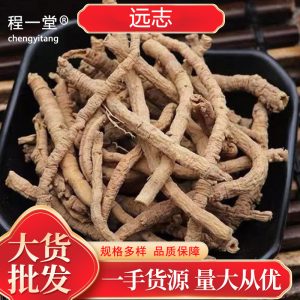
Dried Polygala Root Yuan Zhi 500g Traditional Chinese Herb for Decoction
Price range: $18.87 through $24.54
Reviews
There are no reviews yet.