
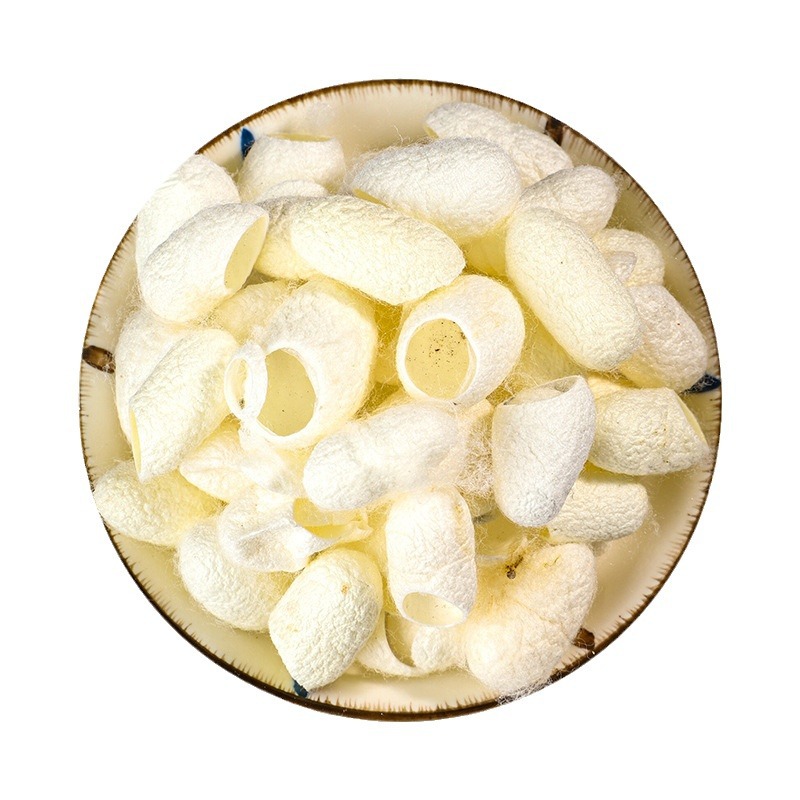
Silkworm Cocoon Shell (Bombyx mori) — Dried Cocoon Husks for Herbal & Beauty Use
Price range: $14.25 through $17.33
Description
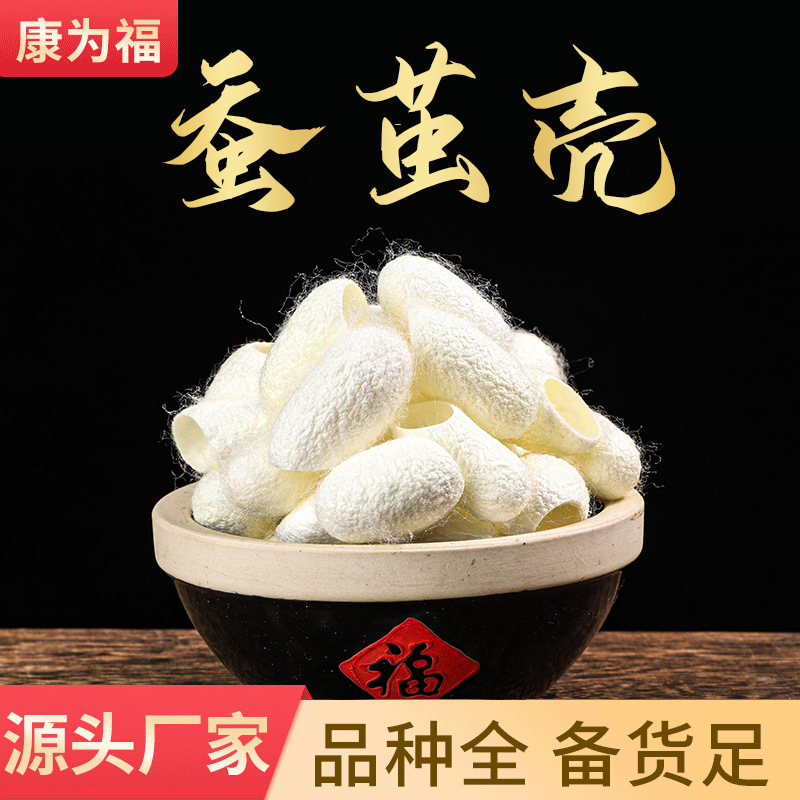
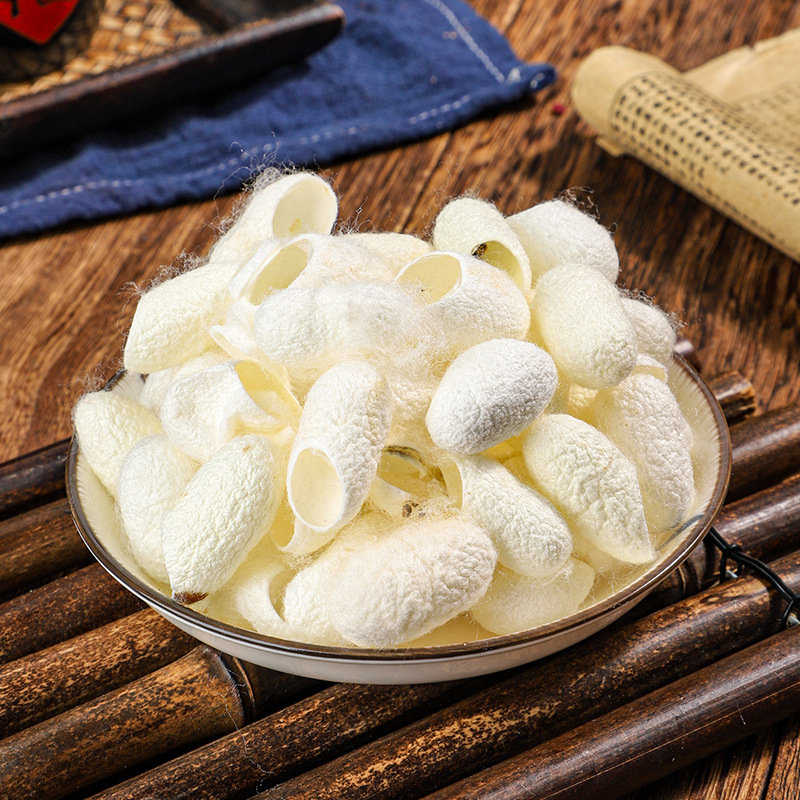
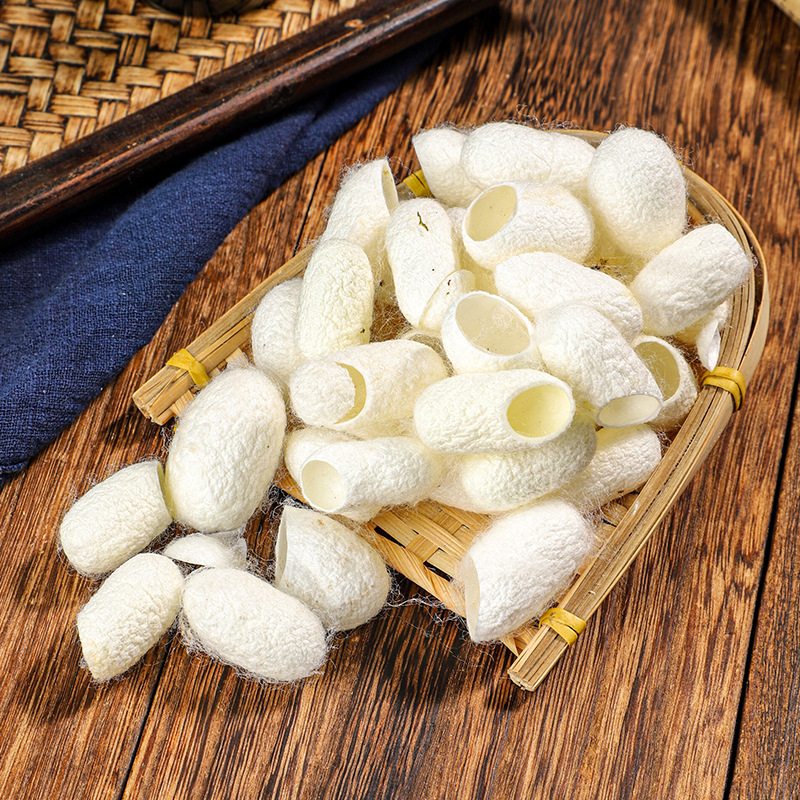
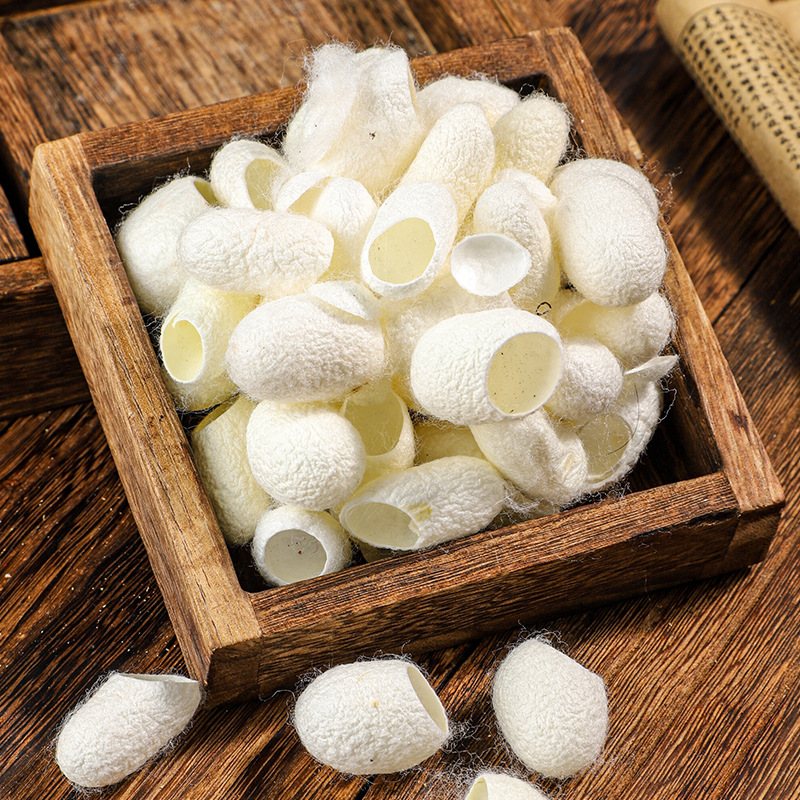
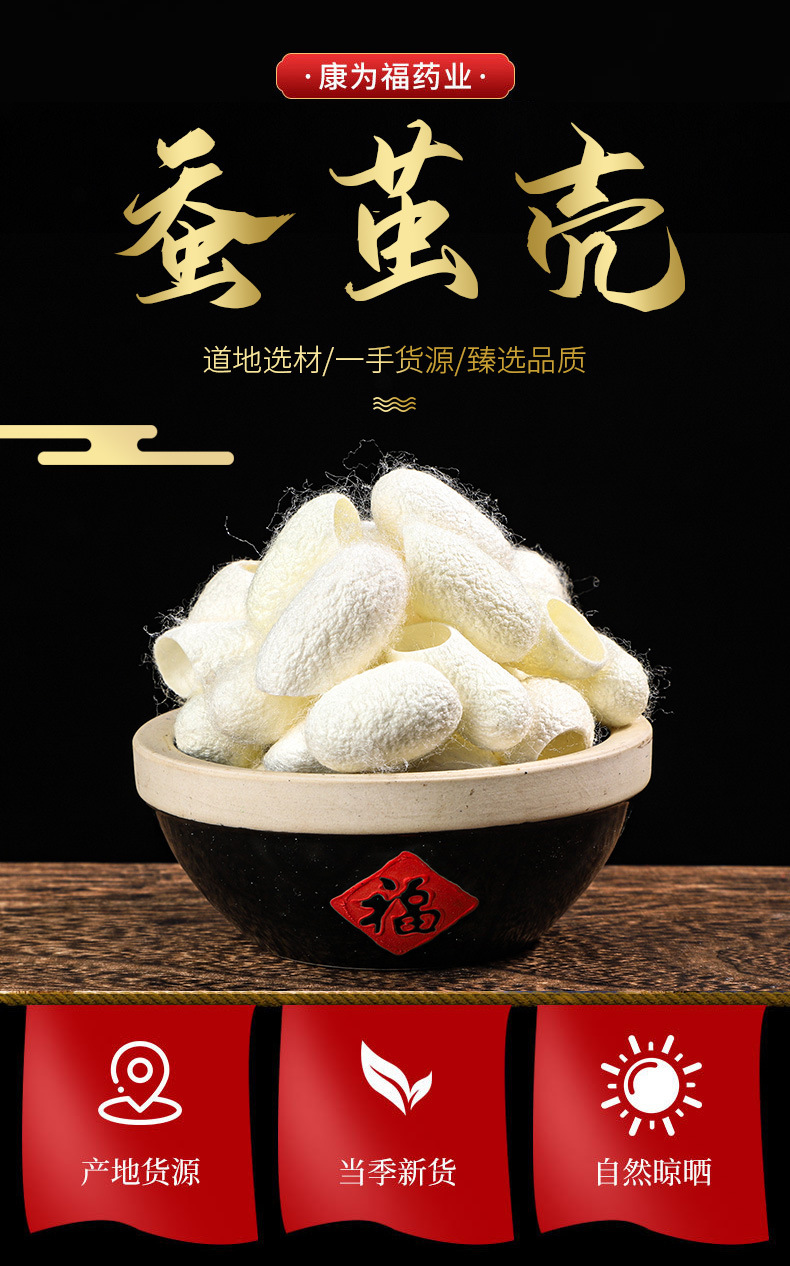
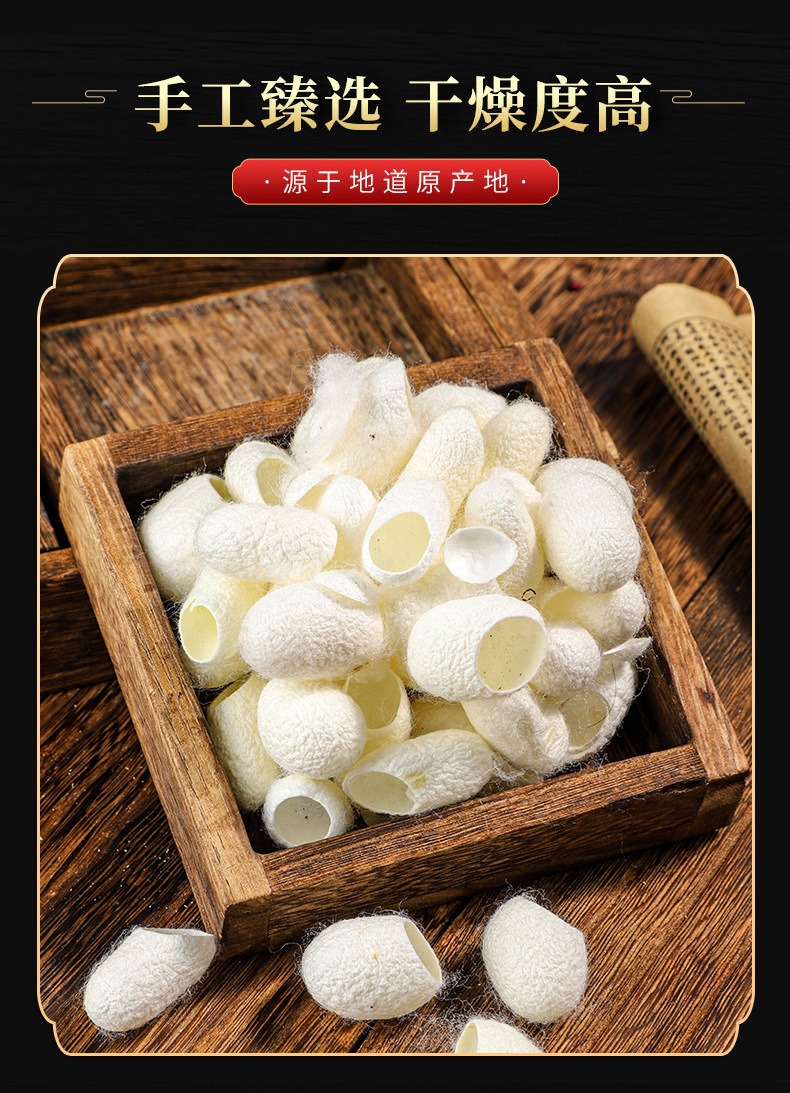
Silkworm Cocoon Shell (Bombyx mori) is the dried outer casing of the silkworm cocoon, known in Traditional Chinese Medicine (TCM) as Cán Jiǎn (蚕茧), with the inner layer referred to as Cán Jiǎn Yī (蚕茧衣). For centuries, silkworm cocoon has been valued in Chinese folk and herbal traditions as a gentle, wind-dispelling and skin-nourishing material, used both in decoctions and in external beauty preparations. Its nature is sweet and warm, making it a mild yet versatile ingredient for traditional wellness and skincare practices.

Key Selling Points
- Traditional Chinese herbal and beauty ingredient
- Dried silkworm cocoon shells and inner cocoon lining
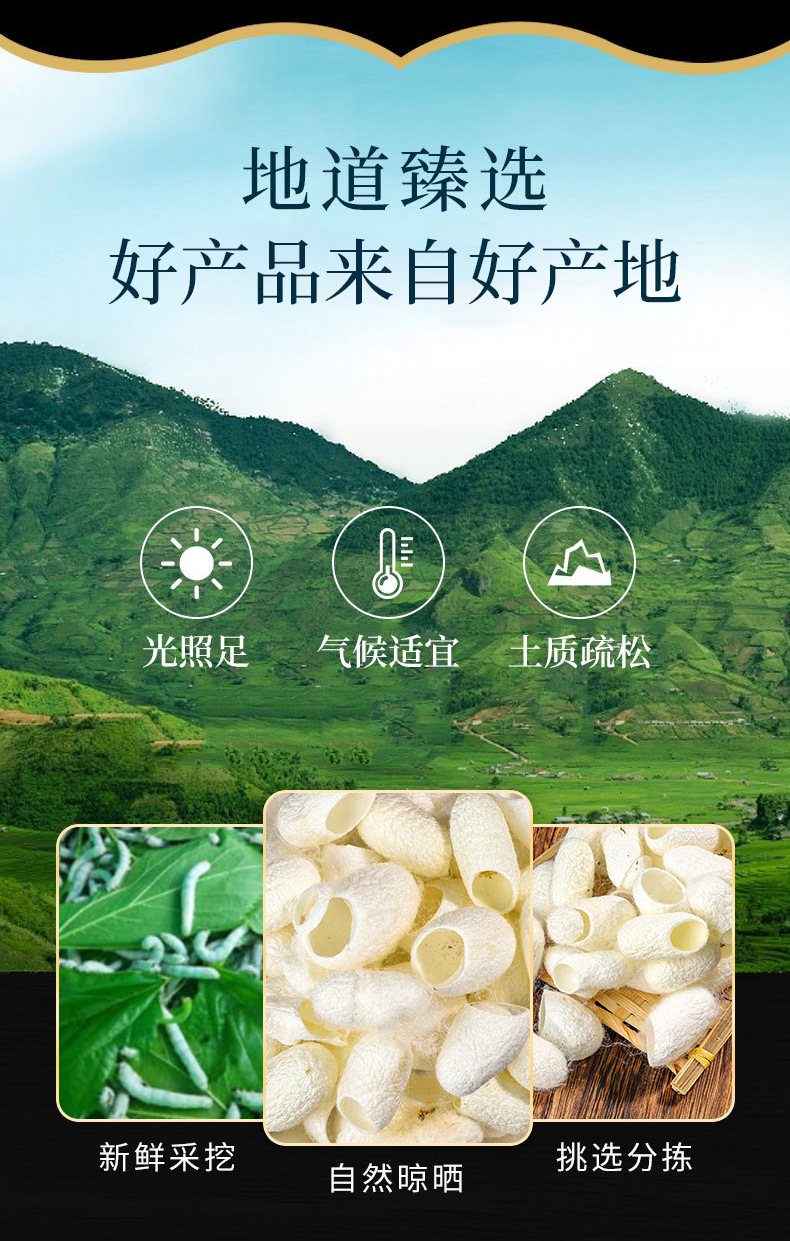
- Bombyx mori, sourced from Zhejiang
- Suitable for decoction and external skin preparations
- 500g bulk pack, 24-month shelf life
Quality & Sensory
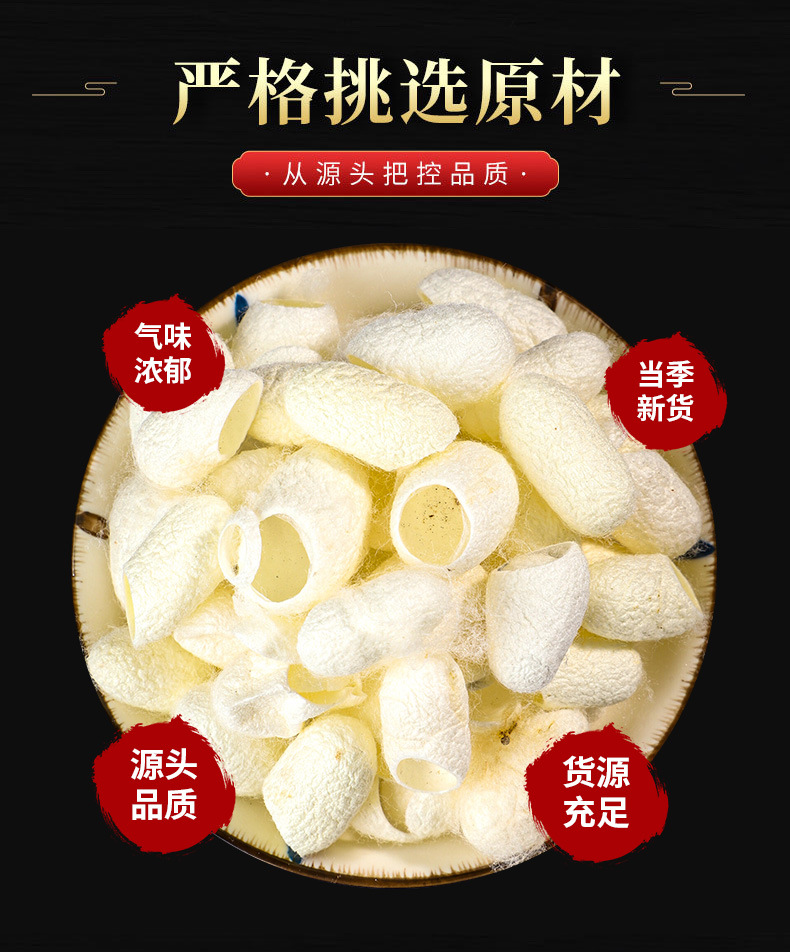
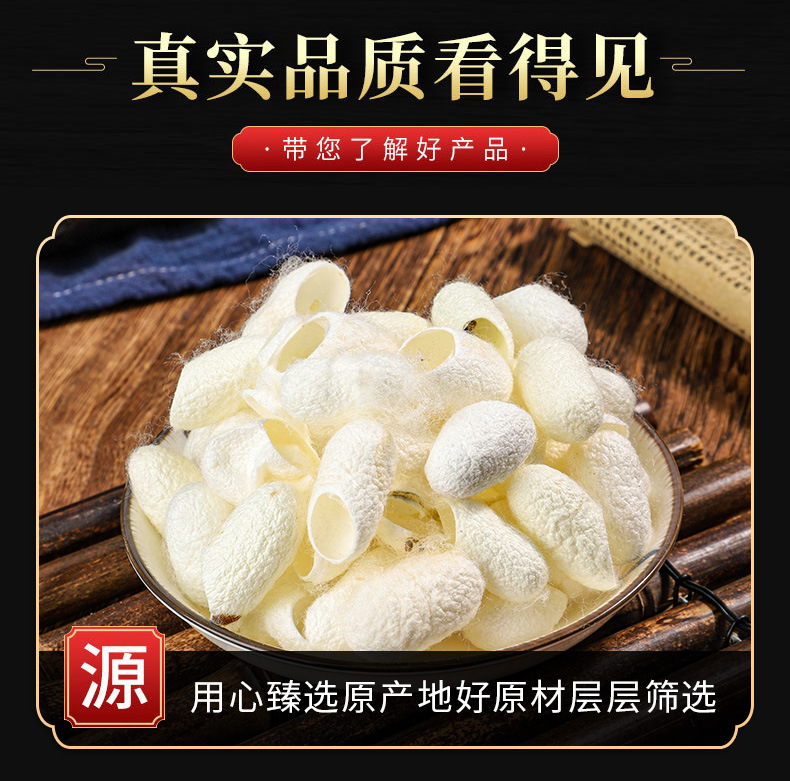
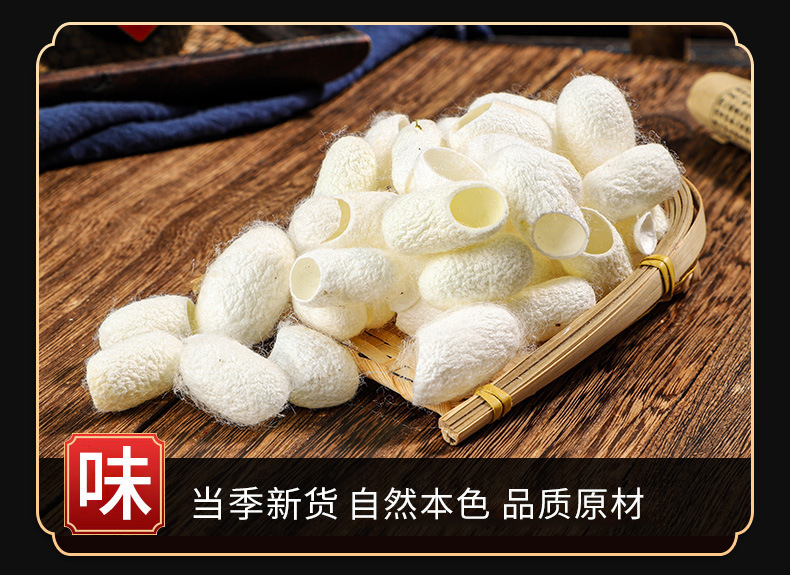
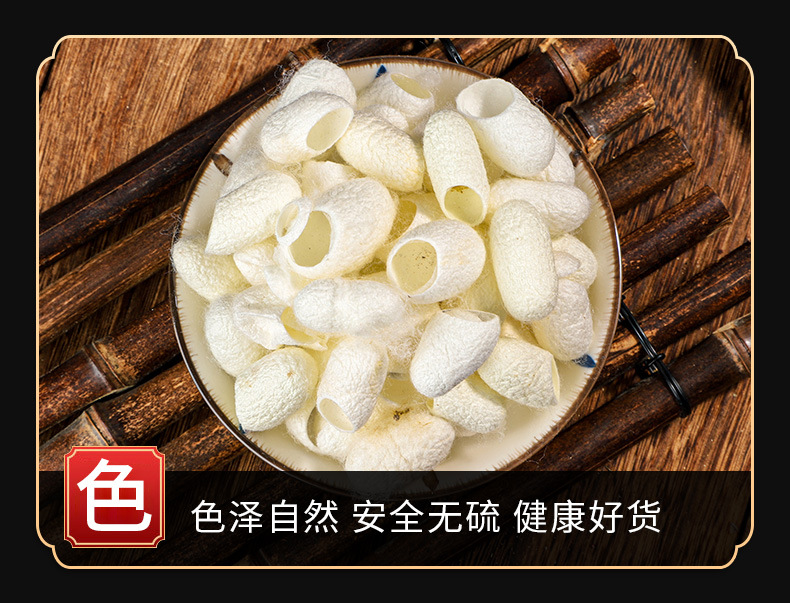
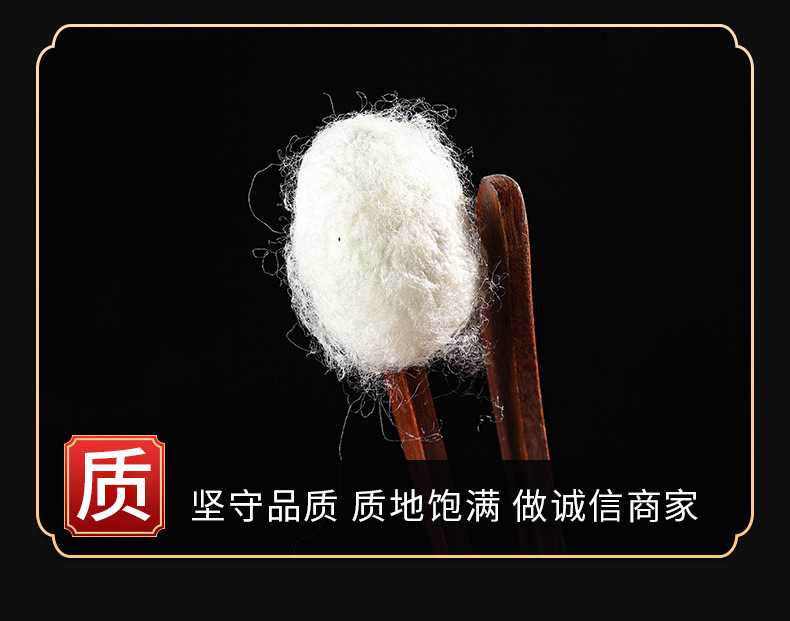
Each batch consists of carefully dried cocoon shells that retain their natural ivory to pale beige color, with a light, papery texture and a faint, clean scent. The inner cocoon lining is soft and fibrous. When decocted, the shells yield a mild, subtly sweet infusion with a smooth, slightly viscous body, while the dried husks remain light and easy to handle for external preparations.
Technical Specifications
| Product Type | Dried Silkworm Cocoon Shell |
|---|---|
| Common Name | Can Jian (蚕茧) |
| Botanical Name | Bombyx mori |
| Origin | Zhejiang, China |
| Net Weight | 500g |
| Shelf Life | 24 months |


Usage Scenarios
- Traditional herbal decoction
- External skin and beauty preparations
- Folk herbal bath and compress
- Herbal tea blends
- Handmade skincare formulations


Traditional Uses
In folk herbal practice, silkworm cocoon is decocted alone or with other herbs to make a gentle infusion, and is also used in external washes and compresses. The inner cocoon lining has long been associated with skin-nourishing beauty rituals, where it is simmered and used as a facial wash or added to herbal bath preparations. In some regional traditions, cocoon shells are combined with ingredients like white mulberry root bark or chrysanthemum in seasonal wellness formulas.


FAQ Q&A
Q: What is silkworm cocoon shell?
A: Silkworm cocoon shell is the dried outer casing of the silkworm cocoon, known in Chinese as Can Jian (蚕茧). The inner layer is called Can Jian Yi (蚕茧衣). It is used in traditional Chinese herbal and beauty practices.
Q: What is the traditional wellness value of silkworm cocoon?
A: In traditional Chinese food and herbal culture, silkworm cocoon is associated with dispelling wind, nourishing the skin, and supporting gentle internal balance. It is used in decoctions and external skin preparations.
Q: How do I use dried silkworm cocoon shells?
A: Rinse the shells and simmer them in water for a traditional decoction, or use the cooled liquid as an external wash. For skincare, the inner cocoon lining can be simmered and used as a facial rinse. Adjust quantities to your recipe and preference.
Additional information
| Weight | N/A |
|---|---|
| Dimensions | N/A |
| Packaging specifications | 250g in total, Optional 250g, Premium 250g |
Related products
-
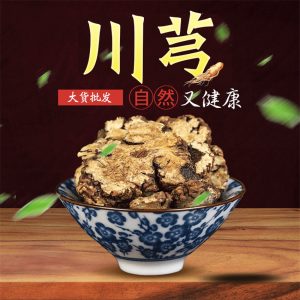
Chuan Xiong Slices (Ligusticum chuanxiong) — Sichuan Sun-Dried Rhizome Pieces, 500g
Price range: $4.44 through $6.06 -
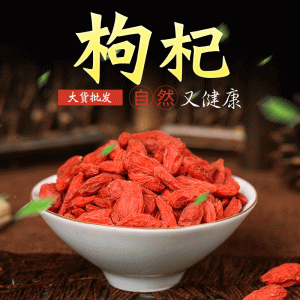
Goji Berries (Lycium barbarum) — Ningxia Zhongning Dried Red Goji, Sulfur-Free First Harvest
Price range: $7.52 through $8.66 -
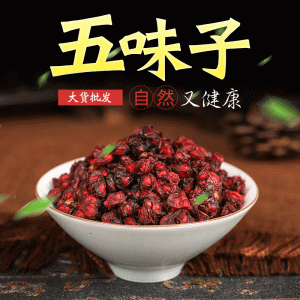
Liao Wu Wei Zi (Schisandra chinensis) — Dried Changbai Mountain Schisandra Berry, 500g
$6.88 -
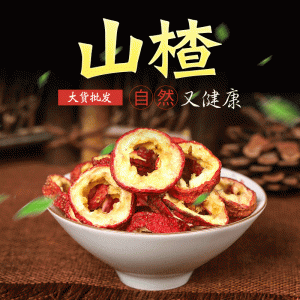
Shan Zha Slices (Crataegus pinnatifida) — Pitted Dried Hawthorn for Sour Plum Soup & Tea
Price range: $4.12 through $5.74
Reviews
There are no reviews yet.